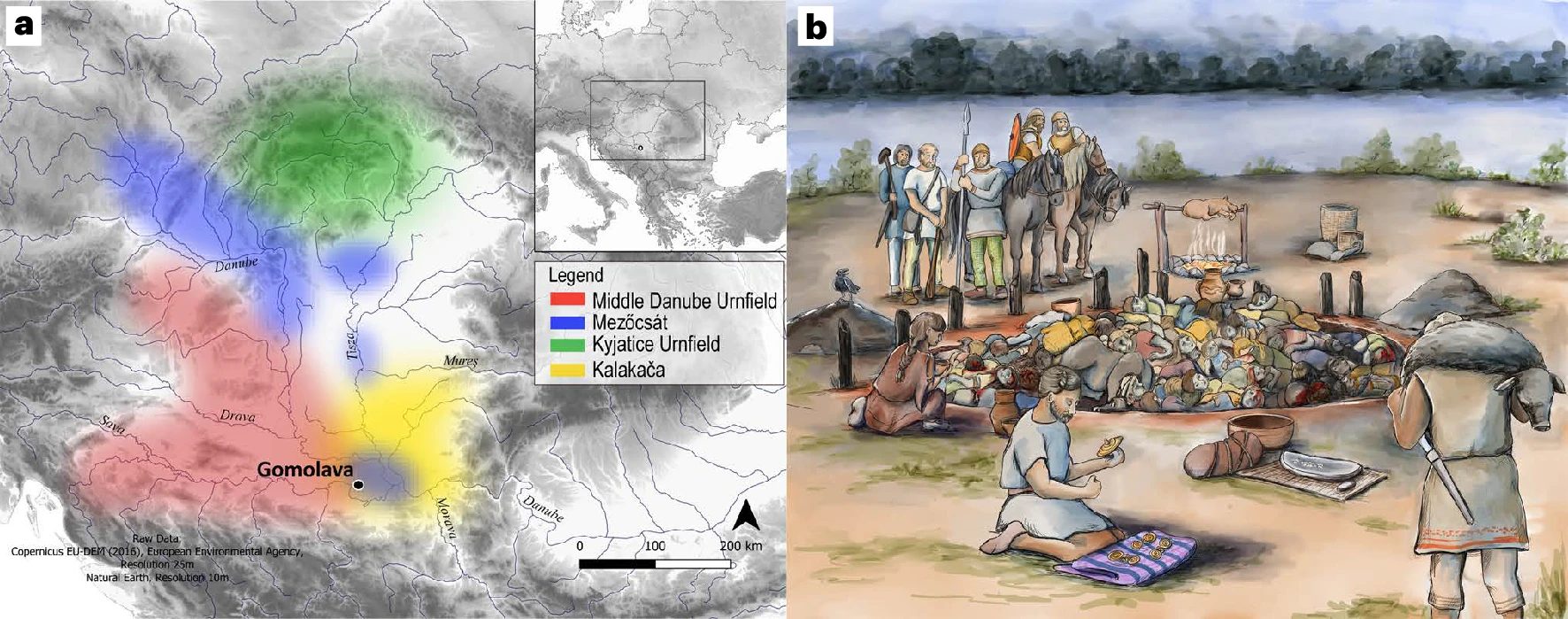
In the heart of the Balkans, in the north of Serbiaan archaeological site is rewriting what we know about violence in the European prehistory. TO Gomolavain the Carpathian Basin, archaeologists have unearthed a large mass grave dating back to about 2,800 years agoat the beginning of the Iron Age (9th-8th century BC). The study, published on Nature Human Behaviorpresents as leader Linda Fibiger of the University of Edinburgh e Miren Iraeta-Orbegozo from the University of Copenhagen.
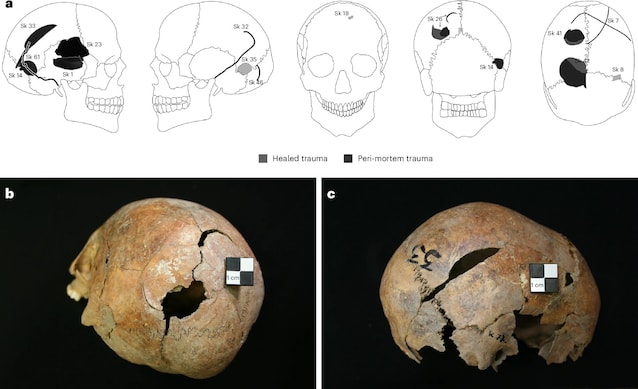
In the mass grave, surmounted by a moundthe remains of 77 individuals. The materials found and radiocarbon analyzes have dated the context to 9th century BC. The anthropological analyzes performed on the skeletons have identified obvious traumaespecially in the head: violent blows with weapons or projectiles, compatible with aintentional killing. It is therefore neither an epidemic nor a collective ritual burial. All the evidence gathered indicates that it is the result of a deliberate massacre. The pit measured 3 meters in diameterand it was half a meter deep. Under the remains of the 77 individuals, piled on top of each other, was found skeleton of a young bovinepresumably sacrificed by whoever built the pit.
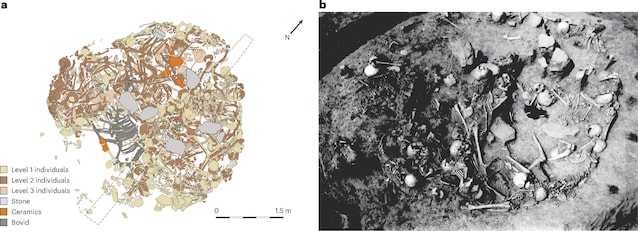
What struck archaeologists most, however, is the population sample represented in the burial. About 70% of the individuals analyzed were femalewith a very high share made up of children And teenagers. The men very few adults are represented. This data breaks a frequent pattern in the conflict contexts of prehistoric Europe, where the victims are often mainly males of fighting age. Here, however, the main victims are people vulnerable.
Some were also carried out DNA analysis on the remains found, to outline the system of relationships among the victims buried in the mass grave. These revealed another fundamental element: most individuals were not closely related. It was therefore not a question of the elimination of a single family or of several families linked to each other, but probably of one significant part of a larger communitylike a tribe. Only in a few cases have direct links emerged, such as that between a mother and two daughters. It was probably a substantial part of the population of a village at the timeinhabited by approximately 100-200 people.
Episodes of such brutal violence in prehistoric Europe are quite attested in archaeology. To explain the particularity of the Gomolava context, scholars believe that it was a act of selective violenceaimed at deliberately targeting a specific segment of the population. Not a battle between armies, but a targeted attack against women and young peoplethe heart of a community. At the beginning of the Iron Age, the Carpathian Basin was in ferment: this region being a geographical crossroads: numerous human groups passed through it for various reasons. Different cultures coexisted and overlapped, generating commercial and cultural exchanges, but also tensions. The Gomolava pit appears to be there concrete trace of one of these moments of extreme conflict. In an era of social transformation, migration and competition for resources, eliminating women and children could mean strike at the very heart of a community: interrupting its biological, social and economic continuity.
This study is important not only for its dimensions (it is one of the largest European mass graves from the beginning of the Iron Age), but also because it offers a direct look at the dynamics of prehistoric violence. Almost three thousand years ago there were therefore forms of organized aggressioncapable of deliberately targeting the most defenseless members of a society, in this case women and children. The discovery reminds us that war, in its largest dimension cruelis not a modern invention.
