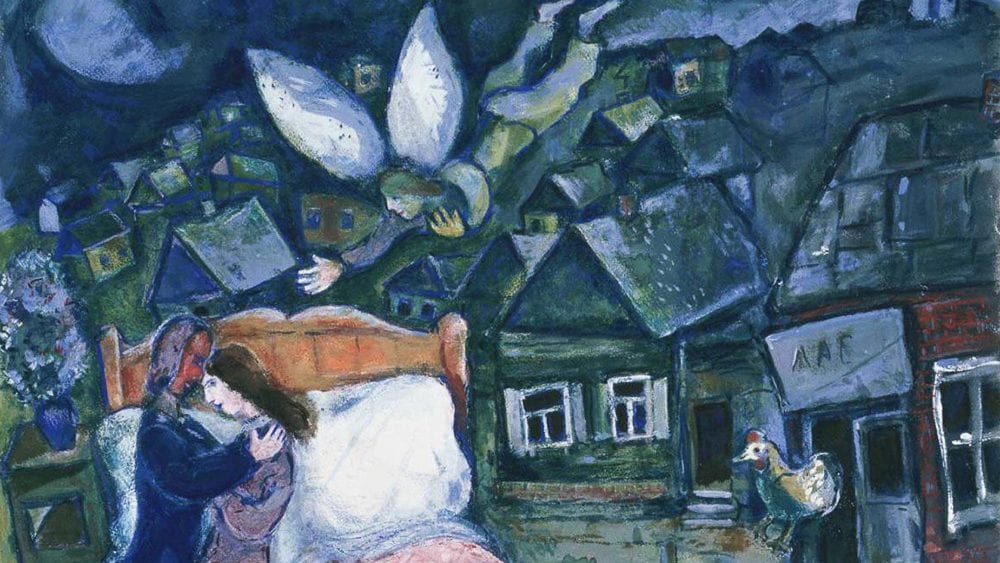
“I dream of painting and then I paint my dreams” – Van Gogh.
Every year, on September 25, World Dream Day is celebrated, the World Dream Day. Established in 2012 on the initiative of the American educator Ozioma Egwuonwu, this day is an opportunity to reflect on dreamsinterpreted both as the aspirations of each of us is, in a more literal sense, like the involuntary psychic activity we do during sleep. Phenomena that have always been considered complex and mysterious, dreams have been the subject of study and inspiration since ancient times: for this reason many artists and artists have made their subjects their subject. Let’s see some of the most famous works dedicated to this fascinating theme.
1. The dream of Innocent III of Giotto (1295-1299)
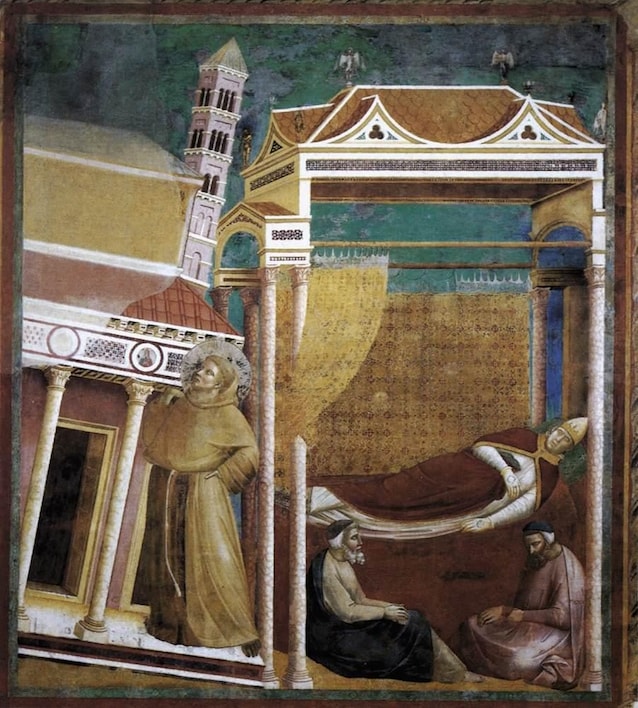
The “dream of Innocent III” is the sixth of the twenty -eight scenes of the cycle of frescoes of the Stories of St. Francis of the upper Basilica of Assisiattributed to the great medieval painter Giotto. According to the story – taken from the Legend Maior of St. Francis – Pope Innocent III saw the humble Francesco in a dream while holding the Basilica of Lateran, which at the time represented the heart of the Church. And so GIOTTI represents him, portraying the Pope in his canopy alongside the dream: the basilica, very inclined, is portrayed on the point of collapsing, but the intervention of the saint avoids the disaster.
2. The dream of the knight of Raffaello (1503-1504)

Store in the National Gallery in London, this painting was probably part of a diptych with the work of the three graces. The apparently simple composition reflects with a delicate system of balance A theme very dear to the Renaissance period neoplatonism: the coexistence of the pleasures of the spirit and the body. The interpretation of the picture is controversial: for some the subject is Hercules, for others Scipio the African. The two female figures are projections of the knight’s dream in the center, asleep on the shield, and would represent the virtue and pleasure, which each offer their best attributes in an ideal symmetrical balance.
3. The nightmare of Johann Heinrich Füssli (1781)

This painting complex, now preserved at the Detroit Institute of Arts, offers A subjective and objective vision of the subject at the same time. We are in a bedroom in dim, full of small objects that tell of the artist’s time: at the center of the picture there is a young woman, who sleeps with a suffering expression, while on the side it appears a disturbing ghost cavalrythat in the folklore of the time and in some fairy tales of Germanic mythology he was told was a bearer of nightmares (in English, the nightmare “Nightmare” means “leap of the night”). The nightmare in question materializes in the form of monster, who is crouched on the girl like a Goblin or Gargoyle.
4. The dream of Picasso (1932)

This work is the most famous of a series of cubist paintings produced in 1932 and all depicting asleep women: the model common to all is Marie Thérèse WalterFrench model who met Picasso at the age of seventeen (while he had forty -five and was married to Ol’Aga Chochlova) and became his lover and then his wife. The painting (probably inspired by Henri Matisse’s Fauves painting) depicts the female subject, asleep but bright, with the folded arms and the head inclined on the one hand: the work has one strong erotic componentgiven by the semi -naked of the figure and by the fact that half of the woman’s face seems to have the shape of a penis.
5. The interpretation of Magritte’s dreams (1935)
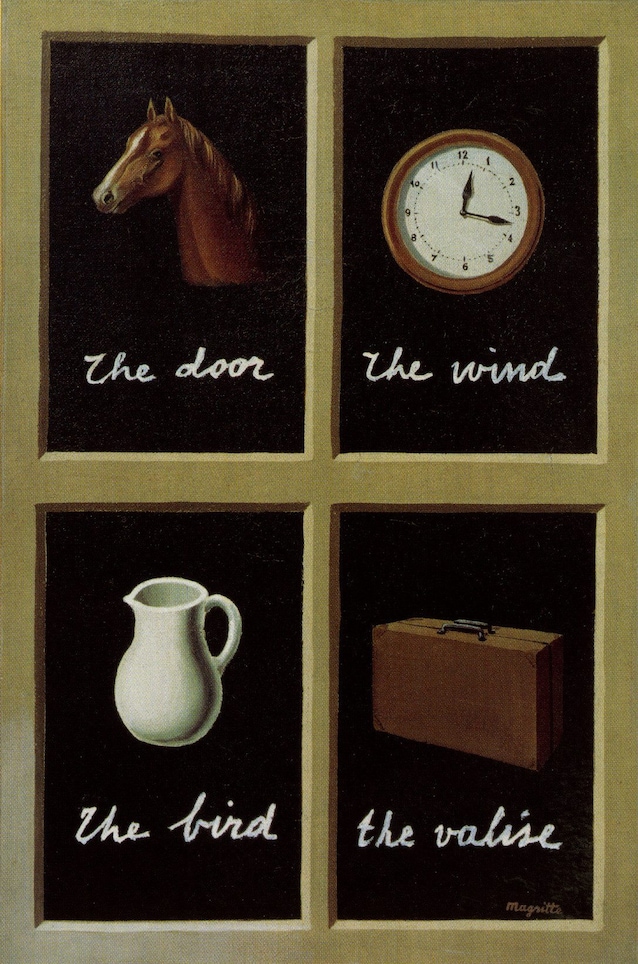
The work belongs to a series of paintings in which Renée Magritte combined words and images using the format of a “reading manual for children”. However, the author gives an incorrect name to the objects (except the suitcase), a strategy to make family things seem unknown and remind us that The images of things are not the things themselves. The didactic tool therefore becomes a confusion tool.
