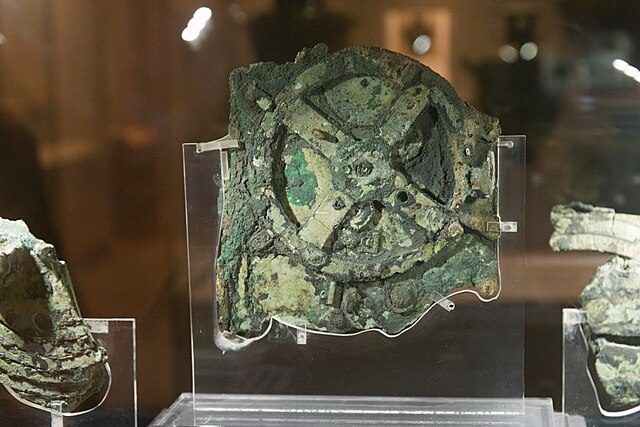
There advance machinealso known as an antikythera mechanism, is undoubtedly one of the More extraordinary and mysterious objects coming fromancient classic world. Raised casually over a century ago in the wreck of a Roman ship in front of the Greek island of early, this enigmatic device has fascinated generations of scholars and enthusiasts, thanks to its extraordinary complexity and its own technological potential Incredibly advanced for the time. The complexity of its functioning, combined with the absence of similar finds, has often fueled pseudo -archeological theories and imaginative speculationswhich have raised it to a symbol of a “lost past” capable of concealing knowledge well beyond what is considered possible. Today the car, which inspired the film “Indiana Jones and the dial of fate“It is located at the National Archaeological Museum of Athens. But what really was the anticipation mechanism? How did it work, and what was it for?
Where and when the antikythera mechanism was found
In waters in front of Previewa small Greek island located between Crete and the Peloponnese, in 1900some sponge seekers by chance found an ancient wreck of the Roman ageabout 45 meters deep, roughly shipwrecked in the first half of the first century to. C. The most amazing thing for scholars who subsequently dealt with this wreck was his load: it was dozens of precious statuesboth in bronze and marble. In addition to the statues, what apparently seemed to have been recovered A block covered with marine incrustationswhich after cleaning turned out to be A mechanism consisting of multiple gears. The recovery works, carried out with the rudimentary immersion technologies of the time (which unfortunately also caused the death of some of the technicians employed) took place between 1900 and 1901 Objects of great value like the statues and the mechanism itself.
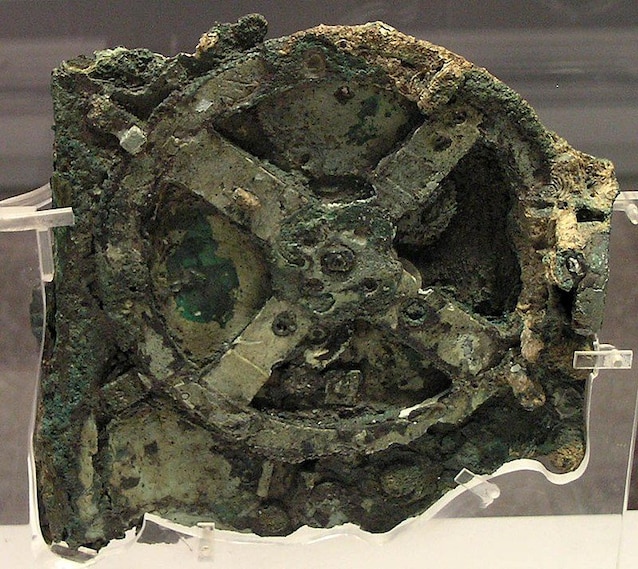
How it worked how the toothed wheel worked
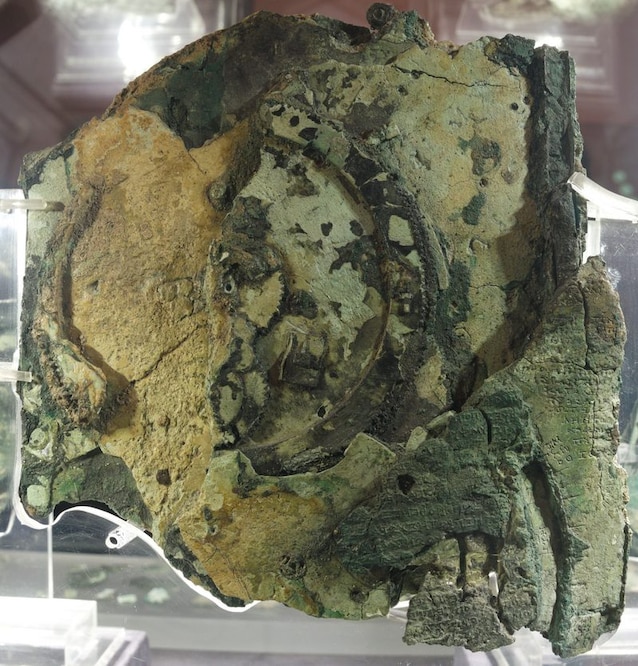
The mechanism, made in copperis small (about 30 × 15 cm), was presumably contained within a wooden container and is composed of 37 tooth wheelsaccompanied by numerous Registration in Greek language on many of the components found. The movement of the wheels allowed the rotation of other parts of the machine. Archaeologists have recovered Four main fragments and a dozen minor fragments, kept today at Athens Museum. For decades, those who dealt with the early machine have tried to give an interpretation to the mysterious artifact, even postulating that it was a much more recent object, finished above the wreck of the first century. AC by pure chance.
It was starting from 1950shalf a century from its discovery, that the early mechanism began to reveal its secrets thanks to the careful study of the British physicist and mathematician Derek John De Solla Price (1922-1983). De Solla Price He studied the car For twenty yearstaking into account each of the gears, and of the relationships that each component had with the others.
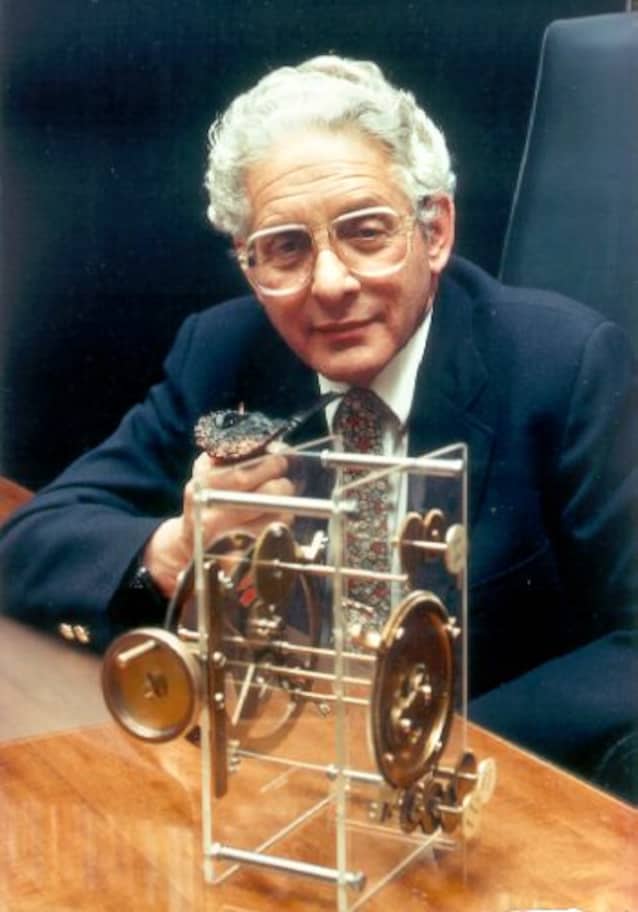
The accurate analysis of De Solla Price allowed to understand that it was a very advanced mechanical calculatorable to use a differential To move more parts at the same time. Subsequent studies have shown that the car was able to calculate The movements of the planets known at the time, the phases of the moon, the sun and lunar subdivision of the yearand probably also the cadence of the ancient Olympic Games. The artifact was probably made between the end of the second century. AC and the beginning of the 1st century. B.Ceven if it seems that the date he had been calibrated (some research groups have managed to estimate it taking into account the error accumulated by the machine through operating simulationsobtaining different results) should be the 178 BC or the 204 BC
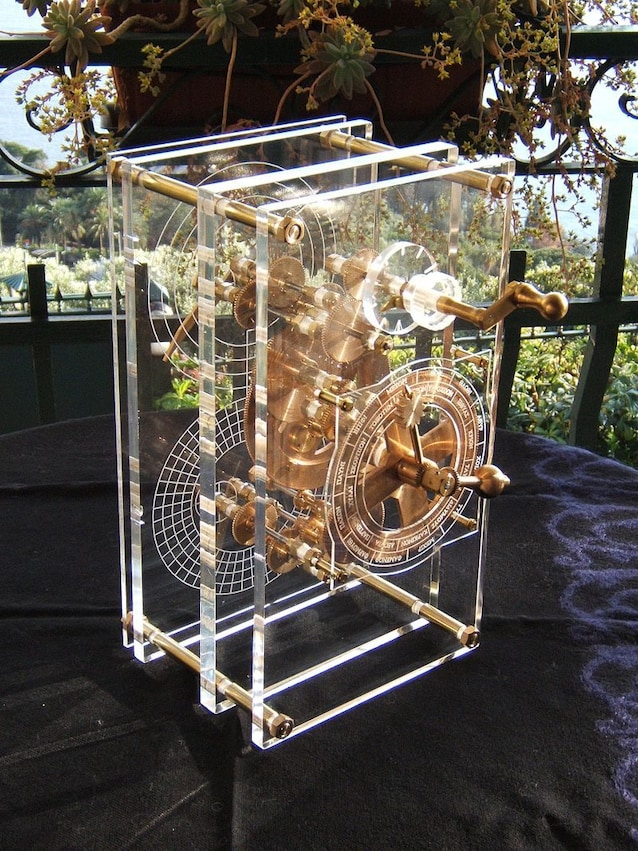
The de facto advance machine would be The first computer in history But it is only one of the elements of highly advanced technology that have come down to us from the Hellenistic era, it is a very rare eventsince because of the precious material in which they were made, usually bronze, often ended up being destroyed and refused. During the Hellenistic period (end IV sec. – The Sec. A. C.) and in the first Roman imperial era they were made several mechanical artifacts handed down from the sources. Rather known is the work of Erone of Alexandriawhich lived between the 1st and second century. DC, and who made The first steam machine.
https://www.youtube.com/watch?v=v_Pceqgtena
Sources
Jones A., A Portable Cosmos, Revealing the Antikythera Mechanism, Scientific Wonder of the Ancient World, Oxford University Press, 2017
Freeth T., et al., Decoding the antikythera mechanism – Investigation of an Ancient Astronomical Calculator
De Solla Price D., Gears from the Greeks. The Antikythera Mechanism: A Calendar Computer From Ca. 80 B. C, in Transactions of the American Philosophical Society 64, 1974,
Marchant J. in Search of Lost Time, Nature 444, 206
