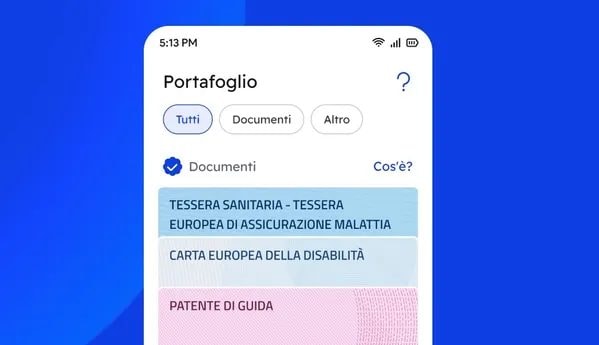
Within February 2027 our smartphone will be increasingly similar to a real digital wallet capable of collecting most of the documents issued by the Italian Public Administration. We have already heard widely about the project, it’s called IT-Walletand is integrated into the ecosystem ofIO appthe platform already used to receive communications from public bodies or make payments to the Public Administration.
According to the Department for Digital Transformation, after a first phase started in 2024 with the introduction of the driving license and health card in digital format, the Government now aims to progressively extend the system to many other official documents, to also include a digital version of the electoral card. The objective is clear: to allow us to store certifications on our phone that we currently keep in our physical wallet and to ensure that the digital versions have the same legal value as the paper ones. The timetable for this transformation was established by a decree of the President of the Council signed on February 18 and developed together with the Ministry of Economy and Finance.
IT-Wallet: the current situation and future developments
To understand how this system will work we must start from the current situation. Today the digital wallet is one internal function of the IO app and allows you to upload only three types of documents: the driving licensethe health card and the European Disability Chartera certificate that allows people with disabilities to access services and benefits in various European countries. Although still in its early stages, adoption is already significant: approx 8.5 million users have registered the digital driving license and as many have inserted the health card, while the certifications linked to the European Disability Charter are approximately 200 thousand. These numbers indicate that a substantial portion of citizens have started to use the system, although the real expansion will come with the integration of many other documents.
The decree provides that all public administrations make their certifications available also in digital format through the infrastructure ofIT-Wallet. This means that, over time, the digital wallet will be able to include various certificates issued by the PA and also the future digital voter cardthe electronic version of the document that is used today to register one’s participation in the vote. The idea is to create a personal archive accessible from the telephone that contains official certificates verifiable by the competent administrations and authorities.
To support such a system, a complex technical infrastructure is required. The decree entrusts the planning and organizational management toState Printing Institute and Mintthe public body that already produces sensitive documents such as passports or Electronic Identity Cards. Its task will be to issue digital certificates that certify the user’s data after an authentication process with high security standards. In this way, the electronic version of the documents added in the IO app will be verified and can be shown to the authorities or used while using the various Public Administration services.
The role of the ANPR and PagoPA
The data needed to create these documents will be retrieved fromANPR (National Registry of the Resident Population), the state database that contains the personal information of Italian citizens and residents of the country. Connecting the digital wallet to this archive allows you to ensure that the information in the documents is up to date.
Another important player is PagoPA SpAthe public company that develops many digital infrastructures of the Italian PA. In the IT-Wallet project PagoPA is responsible for the creation and management of the technological platform, ensuring that the system complies with national and European regulations on digital identity.
The documents on IT-Wallet will have full legal value
From a legal point of view, the decree establishes a fundamental principle: the digital documents stored in the wallet will have full legal value. This means that we will be able to show them during checks or administrative procedures exactly as we do today with physical documents. Furthermore, they can be used to send online requests to public offices, in a similar way to what already happens with SPID, the Public Digital Identity System which allows access to Public Administration services via personal credentials.
The decree also introduces a possible future development: in addition to the basic features free for citizens, the digital wallet could include additional paid services. The text in fact distinguishes between essential services (those that guarantee access to documents and fundamental functions) and so-called services “remunerable”i.e. extra options that could be offered by public bodies or private operators. The precise methods will be established by subsequent measures, but the approach is that the main use of the digital wallet remains essentially free.
