Poisoned at the polls, so in the referendum we will vote on gaffes
There’s no denying it: it was the election campaign of gaffes. To want to be good. Of those who do it outside the box, to use a somewhat strong but effective expression, of those whose clutch always slips, of those who, without wanting to, transform themselves into the best testimonials of the opposing front. Of those for whom, if you want to convince your people to vote in a certain way, you have to remember what they said: precisely them, who militate in the opposite camp.
The front runners
Thus, a few days after the vote on the referendum on justice, the undisputed front runner of Yes – you read correctly, of Yes – is the prosecutor of Naples Nicola Gratteri: the one who first quoted an interview by Giovanni Falcone in support of the separation of careers, only to be later sensationally denied; then, after explaining that “mafiosi, camorra and freemasons” would vote Yes, he went so far as to enlist the recent winner of Sanremo Sal Da Vinci in the No front, an event which also turned out to be false; finally he produced a real threat to the journalists of the Foglio and, more generally, to the entire category, explaining that “we will deal with you after the vote”. A gallery of horrors, especially if staged by a very important public prosecutor, and one trembles at the thought that someone who doesn’t think like him could pass through Naples and involuntarily find themselves under his clutches.
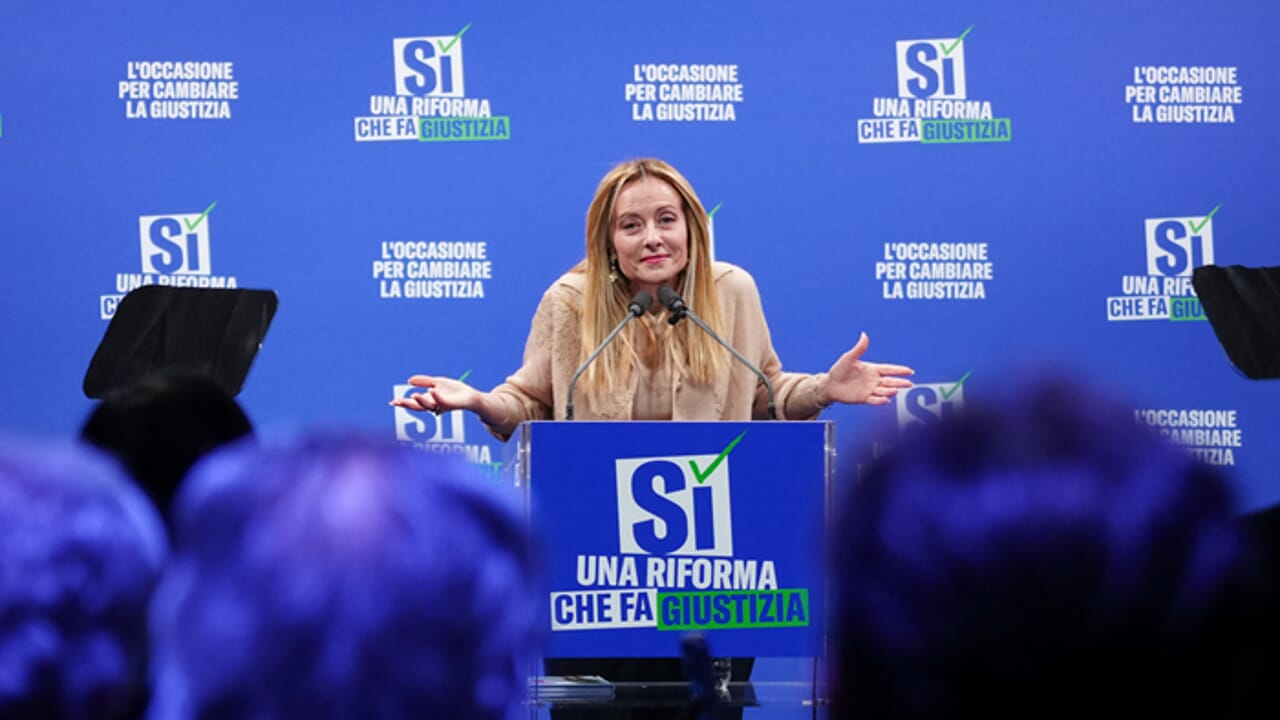
On the contrary, the heroine of the No – let’s repeat: of the No – has become Giusi Bartolozzi, head of cabinet of Minister Nordio, according to whom, if the reform passes, “we will get the judiciary away from us”, which is more or less the hidden aim of the reform that the Pd, M5s and Avs contest against the government. “With the separation of careers they want to put judges under the protection of the government,” accuses the left. Meloni and the others hold rally after rally to refute this thesis, then Bartolozzi arrives and “confesses”. A big problem, so much so that all the prime minister’s irritation towards the head of cabinet was leaked into the newspapers, defended but only with a certain embarrassment by the minister himself. Minister who, here and there, had in turn scattered the electoral campaign with other pearls, perhaps due to the fact of not being a professional politician and therefore being less shrewd in communication: “It is a reform that does not make processes faster”, “it is a reform that would also suit the Democratic Party if it were to go into government”, “Licio Gelli was right!”, “the CSM uses mafia methods”.
So what do you really vote for on Sunday and Monday? The reform explained in brief
In recent days the list has grown further, with the photo of Meloni and Nordio burned during a demonstration by Potere al Popolo and the grassroots union USB, and with an AVS deputy, Francesco Emilio Borrelli, who posted the image of Giorgia Meloni, created with artificial intelligence, on the psychiatrist’s couch while she defends the reform, as if she were a mental patient.
In short, there is something for all tastes, and it is not excluded that the temperature will rise further between now and Sunday. An event which is obviously to be regretted, but which is worth reflecting on for a moment. Because an electoral campaign more focused on merit would also have allowed citizens to get a more precise idea of how one of the vital cornerstones of every mature democracy works – or does not work: the administration of justice.
And luckily Mattarella had called everyone to order
The point is – and here we come to the explanation of why this did not happen – that it involved asking for a vote on a fairly technical question, not easily understandable for many citizens, like what happened with other constitutional referenda in the past, and that consequently, in the polls of recent weeks, people had expressed their intention not to go to the polls. The political forces thus thought that only by mobilizing their own “curve” could they win and that, to mobilize the curve, they needed to simplify the message to the point of distorting it or making it understandable more to the “gut” than to the head. So here is Bartolozzi – moreover you have a technical role and therefore should not have been on TV to talk about the reform – saying that “we will get the magistrates away from us”; Gratteri – even for him silence would have been more advisable, regardless, given the impartiality required of a magistrate – to maintain that the bad people vote Yes and the good people vote No; or the Avs deputy who calls the Prime Minister a psychiatric patient.
If we add to all this the importance of voting one year before the elections, we understand the nervousness of the political forces and the tendency of some to go off the rails. Luckily President Mattarella had called everyone to order. Who knows what would have happened if he hadn’t.
