Explaining Bossi to those who weren’t there, to those who didn’t grow up in Padania: in short, to the rest of the world
The death of the man Umberto Bossi comes late, a few geological eras later, compared to the disappearance from public life of Umberto Bossi, one of the most important Italian politicians of the last fifty years. The vicissitudes of life, the transience of the body and mind, the cynicism of many and the desires of many, the glaring errors committed by himself, when the going became too tough, precisely for him who had made a story and a shield of virile harshness, archived his role long before his life ended. He also brings with him, to his Varese tomb, the failure and ambition of a project, of an idea, of an anthropology, of a territory, when it was thought that they could become a political project. Yet, he has witnessed all this, like no one else, in contemporary Italy and for this reason it is worth telling it, now that Umberto is leaving, for those who were not there then, for those who did not understand what we are talking about, for those who rightly considered him an adversary and for those who simply do not know that politics, in a democracy, means bringing someone who knows how to speak – into Parliament, isn’t it called that for nothing? – also the language and history of those who have always been able to do it only in the tavern.
An anthropological question
There are a few things that need to be noted. Because Bossi and his League are not simply a political phenomenon, they are first of all an anthropological question. It’s not a defense, it doesn’t mean it’s right, but we need to understand the reality. Politics exists to represent interests, desires, merits, needs, psychologies. In all its versions, even the highest and noblest, the most cultured and refined, there is space for compromise with evil and the sordid. To give some examples: no one disputes that De Gasperi was a great statesman, a father of the country, someone who found the highest possible agreement with his adversary and dared, as a Christian Democrat, to challenge the Pope, the Duce and the King. But De Gasperi needed Andreotti, his Rome and his Sicily, and in the end the father of the country left the reins to his faithful squire, who was precisely called Giulio Andreotti. Today the few who remember who he was say: “Eh, have some.”
Yes, however, when Bossi started raising his little finger – middle, I would say, by intuition – in the province of Varese in the early 1980s, almost everyone was already fed up with Andreotti, who made jokes about Craxi who, on state missions in China, filled the planes with friends and relatives. Many people in Lombardy were tired of this too. They said it in dialect, telling ante litteram the story of the people who take power, of one-is-one: it makes a certain impression that, today, those who hate that story are, sometimes, those who, with other populists, more rooted in other latitudes, seek a political agreement with all their might. But in short, upstream, we are already going too far.
“Terrone” and anti-Southern racism
Bossi, we were saying. He brings to Rome a story that really has nothing to do with Rome and national institutions. Bring there, first of all, Lombardy; to be precise, the North of Lombardy; to be picky, the province of Varese. Wedged up there, a point that acts as a bridge between Milan and Switzerland, with a national, and even regional, notoriety, almost exclusively linked to the cult of basketball. Nobody, or almost nobody, knows that that handful of land that starts just north of Milan and reaches the Valganna passes is worth around 10% of the national GDP in those years. Nobody knows that the people of Varese, except for accents and cadences, speak the same dialect as the Milanese, the Como people, the Brianza people, the eastern Piedmontese, even the Pavia people. We all understood each other. “Terrone”, the main insult for southerners, was the same in all languages. Even in Brescia and Bergamo, which were actually other languages. Even throughout the Veneto. Down, even in red Emilia. Those in the south had the same name. There is no point in hiding and softening reality: the profound key to that intuition, the primordial basis, is anti-Southern racism.
The annoyance, the distance, the sense of otherness never completely metabolised, even in territories that have provided homes and jobs, and have drawn profit and added value, from the arms of the people who arrived from the South. On that basis, on that common feeling of such different peoples – the Milanese-speaking Lombards, the Bergamo-speaking Lombards, the Venetians, the Piedmontese, the Friulians, the Emilians of the north – it rains like a blessed curse, after the massacres of mafia, the season of Tangentopoli. Those who began to outline, following Gianfranco Miglio’s words, that there was a need for fiscal autonomy and federalism, found a need concretely confirmed: the mafia kills magistrates, devastates highways and cities, and in the meantime a group of Milanese magistrates line up thefts and misdeeds of the party system. Umberto Bossi has the face and voice of someone who says “I told you so”, and rubs his hands and uvula.
The dreams of the origins of Padania
At that time, between a First Republic that had been dying for many years, and a Second Republic that had never finished being born, his Lombard League federated the Venetians, who really had a national identity, elected Marco Formentini as the first mayor of Milan of the “new era”, made a lame agreement with the first Berlusconi, with whom he was an ally in the North in 1994, taking advantage of the electoral law designed by Sergio Mattarella. The newly formed Forza Italia is allied with the League in the North, and with a National Alliance that has not yet truly renounced the fascist past in the South. Bossi constantly declares himself anti-fascist, “never with the fascists”, he shouts: then he ends up in government, with the fascists, but the story does not last long, a summer, little more. Berlusconi chases him, begs him, even says, when he thinks it’s over: “Call me an idiot if I make a new political agreement with Mr. Bossi.” Who then, later, will become his most faithful ally. In between, Umberto dances alone for a while. In 1996, remaining alone with the same electoral law, he allowed a confused and twisted center-left to bring Romano Prodi to government: that coalition was a minority in the country, but thanks to a game of desistence and Bossi’s solitude, in the North, it obtained the majority. Even today, thirty years later, when Massimo D’Alema happens to him, he reminds everyone that it is thanks to him that that minority, that centre-left, governed an already right-wing Italy for five years. But history, as we know, does not give discounts, and in 2001 Bossi returned to the fold, and the center-right won the elections, finally bringing Berlusconi back to Palazzo Chigi.
The secession
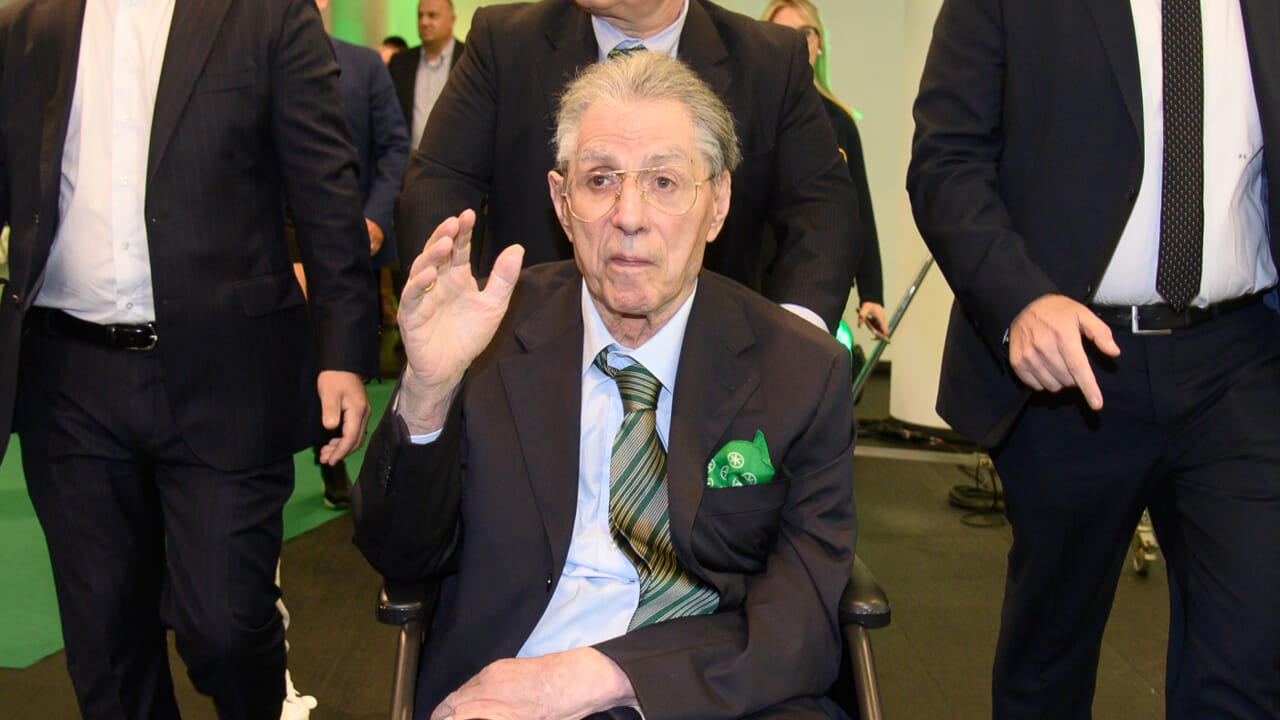
The dreams of Padania’s origins, the secession described as a natural destination for that history, are watered down by the idea of federalism. Botched reforms, flags planted here and there, regional potentates who become intrusive regional bureaucracies and who replace, at least in part, the hated Rome. And then the followers, the students, the leaders of other divisions, the profiteers, the ungrateful ones. In 2004 a stroke took away the former leader forever. He leaves Italian politics and the League with a halved, crippled leader who still walks with a cordon of human protection all around him, who arrives on the Transatlantic, in Parliament, with his acolytes and his cigar. Umberto Bossi, indeed, ends up there, twenty-two years before his death. In his laterality of body with fewer and fewer words, he saw his League become other, national, nationalist, sovereignist, friend of Putin, friend of Trump, and permanently bigger and more relevant than it has ever been with him. Who was more human, less evil: but one cannot, looking at history, exclude him from the list of those responsible for this degeneration of the politics of our times.
The hypocritical memories of false friends
Now, after all, while there are the cries of the few old true friends of every political colour, the hypocritical memories of many false friends and some adversaries, but also the foaming contempt of those who confuse militancy with inhumanity and incomprehension of reality, I like to remember Umberto Bossi as a largely imperfect human and political being, a hoarse and confused voice who represented real problems, imbalances and immaturities, but for which he neither knew nor could propose realistic, solid, and not even right. It was a stone in the glass, and also the story made flesh of the inefficiency of the political system, of its inability to represent its own time, its own territory. He was one of the last to do politics by sitting in provincial bars, listening to people, speaking their language, without algorithms, communication scientists, dependence on polls, someone you really saw at festivals not for the appearance, but for the pleasure of being there, because it was his party. A human being full of defects, limits, desires and flaws. The remote past of a time that will not return, and that we will miss.
