
The sight of a steaming pizza, the smell of bread or a freshly baked croissant and we find ourselves with the famous “mouth watering”, which is nothing else than an increase in saliva. It is the sign that the brain is starting to prepare for the arrival of the foodin a process called cephalic phase. THE’increased salivation is among these preparatory operations: saliva has the task of moistening the food, making it softer by facilitating swallowing and, above all, starts digestion thanks to enzymes that begin to “unpack” the food we eat. It is a stimulus induced by hunger, but also by an intricate relationship with memory, emotions and reward circuitry. In fact, the more we like that food or it is linked to pleasant experiences, the more the watering increases because it is not a simple stimulus-response relationship, but is activated by the integration of sight, smell, basic physiological mechanisms with memories, emotions and previous experiences.
From the plate to the brain: the meaning of mouth watering
When we see the pizza or dessert arriving at our table, the eyes register the dish, the nose picks up the scent and both these stimuli travel quickly until the sensory areas of the brain involved in visual and olfactory perception, the visual cortex and the olfactory bulb respectively. Indeed, a study published on Current Biology in 2022 discovered that food images have their own specialized area in the visual cortex and are processed independently from other images, for example a written page or a face we know.
From the sensory brain areas, these signals are sent to the hypothalamus where the hunger and satiety control centers reside physiological and which are normally activated when we need new energy. Recent evidence shows that the hypothalamic neurons that regulate hunger and satiety do not only respond to metabolic signals (I am chewing food or my stomach is full/empty), but they are quickly modulated even by the simple sight or smell of foodanticipating future ingestion and contributing to the physiological preparation associated with mouth watering.
The so-called is triggered cephalic phase: The brain tells the body that food is coming! The hunger neurons are “calmed down”. those of satiety enter the scene. Through the parasympathetic nervous system, they send signals throughout the body: for example, the production of insulin increases in the pancreas, to cope with the glucose that will arrive with the meal.
These signals also reach the mouth, stimulating the salivary glands and beyond they begin to produce more salivabut they also modify its composition, in particular increasing the concentrations of enzymes such as amylase And lipase. After all, the first phase of digestion takes place in the mouth: amylase and lipase, in fact, they partially digest polysaccharides and starches, even before they reach the stomach.
How it forms: an intricate connection between stimuli, memories and emotions
As we have just described it, one would think that just looking at any dish would make us salivate. But how many of you have your mouth watering for a plate (or even worse for the smell) of boiled broccoli? In fact, it has been shown that the activation of anticipatory salivation does not only depend on whether we are hungry or not, but also influenced by the type of food that we look at and by the experience with which we have associated it.
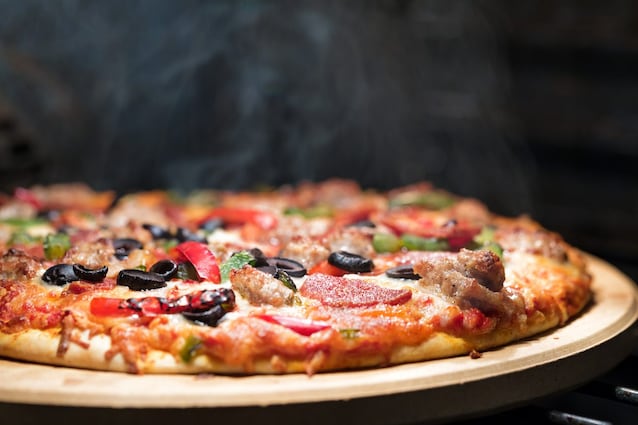
The more pleasant and good a food is, the more we salivate. The olfactory bulb and the visual cortex, in fact, are also closely interconnected with areas related to emotions, memory and the reward circuitsuch as the insula, the amygdala and the orbitofrontal cortex. Meta-analyses of neuroimaging, conducted by van der Laan and his team in 2011 show that images of food they systematically activate networks associated with reward and to the representation of taste, even in the absence of actual ingestion. Just as a recent review on functional magnetic resonance imaging confirms that when we smell or see food, most of the brain areas active when we eat are activated.
The brain simulates the experience of eating: scientific studies
A 2016 research published in the journal PloS oneproposes an interesting interpretation defined as “consumption simulation“. In short, given that there is this connection between sensory stimuli and areas of memory and emotions, seeing a food or smelling it, we associate it with a previous experience and the more pleasant this was, the more it will trigger the cephalic salivation response. Not surprisingly, if we plan to eat our favorite pizzaespecially if we are hungry, we say that we are “anticipating”: we imagine we can smell it, we can almost taste the crunchiness of the crust and the flavor of the pasta.
After all, we’ve all heard about Pavlov and the Pavlovian conditioning: stimuli previously associated with consumption can evoke autonomous salivary responses even in the absence of real hunger, demonstrating how the integration between memory, motivation, and real energy need is dynamic and adaptive.
The same research shows that even just imagine vividly chewing or tasting food activates the same main areas that are activated at the sight of food or when we eat, significantly increasing salivation compared to simple passive observation.
Sources:
Keesman, M., Aarts, H., Vermeent, S., Häfner, M., & Papies, E. K. (2016). Consumption Simulations Induce Salivation to Food Cues. PloS one. Mattes RD (2000). Nutritional implications of the cephalic-phase salivary response. Appetite. Sun X, Liu B, Yuan Y, Rong Y, Pang R and Li Q (2025) Neural and hormonal mechanisms of appetite regulation during eating. Front. Nutr. Meenakshi Khosla, N. Apurva Ratan Murty & Nancy Kanwisher (2022) “A highly selective response to food in human visual cortex revealed by hypothesis-free voxel decomposition.” Current Biology van der Laan, L. N., de Ridder, D. T. D., Viergever, M. A., & Smeets, P. A. M. (2011). The first taste is always with the eyes: A meta-analysis on the neural correlates of processing visual food cues. NeuroImage. Chen, Y., & Knight, Z. A. (2016). Making sense of the sensory regulation of hunger neurons. BioEssays Chen, J., Papies, E. K., & Barsalou, L. W. (2016). A core eating network and its modulations underlie diverse eating phenomena. Brain and cognition
