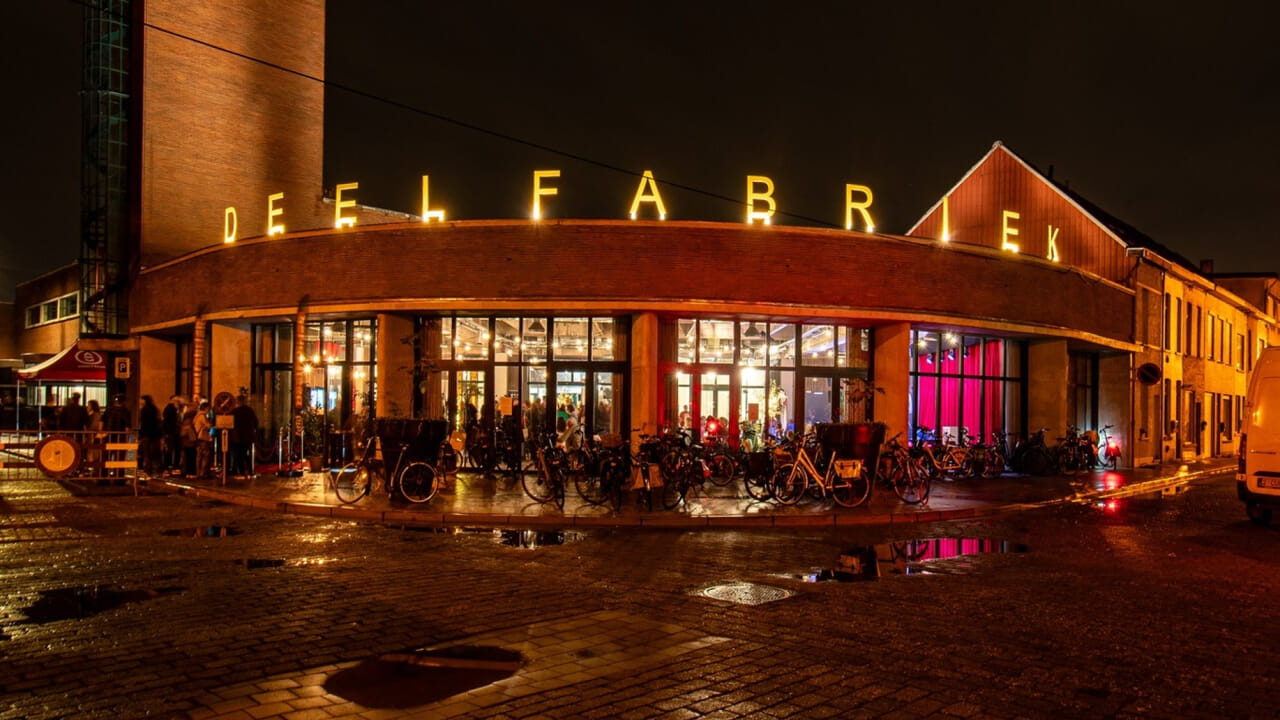
In the heart of Kortrijk, Belgium, an imposing tower rises above the rooftops of a historically working-class neighborhood. Once the headquarters of the fire brigade, today this building no longer houses fire engines and sirens, but a social experiment that is redefining the concept of urban economy in the Belgian city.
The Sharing Factory project (Deelfabriek in Flemish) is not just a multifunctional center, but a place where the fight against poverty is intertwined with sustainability. Here the industrial architecture has been redesigned to meet the needs of a society that seeks concrete alternatives to mass consumption and to put citizens, of all social backgrounds, back at the center of the city.
“There is a wide mix of people, both those with low incomes and those who come for reasons of environmental sustainability and otherwise. This is the strong point of the project, because it is open to everyone,” Ruben Bruyneel, one of the managers of Sharing Factory, explains to Europa Today.
From listening to citizens to the birth of the project
The project was not born from top-down planning, but from the need to provide a venue for spontaneous initiatives in the city’s neighborhoods. As Lisa De Meyer, coordinator of Sharing Factory activities, says, “it all started about eight years ago when we received several requests” from citizens who wanted to start social projects, but did not have adequate spaces.
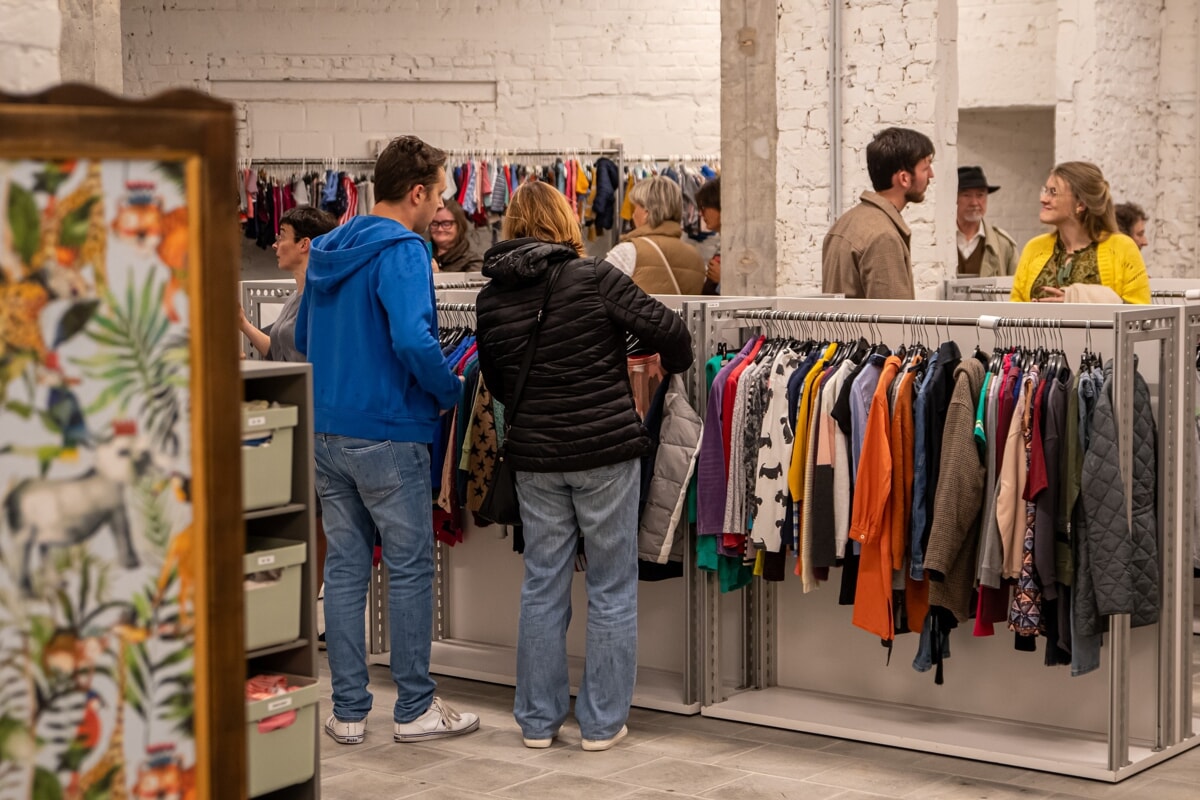
“It was then that we started the initiative. We saw many opportunities and wanted to give them the chance to grow”, continues De Meyer, recalling how flexibility was “the key to the initial success”. At that moment in Kortrijk it was decided to bet on human capital, starting with five pilot projects focused on the exchange of clothes and the rental of work tools.
The social impact was evident from the first months. The Sharing Factory coordinator recalls that “we saw many people arriving in financial difficulty and they immediately understood that they could make a difference”. This intuition gave rise to the creation of the permanent social laboratory.
Because “sharing goods and knowledge is not only an ecological choice, but can create a network of economic and social support” for anyone who feels the need.
Transforming buildings from consumers to producers of water
European support
The definitive leap in quality occurred in 2023 with the redevelopment and transfer to the former Rijkswachtstraat barracks. The operation – made possible thanks to European funding through cohesion policy – made it possible to recover a historic building while preserving its identity, but providing it with modern and multifunctional spaces.
Bruyneel strongly underlines that it was the European funds that made sure that the idea could be taken to a higher level: “Now we have over 20 projects and 20 thousand visitors a year.” The redevelopment of the large building was a sort of driving force for the regeneration of the entire surrounding area.
The barracks which now houses the Sharing Factory, being close to the train station between two vulnerable neighbourhoods, is in a strategic position and, in parallel with its renovation, many nearby streets and buildings have also been renovated.
“The entire neighborhood is evolving and it is more beautiful to live there”, confirms Bruyneel, speaking of how the new circular economy hub has soon become “the pivot of an urban planning that does not forget the social dimension”.
Sustainability and inclusiveness
Sharing Factory’s main innovation lies in its ability to neutralize the stigma of poverty. Instead of creating a center dedicated exclusively to those in economic difficulty, the structure attracts a heterogeneous audience: environmental activists, young designers, pensioners, families of different incomes and even simply curious people.
The center is open to all and allows different worlds to meet in a stimulating context. “Sustainability is everywhere and now we see more and more people coming for this reason,” notes Bruyneel. The services offered respond to practical and daily needs.
Among the most active projects is Babytheek, a children’s library where parents can borrow bulky and expensive equipment that is only needed for short periods. Then there is Instrumentheek, which provides professional drills and machinery for do-it-yourself.
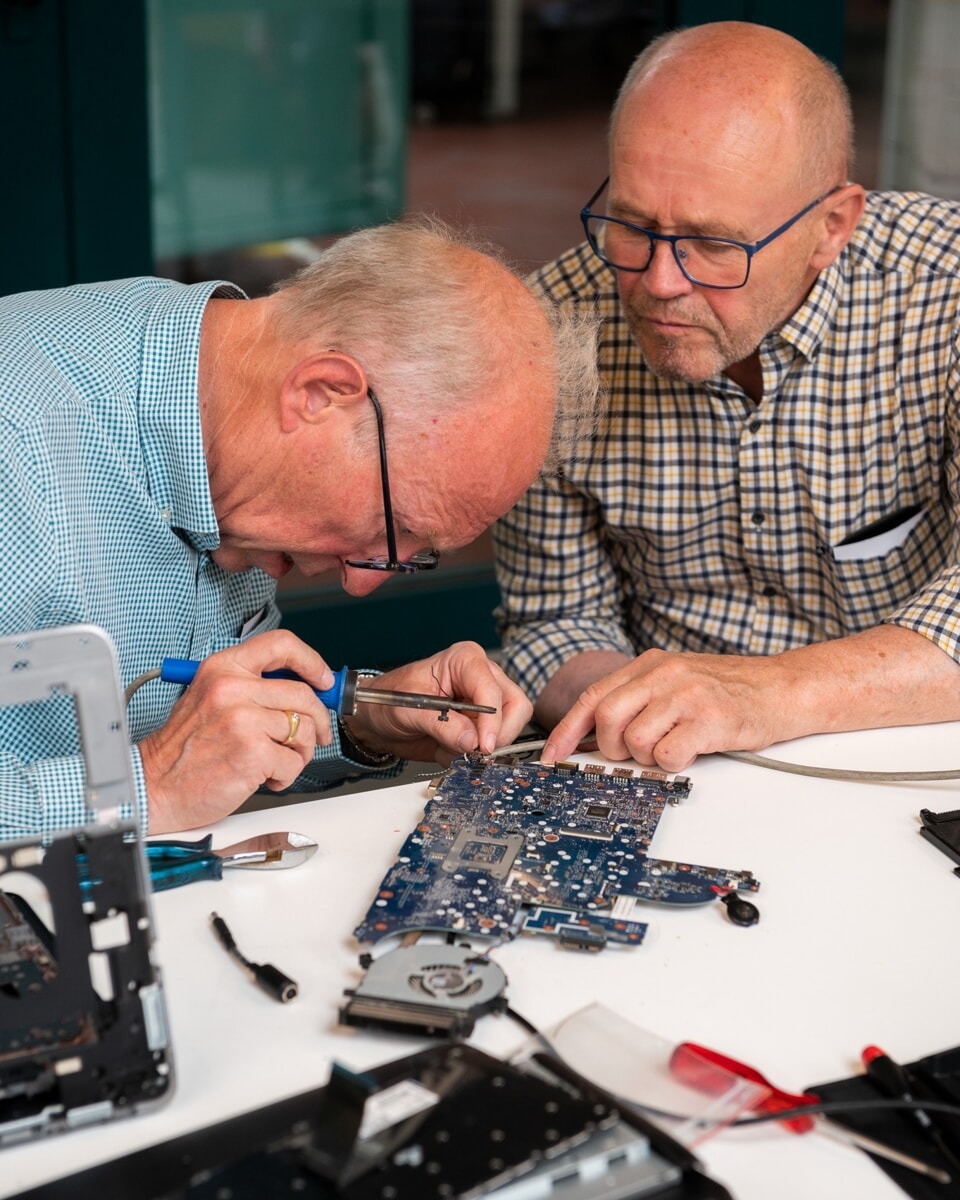
For activity coordinator De Meyer, the value of the project lies in its immediacy: “Whoever has something at home that they no longer use can share, reuse or repair it. A small gesture can make a big difference.” In this way, the circular economy becomes a practice accessible to anyone, regardless of income.
The Sharing Factory engine is made up of a network of around a hundred volunteers, who ensure the functioning of the various laboratories, the cycle workshop and the digital assistance desk. However, managing a structure of this size based on volunteering is a complex challenge.
Bruyneel, who supervises the entire operational machinery of Sharing Factory, admits that “working with volunteers requires a lot of time and effort to train them on how to relate to clients and understand what poverty is”. Logistics management, starting from opening hours, is also affected by this approach.
Despite the desire to stay open as much as possible, “it’s always a delicate balance between offering a good quality service and respecting the fact that they are not professionals on a salary.”
At the same time, this non-bureaucratic nature allows the structure to remain flexible and close to the people, preventing the project from turning into a cold administrative institution and keeping alive the identity of a sort of covered neighborhood square full of activity.
A model for European cities
The case of Kortrijk is redefining the concept of sustainable city. As the two project managers say, “at the beginning many residents perceived Sharing Factory only as an answer to poverty”, but the hard work to change this perception paid off.
“We’ve really tried to change things and make it a project for everyone. We have a whole new clientele, who are very welcome because they donate clothes and all kinds of things that we can reuse.”
This influx guarantees a continuous recirculation of goods that are taken from the landfill and reintroduced into the local circuit, available to everyone but above all to those who need them most.
In this context, sustainability does not pass through impositions, but through tangible advantages. Those who frequent the center do so because it is “cheap, practical and rewarding”. De Meyer says that the sense of community is the key element: “It all started with people and their passion, and we are here to help them move forward.”
This climate has made the building a place where everyone can find their own dimension of usefulness, allowing people to “really be what they want”. Sharing Factory is a highly transferable and scalable model also in other urban contexts.
Thanks to its ability to bring environmental and social issues together under the same roof, the project is attracting the attention of many European administrations, as confirmed by Bruyneel: “Many representatives from other cities come to see what we are doing and copy some elements of the project to create the best solution for their reality”.
The success of the initiative demonstrates that the ecological transition can be an opportunity for social support, if managed with listening and participation. Furthermore, you don’t necessarily need a lot of starting capital to get started. “We started with just a few people who had an idea and simply asked for someone to support them,” De Meyer and Bruyneel point out.
Their invitation to those who want to replicate their experience in other European cities is to “listen to what the people living in the neighborhood want and need, and give them just a little push to get started”. Because, as Sharing Factory in Kortrijk demonstrates, by sharing resources, cities not only save money, but build a more solid social fabric.
