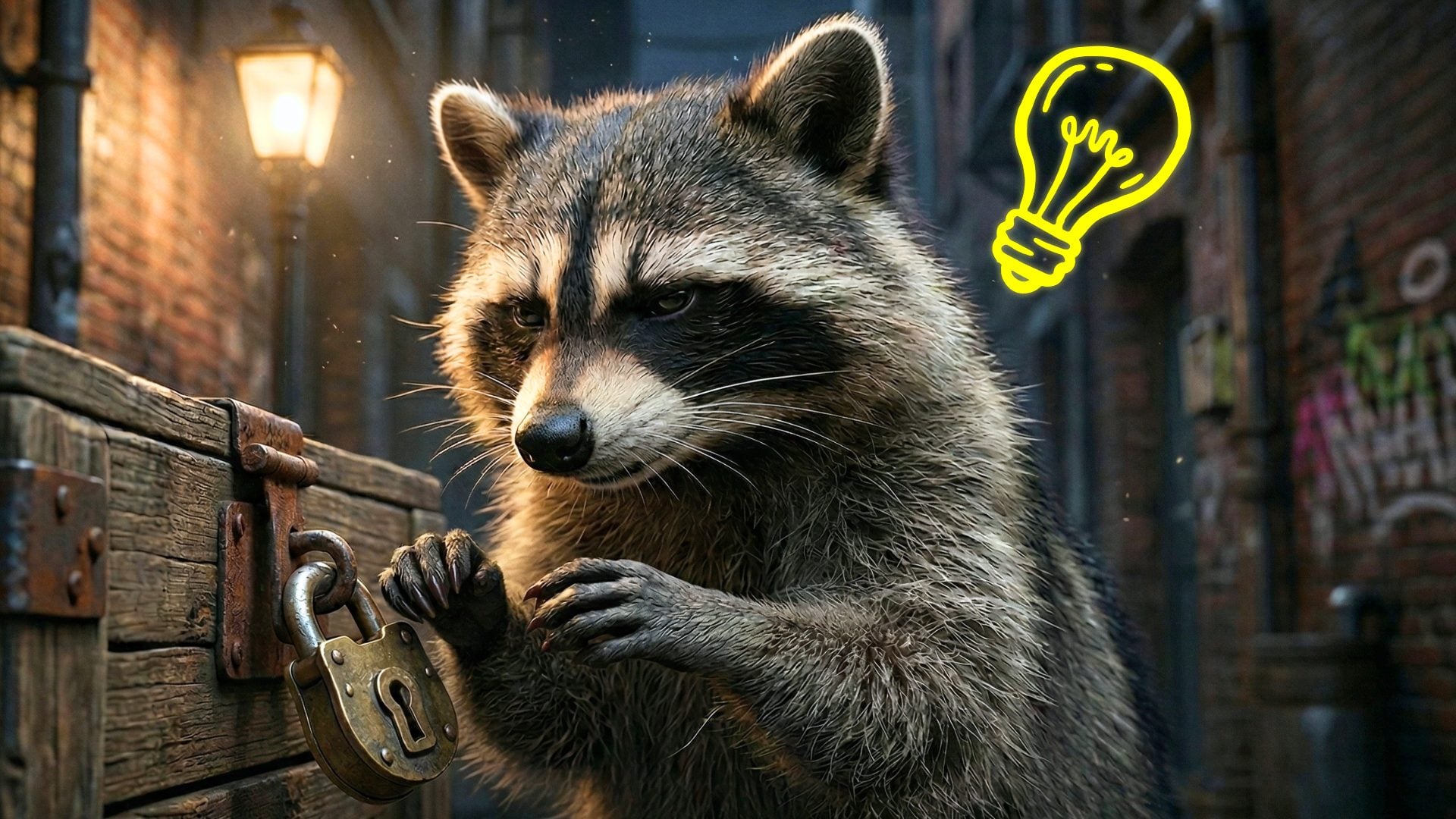
Whether they’re rummaging through a garbage can or playing Rocket in Guardians of the Galaxy, raccoons (Procyon lotor) have always been a fixture in North American folklore. Behind their funny and opportunistic appearance, however, these mammals hide surprising cognitive abilities. A recent study published in the journal Animal Behavior by the researchers of University of British Columbia demonstrated how raccoons not only solve mechanical puzzles, but are capable of evaluate the difficulty of the task and adapt yours accordingly strategyexactly as we humans would do when faced with a risky choice.
Characteristics, habitat and character: who is the raccoon
The raccoon (Procyon lotor) is a medium-sized omnivorous mammal belonging to the family of Procyonidsnative to North America. Reaches a weight between 4 and 10/12 kg and a length of 60-90cm. It is unmistakable for the black mask around the eyes, reminiscent of a bandit, and for the black rings on the tail alternating with white. The coat is gray with brown shades, the ears are rounded and covered with light fur.
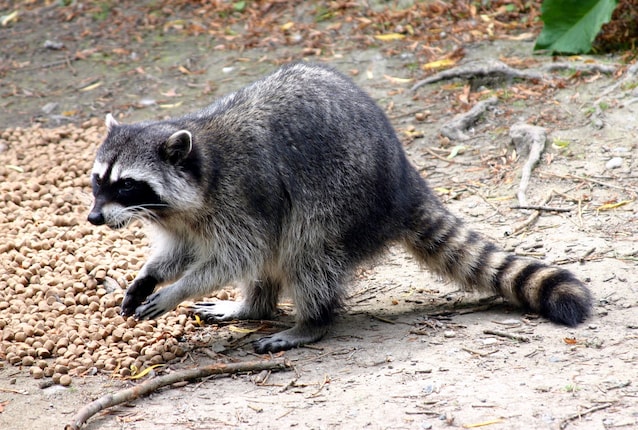
It’s an animal predominantly night lifewhich lives in family units and chooses tree holes or hollow trunks as its den – and in urban areas also attics. Its diet is varied and includes fish and shrimp caught directly in the water, small rodents, eggs, fruit, vegetables, and the leftovers that it manages to recover by rummaging in garbage bins. This dietary adaptability is one of the secrets of its ecological success. The most relevant anatomical feature are the front legsrich in sensory nerve endings, which they use to manipulate, inspect and open objects.
Having arrived in Europe in the first half of the 20th century through importation for the fur industry or released to enrich the local fauna to be hunted, raccoons have adapted well to the new continent. In Germany, in particular, their exceptional proliferation has turned into a serious problem: today there are estimated to be over 2 million specimens in the country.
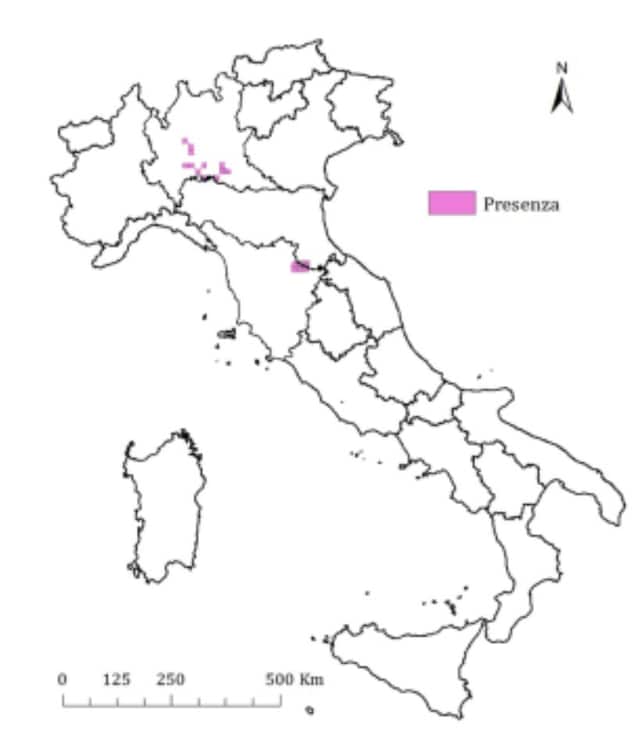
In Italywhere the raccoon is a invasive species included in the European list of species of relevance for negative effects on the environment and biodiversity pursuant to Regulation 1143/2014, the presence is mainly concentrated in Lombardy (along the Adda river) and inTuscan-Emilian Apenninesincluding some reproductive nuclei reported in the Casentino Forests. Until 2006, the raccoon was freely marketable in Italy as a pet or fur animal. After the ban, many specimens were abandoned and, given their exceptional adaptive capacity, they reproduced in nature. They are to be considered dangerous? Not directly to humans, unless they are cornered, but they pose a real threat to the native biodiversity given that they prey on invertebrates, amphibians, fish, bird eggs and small mammals and are disease vectors such as rabies and leptospirosis.
Not just smart, skill in solving puzzles
Several studies have documented that raccoons are capable of opening different types of latches and to generalize a technique learned on one type of mechanism to different mechanisms. As reported by a study published in Animal Behavior in 2024, raccoons tested in Canadian wildlife parks with multiple-solution puzzle boxes showed a behavioral flexibility remarkable. The specimens did not always open the mechanisms in the same sequence, but varied the approach individually. The same study highlighted that raccoons with less experience were able to learn thanks to the introduction of simpler mechanisms that acted as a “springboard” to tackle more difficult ones.
Another 2022 study, published in Journal of Experimental Biologyput these animals to the test with two buttons inside a booth, providing a food reward only when a specific switch is pressed. When the researchers treacherously reversed the working key to test their cognitive flexibility, the raccoons understood the change, revealing that the specimens with a more docile temperament were the fastest to adapt and solve the puzzle.
Raccoon intelligence: strategy and problem solving
The new study by Hannah Griebling and Sarah Benson-Amram of the University of British Columbia, published on Animal Behavior in February 2026, brought new information about raccoon learning. The researchers built a multiple access puzzle box with nine entry points, divided into three difficulty levels (easy, medium and hard), with mechanisms such as latches, sliding doors and knobs. In each 20 minute session, it was hidden in the box a single marshmallow.
What surprised the researchers themselves was that the raccoons continued to open up new mechanisms too after already eating the marshmallowwithout receiving any other food reward. This behavior, which researchers define “information foraging”indicates one intrinsic motivation separate from the hunger for which raccoons explore for the pleasure of exploring, or perhaps, to gain useful knowledge in the future.
All this also followed a adaptive strategy. When the mechanisms were easy, the raccoons explored freely, trying multiple openings and varying the order. As the difficulty increased, they tended to converge on one reliable solution already known, while continuing to explore even at the most difficult level.
These cognitive mechanisms in a wild mammal like the raccoon open up questions about how and why this ability evolved. Although the raccoons tested in this specific study were in captivity, the researchers point out that these data, combined with observations from previous research, suggest that these abilities are valid across the species, including free-ranging specimens in the wild. The most plausible answer, according to the researchers, lies inenvironment in which they live. Adapted to living in urban places, being able to reach places and food inaccessible to other species represents a significant evolutionary advantage. Cities seem to reward their cognitive flexibility, their opportunism and their ability to problem solving.
Sources
University of British Columbia Hannah J. Griebling, Shylo R. Johnson, Sarah Benson-Amram, Raccoons optimally forage for information: exploration–exploitation trade-offs in innovation, Animal Behavior, Volume 234, 2026, Ministry of the Environment Parco Foreste Casentinesi
Stope MB. The Raccoon (Procyon lotor) as a Neozoon in Europe. Animals (Basel). 2023 Jan 13
Stanton LA, Cooley-Ackermann C, Davis EC, Fanelli RE, Benson-Amram S. Wild raccoons demonstrate flexibility and individuality in innovative problem-solving. Proc Biol Sci. 2024 Aug;291(2027):20240911. doi: 10.1098/rspb.2024.0911. Epub 2024 Jul 24.
Lauren A. Stanton, Eli S. Bridge, Joost Huizinga, Sarah Benson-Amram; Environmental, individual and social traits of free-ranging raccoons influence performance in cognitive testing. J Exp Biol 15 September 2022
