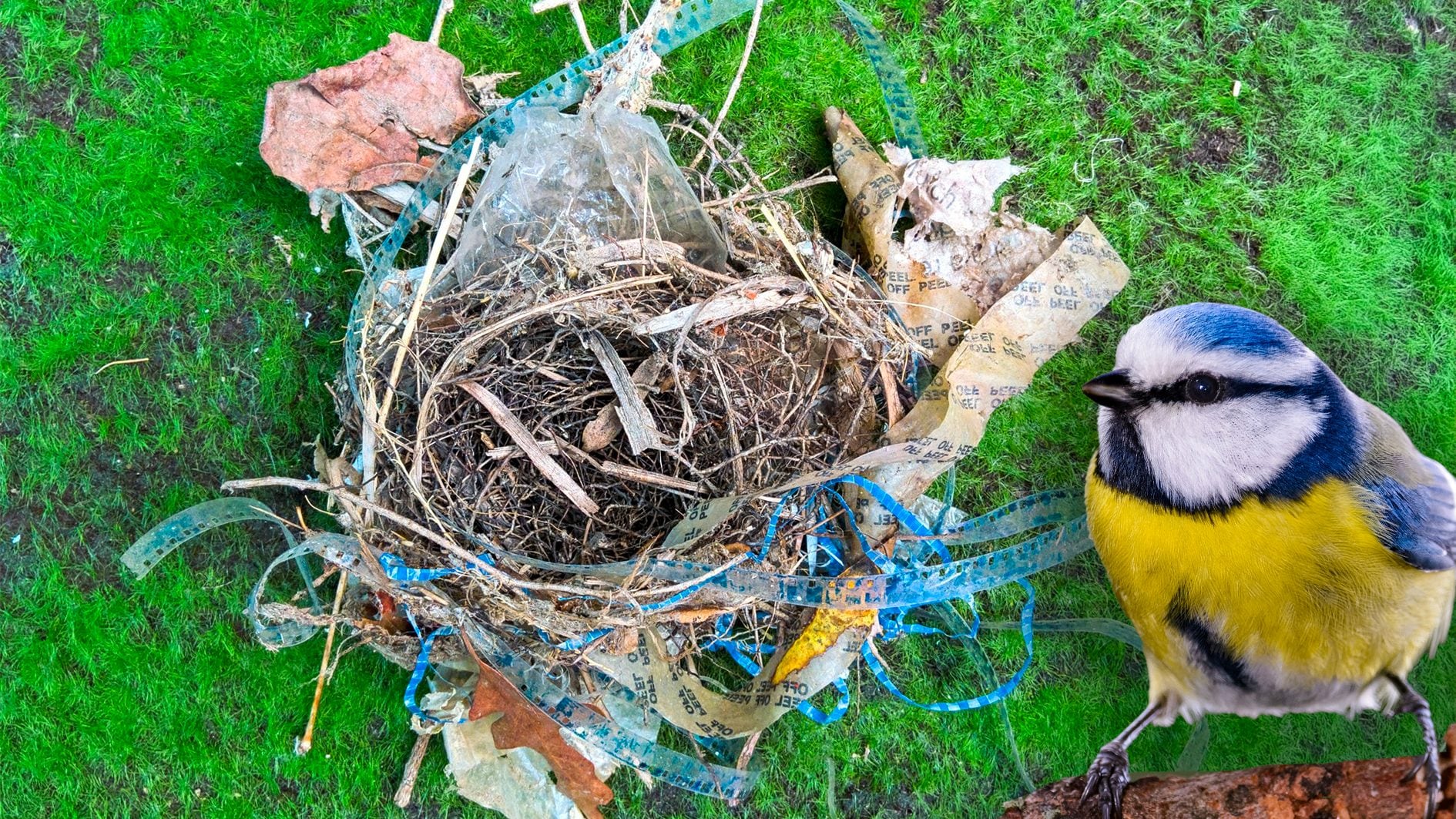
The blue tits (Cyanistes caeruleus), passerine birds belonging to the Paridae family that live in urban environments, have acquired the habit of add cigarette butts to their nest or even to build the nest in public ashtrays, to exploit the repellent effect of nicotine against parasites. Talking about it is a study conducted by a team of zoologists from the University of Lodz, Poland, recently published in the journal Animal Behavior. The researchers wanted to verify the effects of nicotine both on the health conditions of the nestlings (the chickadees of great tits), and on the presence of parasitesthrough comparison with control nests. The results showed that chicks raised in nests in which butts were present had an average of better physiological conditions of those raised in control nests without cigarette butts. It should be emphasized, however, that the study focused only on the early developmental stage of the nestlings and long-term effects have not been verified. Cigarette butts are still waste very harmful to the environment: persist for over 10 years and release microplastics and toxic substances.
How the study was conducted
In the area of the city of Lodz, on two sample sites, an urban park and a broad-leaved forest approximately 10 km apart, nest boxes (200 in the park and 300 in the woods) to encourage the nesting of blue tits. During the breeding season, 33 nests containing broods (eggs ready to hatch) were found in the boxes, which were subjected to three types of treatment: to some (control group) 2 intact and never lit cigarettes were added, to others 2 extinguished butts and still others were completely replaced with artificial sterile nests. At regular intervals, the researchers examined all the nestlings and measured some blood parameters (hemoglobin, glucose and hematocrit) and the length of the wings to evaluate the state of health and nutrition.
It was found that nests with 2 butts had fewer parasites and healthier pullets compared to control nests, but only the artificial nests were completely sterile free of parasites and the chicks that grew up there were the healthiest and fastest growing. The effect of nicotine residues therefore has a partial repellent and antiparasitic effectbut it does not guarantee the total absence of parasites. Furthermore, the long-term effects of this waste on birds are unknown.
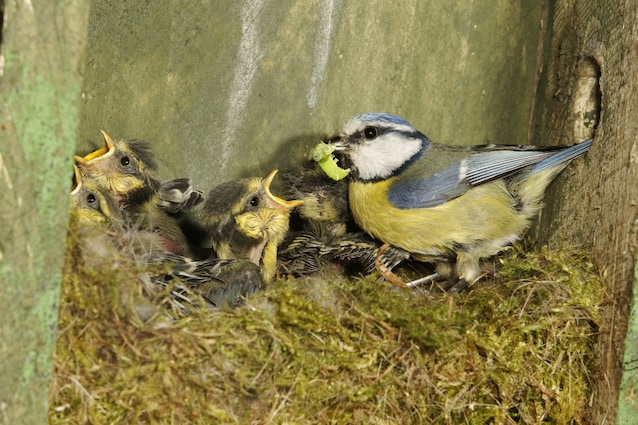
How the blue tit’s nest is made and how it adapts to urban environments
Birds’ nests typically have a protective outer covering made of durable material and a soft inner portion that contributes to thermoregulation of eggs and nestlings. Blue tits in a forest environment line the nest internally with moss and grass and add sprigs of aromatic plants to keep parasites away. Ticks, fleas, fly larvae and mites, in fact, proliferate due to the hot-humid conditions of the internal lining, infest the nest and threaten the survival of the chicks.
Blue tits and other birds have now adapted to living in urban parks and gardens and are also changing building materials for their nests. Often wool or fur replaces moss and grass. Moreover, not only in the blue tit, but also the Mexican bullfinch (Carpodacus mexicanus) uses cellulose from cigarette butts as a nest lining to reduce the number of ectoparasites. More and more often we observe nests made using plastics and synthetic materials from waste and this habit is often related to the age of the parents. For example, a study on black kites (Milvus migrans) demonstrated that the specimens older they incorporated a greater quantity of plastic material in the nests up to the age of 10-12 years, the period of maximum fertility, and then drastically reduce its use at an older age.
