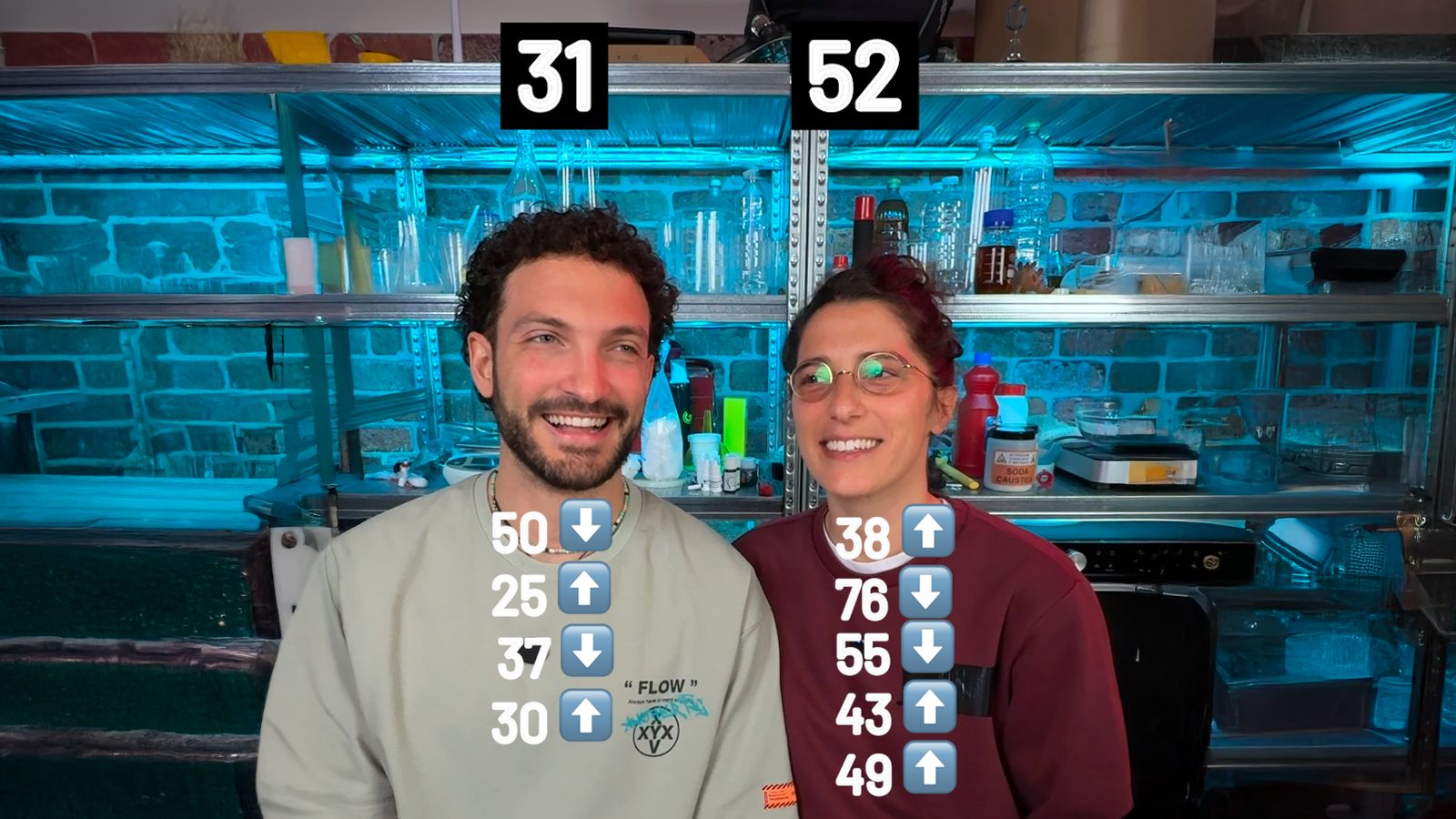
There is a method to win at number game What’s driving the web crazy? Before we see it, let’s try to understand how the game works. The two “competitors” think of a number between 0 and 100without telling the other, and they have to try to guess their opponent’s number. As? Let’s understand this with an example.
Let’s imagine that player number 1 chose the number 31, while the second player chose the number 52. At this point:
- The first player try to guess the number of the second player (which is 52) by saying a random number between 0 and 100, for example 73;
- at this point the second player must say whether the number 73 is the one he thought of, or whether his number is greater or less than 73. In our case, 73 is not the correct number, but rather it is greater than the right number (52), so the second player will say “lower”;
- It’s up to the second player, who will try to guess the number of the first (31), who will have to answer “Right”, “taller” or “lower” depending on the number said by the opponent;
- at this point, when it’s the first player’s turn again, he knows that this time to guess he will have to say a number between 0 and 73, given that in the first round his opponent answered “lower”;
- the game continues like this, one shift after anotheruntil one of the two players has guessed the other’s number.
The fate of this game seems completely random – and it is! – but there is a method to allow us to never stray too far from the solution.
If we try to guess completely random, by throwing numbers without thinking, we could either get very close to the answer or go very far! For example, in our case above, saying the number 73 slightly reduces the interval in which the solution is found – which is 31. If instead the number to guess had been 80, the first player would have done “bingo”, because it would have greatly reduced the interval of possible solutions.
However, there is a method in which we can be sure of getting closer and closer to our solution. It is the so-called bisection method and it works like this: we always divide the interval in half. To be clear, if the interval of possible solutions is from 0 to 100, we say 50 as the first number. If the opponent tells us that his number is higher than 50, we divide the interval 50-100 in half, therefore saying 75, if instead the opponent tells us that the result is lower than 50, we divide the interval 0-50 in half, saying 25.
And so on: we continue by gradually dividing the range of possible solutions, until we find the correct one. This method is certainly not the fastest – in short, it is not the most efficient – but it is certainly an extremely effective method! In fact, it allows us to definitely find our opponent’s number in a maximum of 7 moves.
Try it to believe it!
