
“Hack” your own mind through the body it is one of the most fascinating, and debated, promises of modern psychology. From the famous theory of “power pose” (power postures) up to the clinical evidence on asanasyoga positions, science has long been wondering about a fundamental question: assuming a certain physical posture can really alter our self-esteem? While on the one hand the sensational physiological effects initially attributed to power poses (such as the alteration of testosterone and cortisol) have been widely proven wrong due to a replicability crisis, on the other hand studies confirm a profound one psychological reality: the way we inhabit space influences in measurable way our subjective sense of power and our self-evaluation.
What does “power pose” mean and the influence of power posture
The idea that posture influences the mind every now and then it seems to become a convincing idea again, because it is easy to put into practice and, apparently, with immediate benefits. The concept is based on a simple distinction: le high power postures are the “expansive” onesthose that take up a lot of space and stand out in height (straight back, high chin) and in width (wide arms with hands on hips), while those with low power are the “contracted” onescharacterized by closure, shoulders curved forward, low gaze. Some studies from the early 2010s suggested that expansive postures could even change hormones, regulating testosterone and cortisol.
Subsequent research, such as a 2020 review published in the journal Social and Personality Psychology Compass or the study by Dr. Sarah Nielsen, has resized these statements a lot, making it clear that the power pose they do not alter our biology significantly. Yet, scientists have noticed a non-negligible detail about our psyche: power pose changewith variable but present effects, the way we perceive ourselves. In fact, several experiments confirm that these postures temporarily increase subjective feelings of control and self-esteem.
Correct poses can strengthen self-esteem
How is it possible that a body position alters ours perceived value? The German researcher Robert Körner, in his 2019 article, talks about self-perception theory. We humans often we infer our emotions observing our own behavior. If we physically put ourselves in a position that the mind associates with strength, the brain deduces that there are good reasons to be confident. Some experiments cited by Körner have shown that taking expansive postures for just two minutes increases the self-esteem of the momentespecially that linked to physical appearance and social relationships.

However, the effect is not foolproof and some research has found no increase in self-esteem. The reason for this variability is linked to contexts and at attitudes personal: dominance, in some social contexts, can make us and others feel uncomfortable (the pose with the feet on the desk, although conveying confidence, is experienced as intimidating or arrogant), and people less accustomed to leadership could increase their perception of discomfort when they take a position that they never adopt.
The alternative: energy, breathing space and prestige
If the aggressiveness of dominant poses isn’t for us, science delivers a valid alternative. Scholars distinguish between “dominance” poses (which take up a lot of space) and “prestige” posturessuch as standing holding only the straight back. The latter do not serve to intimidate others, but to convey a message sense of competenceincreasing self-confidence without resulting in arrogance.
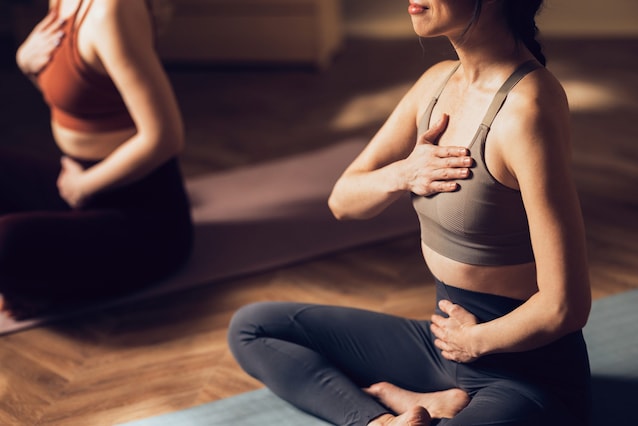
An illuminating example comes from yogaas reported in a recent article. The positions that involve opening the chest and lengthening the spine are incredible effective for self-esteem. Their secret is physiological: raising the chest promotes deep breathing which stimulates the vagus nerve. This biological reaction increases the body’s energy resources, making us feel more vital. In this case, the secret that leads to a tangible increase in self-esteem lies precisely in physiology.
Sources
Körner et al., 2019, Do expansive or contractive body postures affect feelings of self-worth? High power poses impact state self-esteem de Zavala et al., 2017, Yoga Poses Increase Subjective Energy and State Self-Esteem in Comparison to ‘Power Poses’ Nielsen, 2017, Posture and Social Problem Solving, Self-Esteem, and Optimism Körner et al., 2020, Powerful and confident children through expansive body postures? A preregistered study of fourth graders Körner & Schütz, 2020, Dominance or prestige: A review of the effects of power poses and other body postures Jackson et al., 2017, Does that pose become you? Testing the effect of body postures on self-concept Lin & Broadbent, 2023, Understanding Embodied Effects of Posture: A Qualitative Study Carney, D. R., Cuddy, A. J., & Yap, A. J. (2010). Power posing: brief nonverbal displays affect neuroendocrine levels and risk tolerance. Psychological science
