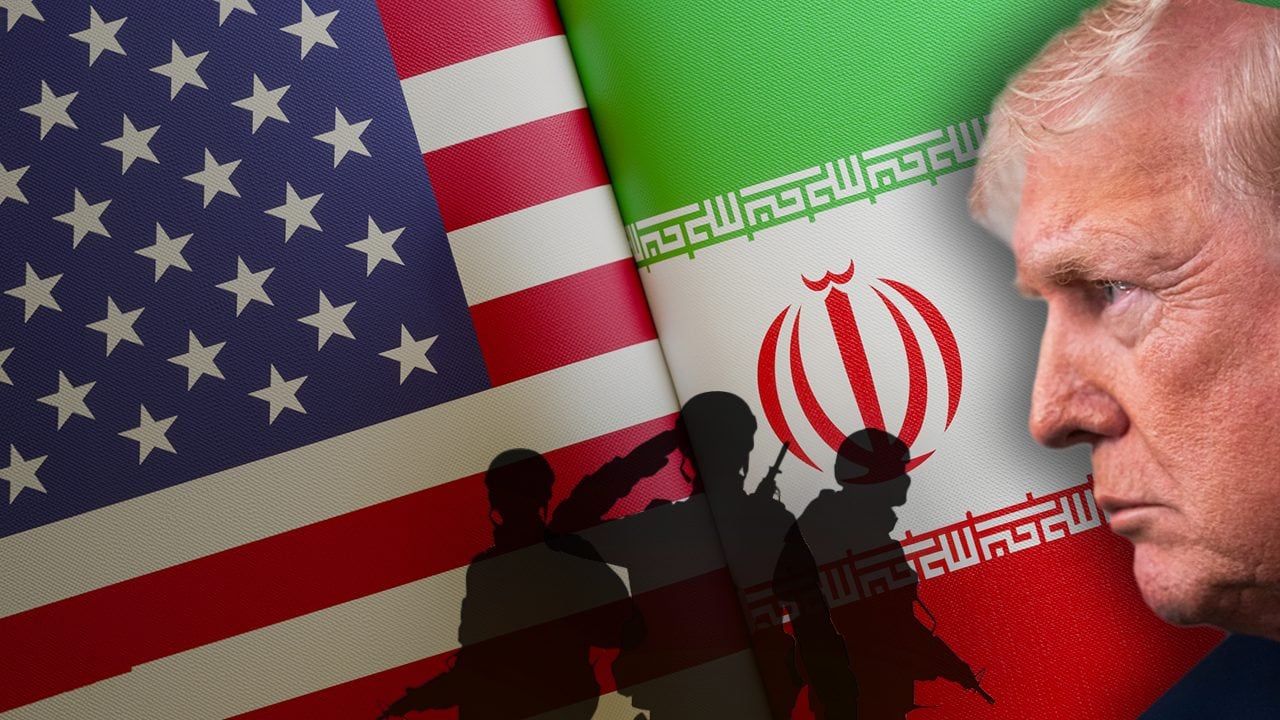
For months the diplomatic path between Washington and Tehran has not produced concrete results. The conditions imposed by the United States on Iran are very restrictive, while Iran even denies having had direct negotiations with the Americans. The blockade of the Strait of Hormuz persists, putting the global energy supply chain at risk. For this reason the American president Donald Trump is threatening ground military operations in Iran. There is no talk of invading the entire country but of operations aimed at specific objectives, including Kharg Islandone of Iran’s oil and economic nerve centers. But a US invasion on Iranian soil would not be easy to manage from a strategic point of view. Let’s see together the role of Kharg Island ei 7 main problems who could meet the USA by deciding to attack Iran by land.
The problems of a US invasion of Iran
What is Kharg Island and why is it strategic for Iran
Kharg Island is a small island in the Persian Gulf (just over 22 square kilometers) about 25 miles off the Iranian coast. The vast majority of Iran’s crude oil exports to global markets pass through this island: according to some estimates, even80-90%. The reason is technical: the seabed around the island is deep enough to allow large oil tankers to dock directly, while much of the Iranian coast of the Persian Gulf does not offer this possibility. Kharg was designed in the 1960s and 1970s specifically to maximize the speed and volume of crude oil exports.
But Kharg Island it’s not the only way out for Iranian oil. During the Iran-Iraq War of the 1980s, the Iraqis repeatedly bombed Kharg trying to put it out of action, but failed. Following this, Iran built an alternative pipeline that runs along the entire southern coast of the country up to the port of Jaskin the extreme south-east of the country, beyond the Strait of Hormuz, therefore outside the crisis area. This means that occupying or bombing Kharg would not turn off the tap of Iranian oil: it would only reduce it.
It is also true that controlling Kharg means increasing economic pressure on the Iranian regime, a circumstance that would favor the acceleration of negotiations. But would it work in practice? We have identified the problems. And there are at least seven.
Problem #1: The geography of Iran
Iran’s geography makes it a sort of “natural fortress” that is difficult to invade. The chain of Zagros it runs through the country from north-west to south-east for over 1,500 km, with crests that exceed 3,000 metres. To the north there is theAlborzwhich closes the side on the Caspian Sea with peaks that reach 5000 meters. Between these two chains lie arid plateaus and two of the most hostile deserts on the planet: the Dasht-e Kavir and the Dasht-e Lut.
The Pasdaran have built their entire military strategy on this conformation: networks of underground tunnels, underground missile sites, distributed depots that are difficult to locate from above. An in-depth land operation it would require enormous resources just to secure supply lines, before even engaging any targets.
There is no shortage of precedents. In 1980, for example, Saddam Hussein attacked southwestern Iran aiming for rapid penetration of the territory. The result was an 8-year trench war, with enormous losses on both sides and no strategic objectives achieved.
Problem #2: Maintain occupation of the island
Kharg Island is located in the north of the Persian Gulf, a 480 km kilometers from the Strait of Hormuz. To reach it by sea there are two radically different options. The first is to force the Strait and go north up the Gulf: it is the direct route, but it means operating under potential fire the entire way, in a corridor controlled by the Iranian coasts. The second is to use the Arabian Peninsula as a rear base, avoiding Hormuz altogether: logistically safer, but it would require the explicit consent of Saudi Arabia or Kuwait, countries that are trying very carefully to stay out of the conflict.
And even when we reached our destination, the problem isn’t taking the island: it’s keeping it. Kharg is 25 km from the Iranian coast, well within the range of missiles, drones and coastal artillery. A contingent of three thousand men would find itself in an exposed position, surrounded by mined waters, reachable 24 hours a day without the possibility of hiding or maneuvering.
Problem #3: The economic and human costs of an overland operation
Iran uses for attacks Shahed drones costing tens of thousands of dollars. To shoot them down, the United States uses interceptors that can cost hundreds of thousands of dollars each. This means that shooting down an Iranian drone costs much more than Iran spends launching it, not to mention that Iran can produce drones much faster than the United States can produce interceptors.
From this perspective, ground troops could serve to shift the economic balance, absorbing some of the attrition that would otherwise consume expensive weapons systems. If on the one hand this logic reduces the technological cost of war, on the other it the human and political cost increases significantlywhich historically – especially in the event of a prolonged conflict – is much more difficult to sustain.
Issue #4: Iranian Domestic Politics
A physical occupation of even a small territory like Kharg Island would provide the Tehran government with a very powerful internal narrative: foreign invasion, theft of national resources, defense of the homeland. It’s exactly the kind of message that historically compacts the populations around the governments in officeeven those who enjoy little consensus in peacetime. An operation of this type, even if designed to weaken the regime, could therefore paradoxically strengthen it in terms of internal legitimacy. It is one of the risks that analysts cite most frequently.
Problem #5: The historical precedents: Afghanistan and Iraq
The September 11 attacks led to the beginning of the war in Afghanistanwhich lasted for 20 years (until 2021) at the end of which the Taliban returned to government.
Also the objective ofinvasion of Iraq In the 2003 it was clear: eliminate weapons of mass destruction and remove Saddam Hussein’s regime. Baghdad fell in three weeks, but the conflict lasted 8 years, costing nearly 4,600 American lives and over $2 trillion. The country emerged from the operation with Shiite militias structurally stronger than the central government and a significantly larger Iranian sphere of influence in the region than at the starting point. The strategic result was, in many ways, the opposite of what was sought.
The two cases are different from Iran in context and scale. But they both illustrate the same dynamic, which military analysts know well: the difference between achieving an initial military objective and manage long-term political and military consequences.
Issue #6: Surveillance of Iran’s nuclear program
Since the conflict began, theInternational Atomic Energy Agency it no longer has access to Iranian nuclear facilities. Before the war, Iran maintained a position of calculated ambiguity: its nuclear program was advanced enough to be valid as a negotiating lever, but contained enough not to justify immediate intervention by the international community. That logic changed with the conflict. A country like Iran, at open war and which perceives a concrete threat to its survival, has very different incentives in evaluating its nuclear program compared to what could happen in peacetime.
With inspections suspended and conflict ongoing, the trajectory of Iran’s nuclear program has become less verifiable and potentially less containable. A military escalation it could accelerate exactly what you wanted to avoid.
Problem #7: The assist to China
American involvement in the Middle East takes away resources from the US to compete in the Pacific with China, a circumstance that the US rival can take advantage of. Private Chinese companies, such as MizarVision, publish real-time satellite images of American bases and movements in the Gulf. The Washington Post documented Iranian ships loading sodium perchlorate, a key precursor to solid ballistic missile fuel, into China. And the Pasdaran are increasingly using China’s BeiDou navigation system to guide drones and missiles, making them resistant to Western GPS interference. This indirect support from the Asian superpower can have real effects on the battlefield.
Reuters reported that some cross-Strait transit payments would already be made in Chinese yuan: a still limited signal, but indicative of a broader trend. This energy and geopolitical crisis is accelerating the search for alternatives to the dollar in energy trading and for strategic trading partners other than the United States.
