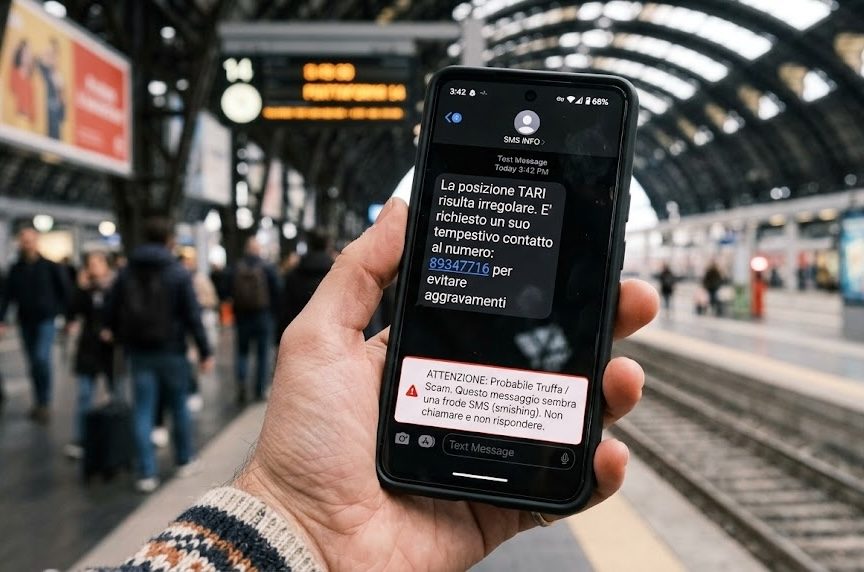
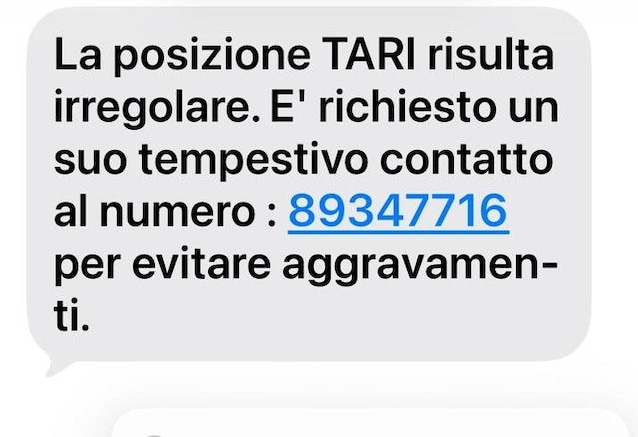
A new scam, which is propagated with an SMS, is circulating throughout Italy, targeting citizens with messages reporting alleged irregularities relating to the payment of TARI, the tax on urban waste. The text of the message is almost always the same: «The TARI position is irregular. You are required to promptly contact the (paid number used by scammers) to avoid aggravation». Anyone who calls that number risks losing all their telephone credit in a few seconds or, worse, unknowingly giving up personal data to scammers. The scam leverages the anxiety of incurring fines and various sanctions for failure to pay the tax, pushing those who receive the message to act on impulse, without verifying the source from which the SMS comes. In this study we explain in more detail how the TARI SMS scam works and, more importantly, how to defend yourself.
How the TARI SMS scam works
The strong point of this scam is its apparent credibility. The reference to TARI – a real tax, which affects practically every Italian family unit – and the vaguely bureaucratic tone of the message may be enough to sow a minimum of doubt in those who receive the message. Those who are unsure of their tax situation may feel pressured to call “just in case.”
But behind the number indicated in the message, there is no municipal office. The numbers indicated in the SMS belong to the category of value-added numbers oh special pricing: lines which, when called, charge very high costs to the caller, sometimes in the order of several euros per minute. In some cases, the simple fact of staying on the line for a few seconds is enough to drain a large part of the remaining credit on a prepaid SIM. In other scenarios, on the other hand an operator could respond who tries to collect personal data, tax codes or banking information under various pretexts.
When receiving similar communications it is important to remember that no Italian municipality uses SMS to communicate tax irregularities related to TARI. Official communications on tax matters take place exclusively through institutional channels: registered postal mail, access to municipal portals, or direct contact with the local tax office. No public administration asks citizens to urgently call a toll number for tax issues.
The widespread diffusion of these messages, reported by various municipalities (both in Northern and Southern Italy) suggests that it is a campaign organized on a national scale and not confined only to some local areas, probably automated through mass SMS sending systems. Scammers don’t necessarily know who really has an irregular TARI position: they send the message to as many people as possible, counting on the fact that some of the recipients fall for the trap they set for them.
How to protect yourself from the TARI SMS scam
So what to do if you receive a text message of this type? There best defense strategy it’s actually very simple: you do not need to call the number indicated, you don’t have to reply to the message and, consequently, you do not need to provide any personal or banking data.
If you have doubts about whether you actually have an irregular situation with the TARI, the only correct way to verify it is contact your municipality of residence directly through the official contact details available on the institution’s institutional website, or physically go to the tax office.
It is also advisable to report the incident to the Postal Police, which collects reports relating to IT and telephone scams like the one we have just told you about and monitors the spread of similar malicious campaigns.
