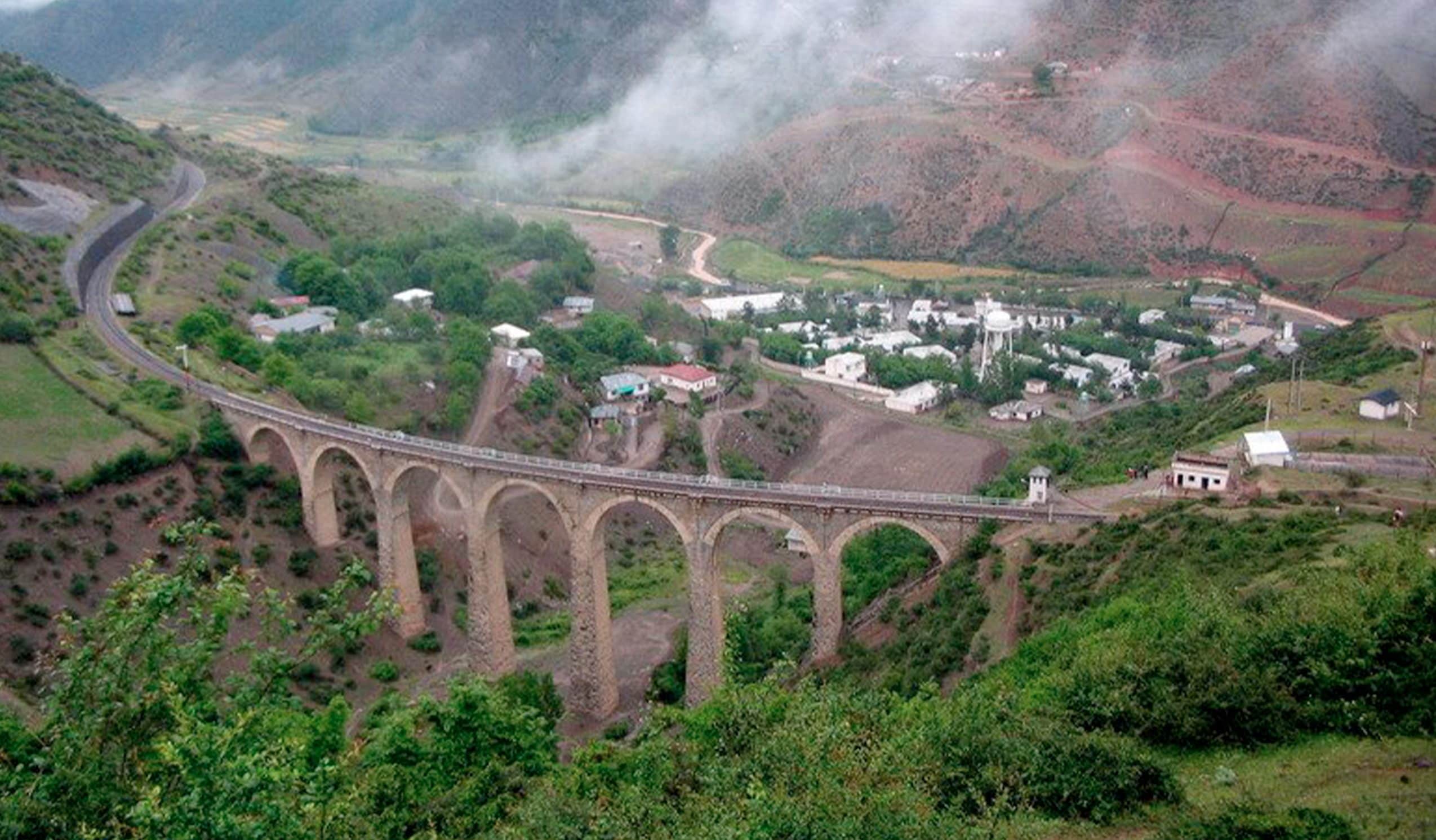
There Railway Trans-Iranian it represents much more than a civil work: it is a symbol of logistical sovereignty. Listed as a UNESCO World Heritage Site already in 2021the infrastructure – built between 1927 and 1938 – today plays a crucial symbolic and practical role in the current conflict between Iran and the United States, essentially acting as a real backbone for internal resilienceconnecting the Caspian Sea to the Persian Gulf via Tehran.
The characteristics of the railway
From an engineering point of view, the infrastructure, built between 1927 and the 1938is a true triumph of the civil and mechanical engineering of those years.
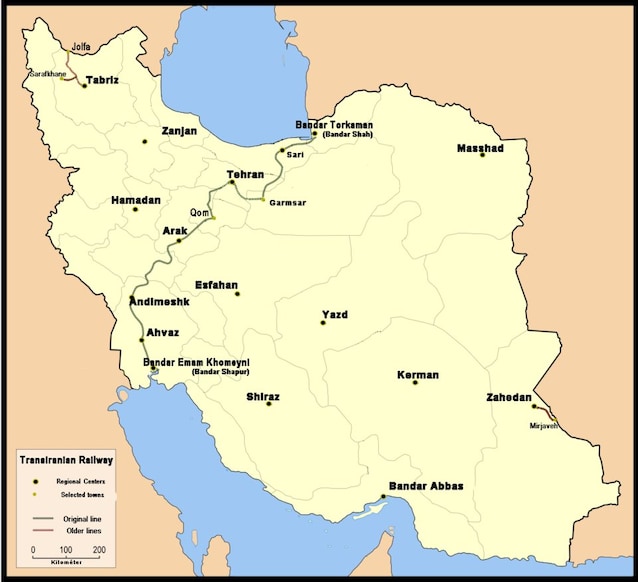
Source: By Hhgygy – Own work, CC BY–SA 3.0, https://commons.wikimedia.org/w/index.php?curid=29281297
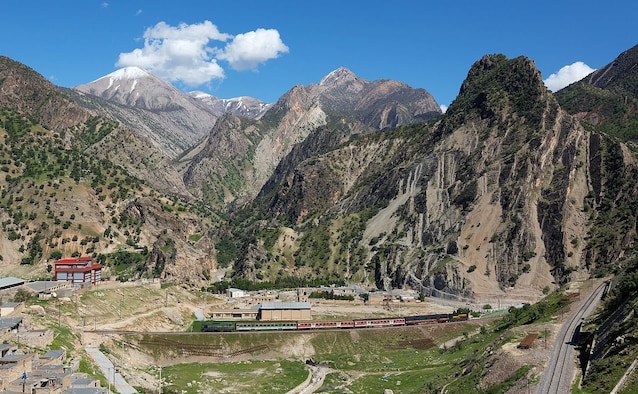
The railway route is long 1,394 kmstarting from sea level and reaching the altitude of 2,200 meters altitude at the Gaduk pass. To overcome the complex and difficult orography of the Alborz and Zagros chains, they were built well 224 tunnels and well 174 large bridgesas well as 186 smaller bridges. Among the most innovative and interesting engineering solutions, there is certainly the “Three Steps” technique (Seh-Line) on the northern side which consists of a series of helical tunnels and railway bends in order to allow and allow the convoys to overcome gradients even of the 26%, distributing the tractive effort over a greater length. The Veresk Bridge stands out 110 meters high on a masonry arch which still supports heavy loads without the need for invasive structural reinforcements.
In the current war scenario underway in Iran, the Trans-Iranian Railway has stopped being just a historical monument to return to being the pillar of strategic and military survival of the country, representing an alternative to naval transport.
Source: By Kabelleger / David Gubler – Own work, CC BY–SA 4.0
The impact of the work in Iran
The economic impact of the railway is unique in the history of the Middle East: the work was entirely financed by Iranian capital through a targeted tax on sugar and tea, avoiding the use of foreign loans that would have compromised national independence. This choice has in fact allowed Iran to maintain total control over the management of trade flows. Today, in fact, the line reduces internal transport costs by approximately 40-50% compared to rubber for heavy goods, integrating the mining and agricultural sectors of the north with the petrochemical ports of the south. The efficiency of its route, in fact, allows the annual transit of several million tons of cargo, giving stability to the internal economy despite the pressures due to inflation and limitations on international import-export.
From a socio-political point of view, however, it was a real catalyst for modernization Iranian. Before its construction, travel from the North to the South of the country required weeks of caravan travel; times which, thanks to the construction of the railway, were drastically reduced, reaching a few tens of hours, also allowing a real cultural and political unification of the regions which for centuries had remained isolated by mountain barriers. For the Tehran government, maintaining this network in full efficiency is a manifesto of technological competence aimed at the West: it demonstrates the ability to manage a complex infrastructure, subject to extreme climates (from the Alborz snowfall to the scorching heat of Kuzestan), without depending on consultancy or spare parts from abroad, thus strengthening the feeling of pride and national identity.
