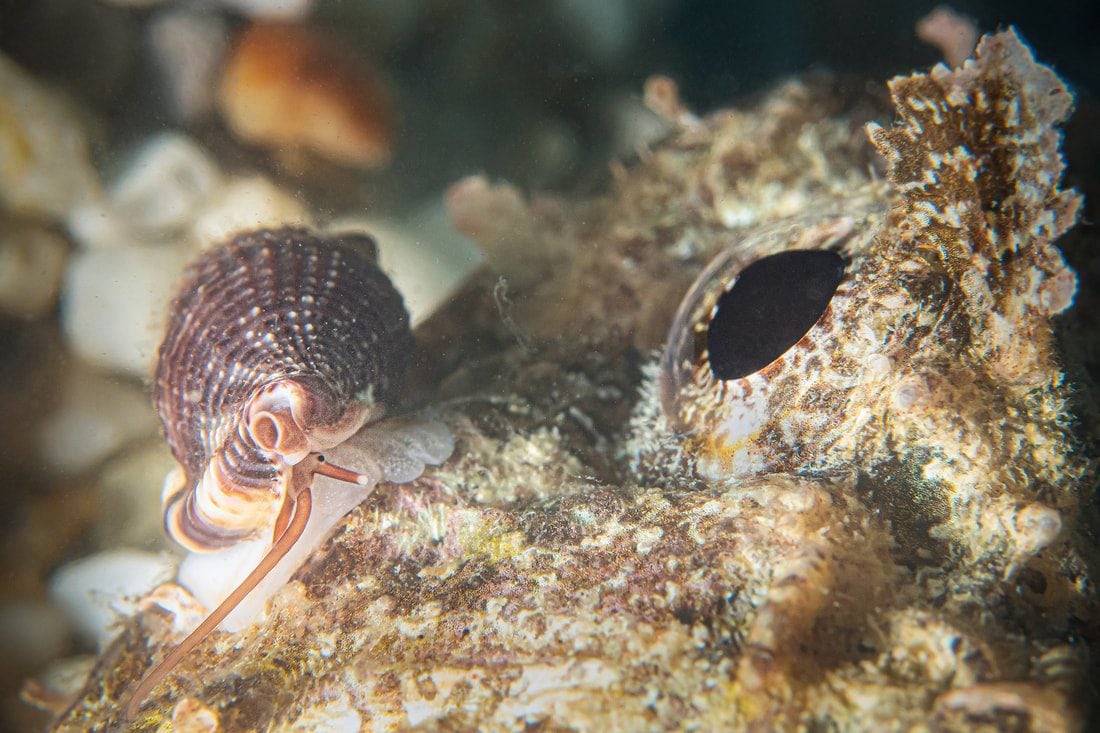
There is one in the Mediterranean Sea vampire snail which at night silently approaches the fish sleeping on the seabed and feeds on their blood through a trunk ten times as long as its own shell. Cumia intertexta it is a gastropod of just 2 centimeters which lives in southern coastal waters and is the only European representative of a group of bloodsucking molluscs (i.e. they feed on blood) distributed throughout the world.
A team of researchers fromUniversity Wisdom of Romefrom the Anton Dohrn Zoological Station and of theUniversity of Salento nominated the snail for the world competition Mollusc of the Year 2026promoted by the Senckenberg Research Institute in Frankfurt together with Unitas Malacologica, the global society of mollusc researchers. There Cumia intertexta is among the five finalists who will compete for the complete sequencing of the DNA of the species.
A small shell with a long proboscis
Cumia intertexta it is a gastropod that belongs to the family Colubrariidae. They have a fusiform shell, with a reticulated surface from which the name derives intertext (“braided”) and reaches a maximum of i 2 centimeters in length.
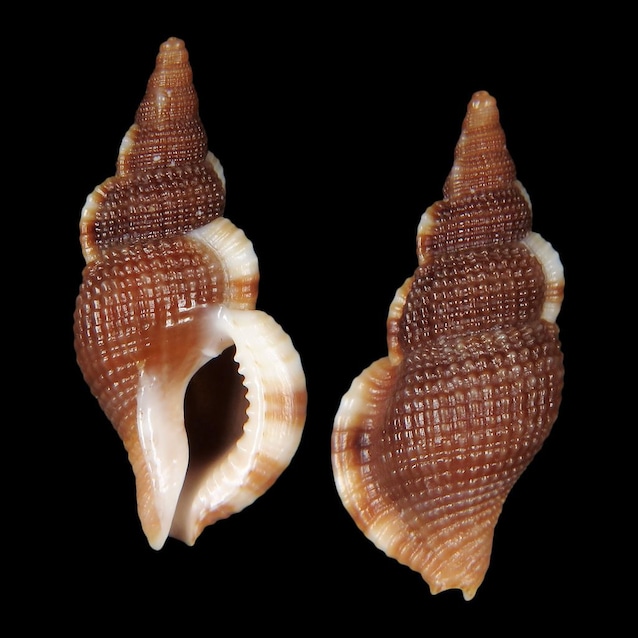
As reported by Sapienza, the extraordinary nature of this marine animal is the flexible proboscis about ten times as long as its shellarmed at the end of one radula – the rasping “tongue” typical of molluscs equipped with tiny sharp denticles. It is this tool that makes it a specialized nocturnal predator.
Hunting for blood at night: how the proboscis works
As darkness fell, the Cumia intertexta it starts moving towards the fish resting on the seabed and approaches with caution. When it’s close enough, extends the long proboscisattaches itself to the skin of the prey with the denticles of the radula and makes a small superficial laceration through which it begins to attack aspirate the blood.
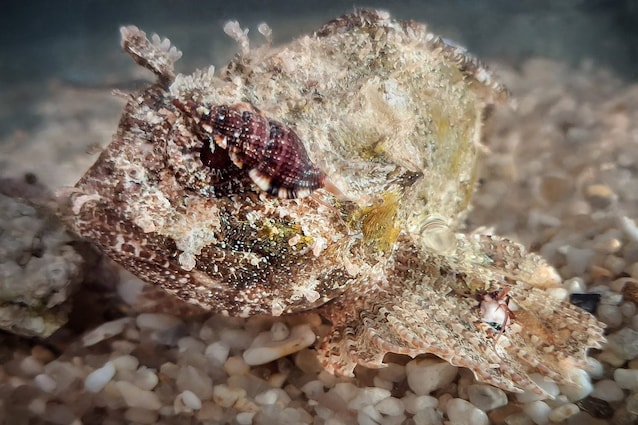
During the entire process it secretes a biochemical cocktail that includes certain molecules that have action cytolyticthat is, they break cell membranes and facilitate access to superficial blood vessels, there are others enzymes that increase the pressure of the fishaccelerating blood flow. There are still others neurotoxins which sedate the fish, preventing it from waking up and reacting. Finally, a series of anticoagulant and antiaggregating peptides they keep the blood fluid throughout the meal, preventing it from clotting at the site of the injury. When the vampire snail is full, it abandons its numb but healthy prey.
All these bioactive molecules have potential biotechnological applications in the medical and pharmaceutical fields. The interest of researchers focuses in particular on venomicsthe discipline that studies the venom systems of animals. Sequence the genome of this species would provide the first genetic map to understand how this unusual dietary strategy evolved and how all the molecules involved are produced.
The only vampire snail in the Mediterranean
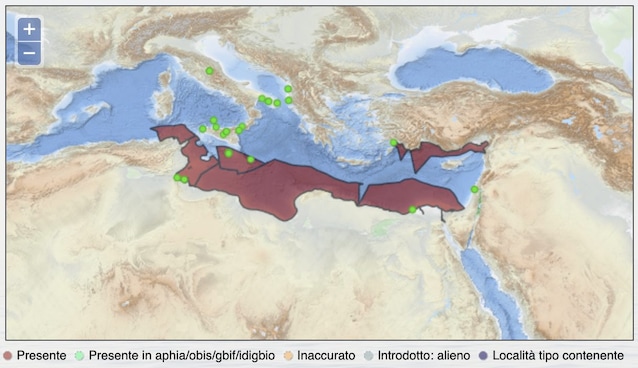
As both Unitas Malacologica and the Italian Society of Malacology specify, Cumia intertexta is thesole Mediterranean representative of the Colubrariidae family. Related species with the same hematophagous strategy exist in other tropical and subtropical oceans, but in the Mediterranean this ecological role is occupied exclusively by it. It lives hidden among the rocks of the shallow coastal waters of the Southern Mediterraneanspends the day motionless and in the open becomes active only at night.