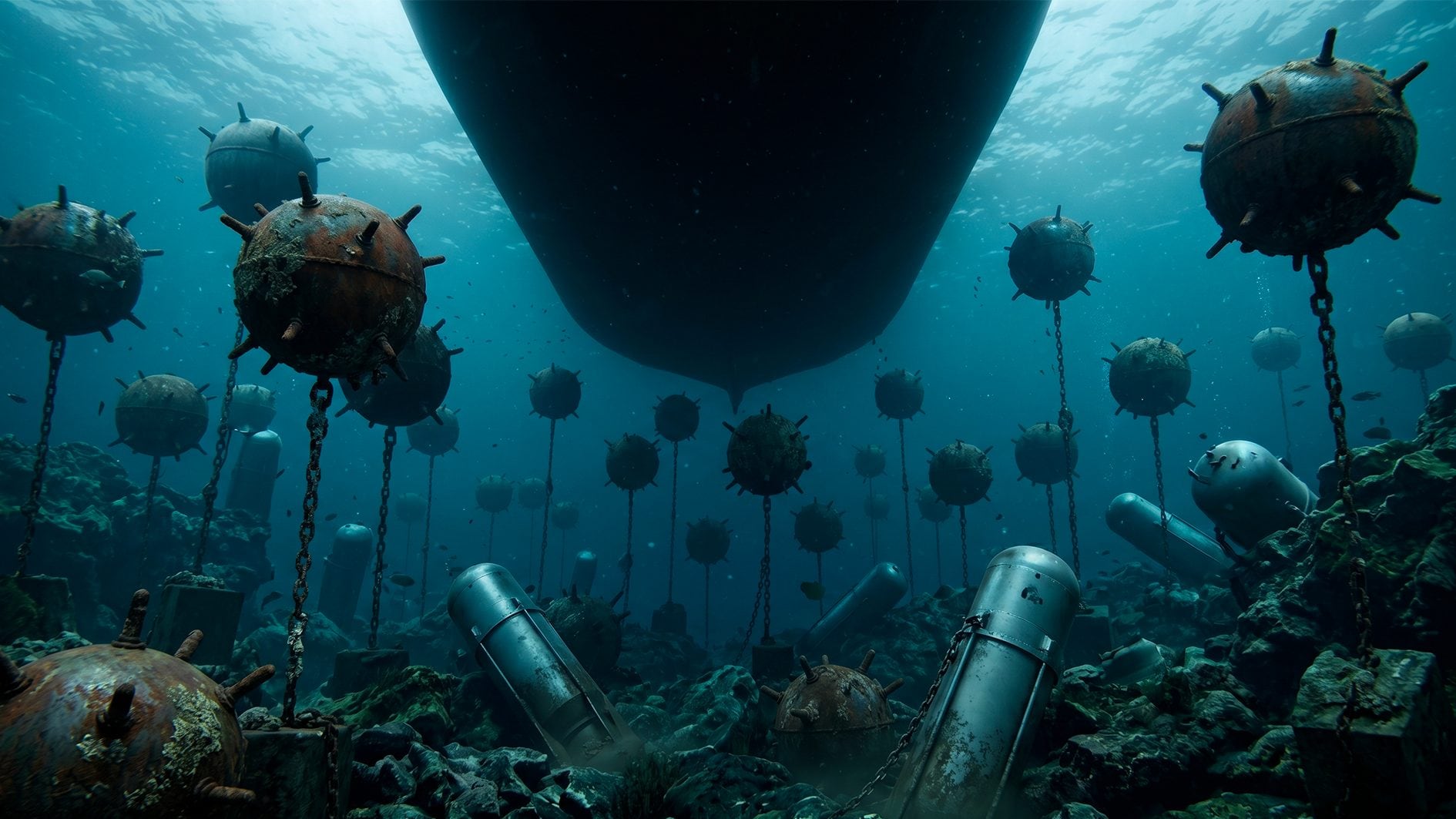
Several times, during the almost fifty-year conflict between the United States of America and theirs Western allies and of “Arab World” on the one hand and the Islamic Republic of Iran on the other, the leadership of “country of the ayatollahs” has threatened to undermine the maritime corridors that cross it Strait of Hormuz and the Persian Gulf. This initiative was finally implemented during the current year Iranian War and cannot be easily canceled because naval mines constitute a difficult adversary against which there are no easy solutions, not even for the navy of a superpower like the American one.
How many naval mines does Iran have
The precise number of naval mines Iran possesses is a military secret, but most analysts estimate that currently Regular Armed Forces hey Pasdaran of Tehran detain between 3,000 and 6,000 naval mineswhich in any case (even without taking into account probable underestimates, as often happens when talking about Iranian military equipment) represent the fourth arsenal of naval mines in the world after those of Russia, China and North Korea.
Iran began using naval mines during its exhausting war against Iraq (1980-1988) both to block shipping to Iraqi ports and to exert military and diplomatic pressure on other Arab countries allied with the Iraqi regime. Saddam Hussein. After an initial phase during which Iran procured mines on foreign markets, during the 1990s, the country began to deploy its self-produced mine models.
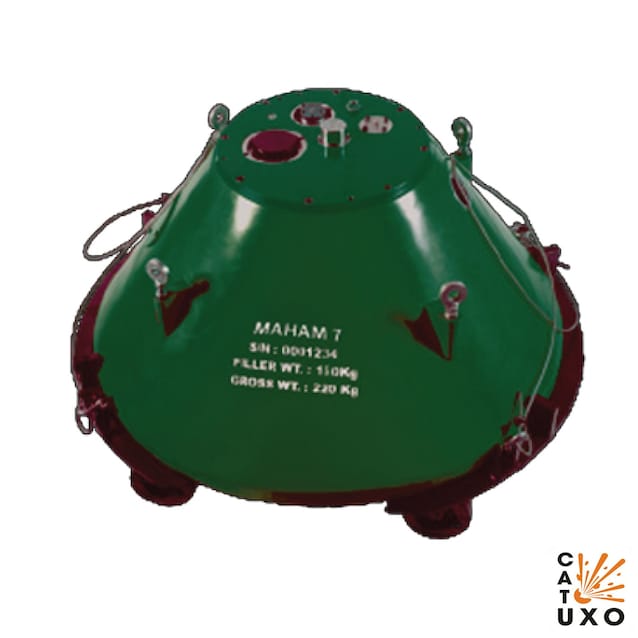
By studying video and photographic evidence – as well as the work of analysts specialized in the sector such as HI Sutton – it is possible to state that the Iranians are in possession of different categories of naval mines, ranging from the classic ones contact mines floating on the surface like the Maham-1 (in its various versions) to those ad magnetic and/or acoustic influence like the Maham-3until seabed mines activated by acoustic sensors like the Maham-7.
It is not entirely clear whether Iran also has naval mines at its disposal characterized by the ability to release an autonomous torpedo equipped with a self-seeking warhead; technology similar to that of Chinese mines of the EMD-52 class. So far nothing definitive has emerged, but given the close military relations that have existed between Tehran and Beijing since the Iran-Iraq War, this possibility should not be discarded a priori.
Because it is not easy to demine a stretch of sea
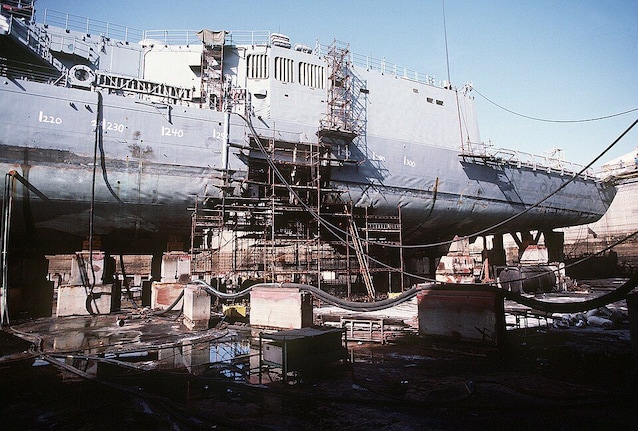
Contrary to what one might be tempted to believe, clearing a stretch of sea from the presence of naval mines is not at all simple, and indeed in military circles there is a tendency to affirm that, on the contrary, once a marine area becomes mined territory, it basically remains so forevergiven the substantial impossibility of eliminating every single mine. The first thing that must be considered when talking about mine hunting operations is that, in order to be carried out successfully, the navies involved must have specialized units available such as minesweepers and minehunters. Curiously, and with “perfect timing”, despite being on paper the most powerful navy in the world, the American one US Navy he disbarred his last 4 minesweepers shortly before the start of the Iranian Warremaining dangerously exposed precisely in this vital sector.
Secondly, the aforementioned naval units must be equipped with a whole series of special equipment used to identify and neutralize mines. However, since the mines are of different types and characterized by the use of different construction materials (in some cases metals but in others special plastics) the demining process cannot always proceed quickly, with the result of enormously extending the times of the operations, which if they proceeded quickly would risk jeopardizing the safety of vessels and crewmen. On the other hand, minesweepers and minehunters must in turn be protected by other better armed units because they risk falling under the blows of other types of weapons with which the enemy is equipped; for example anti-ship missiles.
Can the Iranians block the Strait of Hormuz indefinitely?
In the overall economy of the current Iran War, the political and military decision makers of Tehran they understood that the Strait of Hormuz and the Persian Gulf represent the soft underbelly of the Israeli-American war strategy and they have abundantly demonstrated that they have all the determination to exploit it. It is no mystery that 20% of global oil flows they pass right through Hormuz but if we also add to it natural gas, fertilizers and the share of aluminum productionwe realize that, in perspective, if the Iranians kept the Strait of Hormuz closed (or at least under strict control) indefinitely for many months, the damage to the world economy would not be negligible at all.
In this context, the use of naval mines is as lock tool (or at least channeling and control) of commercial traffic and at the same time of dissuasion with respect to possible external interventions, it has allowed this old and too often little-considered weapon system to acquire a strategic value that until a few weeks ago we no longer believed was possible.
