Every time we leave a television on standby, forget a charger plugged into the socket or leave the dishwasher light on, they continue to consume electricity (or rather, these devices continue to do so silently). According to some estimates made by US Department of Energythis silent dispersion represents between 5 and 10% of domestic energy needs of American families, with a annual increase in the bill of approx 100 dollars (according to other estimates this additional expense can even reach i $183 a year). In Europe, where energy costs are structurally different, the weight may vary, but the principle remains the same: if we leave a device on standby, this will have an impact on consumption. Now, this shouldn’t alarm us, but it should make us think. It’s possible reduce “phantom consumption” or not? With a little effort and the right strategies it is possible to achieve this. In the next lines we will see which devices are the main culprits of standby energy consumption, how to estimate their impact on the bill and what habits or tools we can adopt to keep our consumption under control.
The appliances that consume the most even when turned off
When we talk about standby mode, we mean that intermediate state in which a device is connected to the mains, but is not performing its main function. It is the condition that allows the television to respond immediately to the remote control, the router to stay connected regardless of whether we are browsing the Internet or not, the console to update in the background, and so on. Unlike a complete shutdown, where the power is cut off and consumption drops to zero, standby keeps small internal circuits active which continue to absorb a small amount of current which, if added to that of all the other devices that are in the same state and multiplied by all the days in which they actually remain in standby, represent a non-negligible percentage of the total that is charged to us on the bill.
According to estimates, some video game consoleif not configured with power saving settings (perhaps left in sleep mode with automatic updates enabled), can continue to consume a significant amount of power, in some cases higher than that typical of traditional standby. THE large televisionsespecially in older models or with active network functions, can have significantly higher standby consumption than more recent televisions, designed to limit these absorptions.
THE air conditioners hey microwave ovens are among the domestic appliances with the highest consumption ever, but also the small chargers forgotten in the socket contribute to accumulation. Him too older deviceswithout modern energy saving methods, are generally the most wasteful.
How to reduce phantom consumption
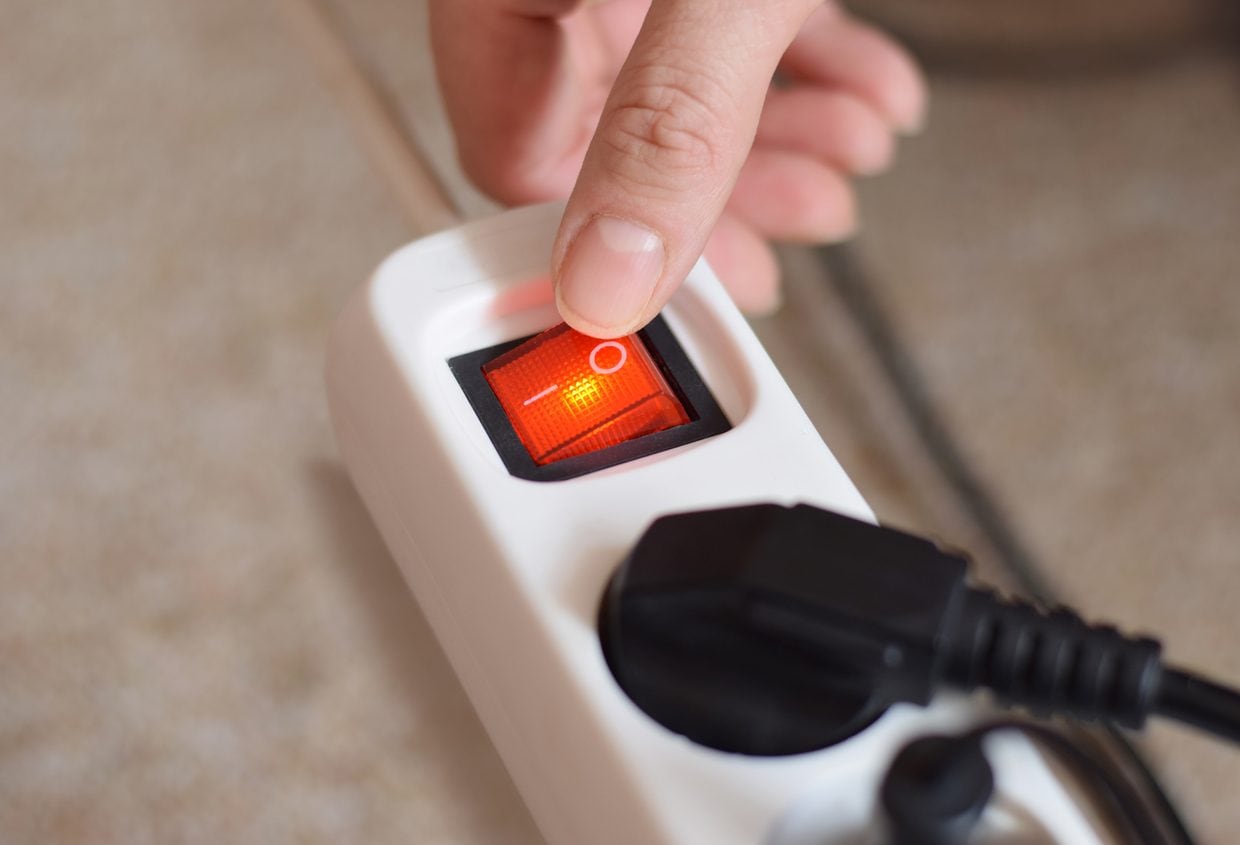
What can we concretely do for reduce standby consumption? The most immediate and zero-cost solution is unplug appliances that you won’t use for hours. That’s it! Where this is inconvenient, even a banal power strip with a mechanical switch allows you to turn off all the connected devices with a single gesture: your gaming station, the devices connected to your home office desk, the coffee corner in the kitchen, etc. But be careful: slippers with indicator lights or illuminated switches also consume electricity, partially nullifying the savings achieved.
One step higher we find the so-called smart sockets or smart plugdevices that are placed between the wall socket and the appliance and are controlled via smartphone or with a voice assistant (for example Gemini, Alexa, Siri, etc.). Some also allow you to program automatic switching on and off and monitor consumption in real time. The cost varies from a few euros for basic models up to 60-70 euros or more for multi-socket smart power strips with individual output control. The latter in turn generate a small consumption in standby (between 0.5 and 2 watts), but used strategically on groups of devices with high absorption still guarantee interesting savings.
Finally, when it comes to replacing an appliance, it is useful to look towards certified models ENERGY STAR (a certification widespread especially in the USA) o TCO (a certification widespread especially in Europe). Generally speaking, however, replacing old devices with new generation devices (on average more efficient than those produced even just ten years ago) can have an impact on standby consumption.
Adopting even just some of these measures – starting from the simplest habits, such as unplugging some appliances at night and not leaving sockets attached to the wall if unused – can lead to a reduction in the “weight” of the bill and also has a positive impact on the energy resources of our planet. An increasingly central theme in a complex society like today’s.
