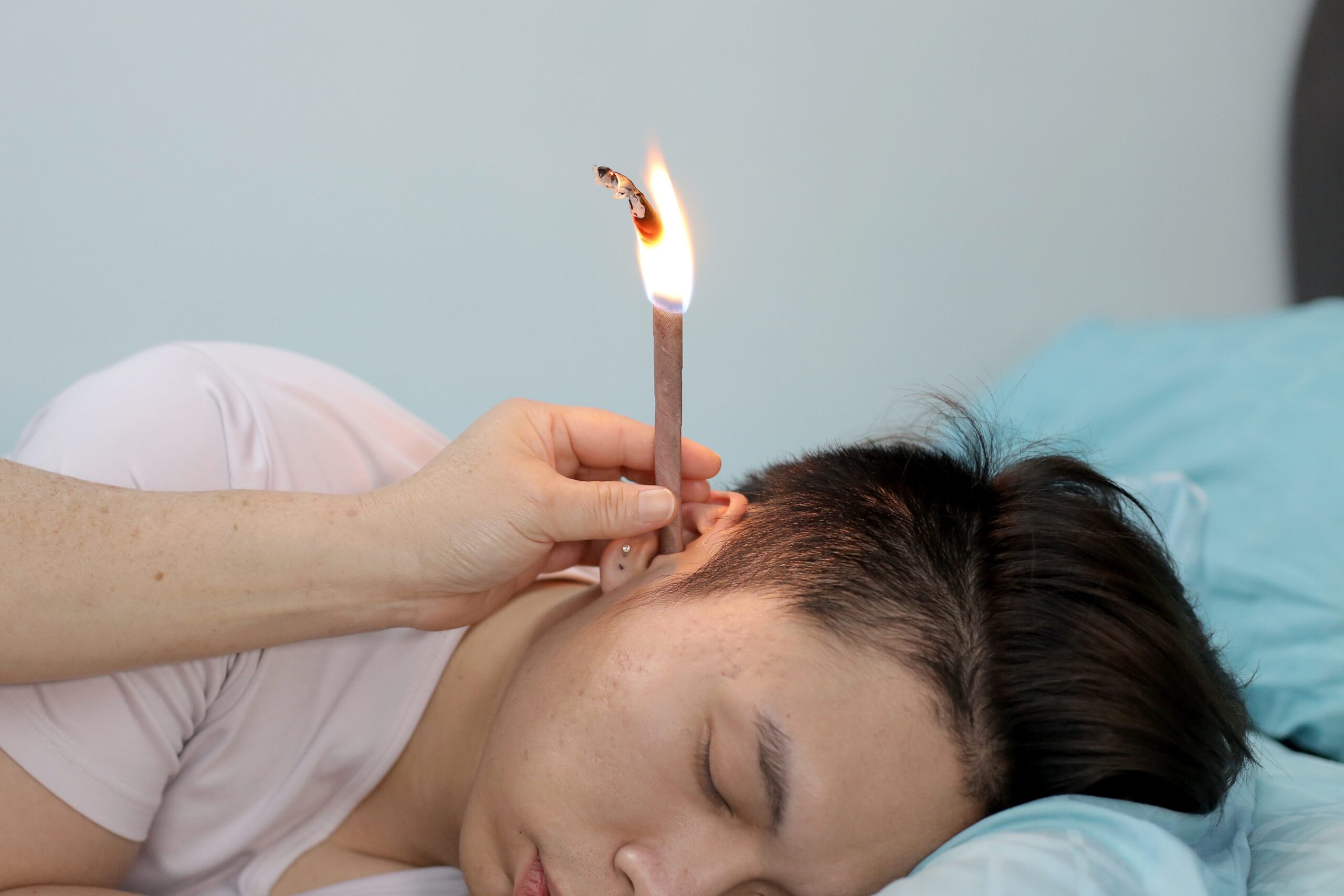
THE‘hygiene is important and that of ours ears is no exception, but not all cleaning practices are safe and effective: for example, the use of candles and ear conesa practice that has become popular among many people, it is neither effective nor safe. Those who propose this practice claim that these simple tools can remove earwax with only recourse to physical principles, but the scientific evidence they give no support to these statements. It was already shown in a 1996 study that cones and candles not only do not suck up earwax, but can push it further into the depths. Furthermore, authorities such as the Food and Drug Administration (FDA) warn that there is no scientific basis for the use of ear candles and cones and they may even be dangerous.
How ear wax cones work
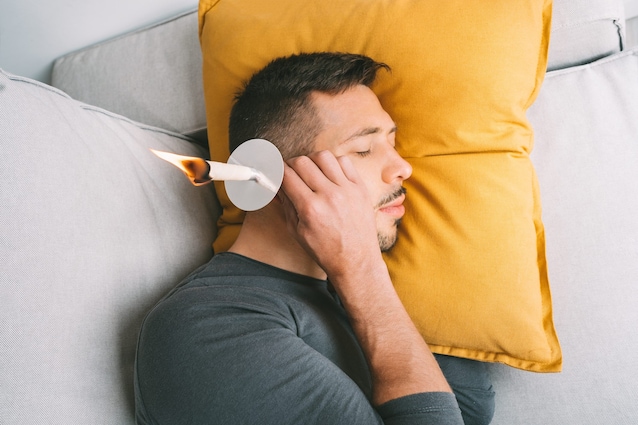
Ear candles are very simple items: a cone thin paper and waxed material, with a disk of cardboard halfway along its length. The cone is inserted into the auditory canala little deep inside the ear, while we maintain the head stretched out sideways. The presence of one is usually recommended second personsince to start the process you will need to turn on, with matches or lighterthe end opposite to the one we insert into the ear.
At this point there are two mechanisms of action proposed by those who use it:
- the first predicts that the slow combustion of the apex of the cone generates a slight upward current of hot air which, amplified and channeled by the cone, would generate a I suck into our ear canal, sucking dirt and earwax in the lower end of the instrument;
- the second mechanism, however, more “humble” if you like, provides that the heat simply fluidize the earwax which will then come out little by little in the following days.
The whole operation usually requires one fifteen minutes. During the process, small pieces of burnt paper they can fall from the apex of the cone and this is why, very often, we find a cardboard disk halfway: it helps to keep these shreds from falling on us. Once this operation was completed, many proponents, including sui social and on YouTube, they open the bottom end of the cone to observe what would be aspirated in the process, showing waxy residues and dirt.
What the studies say: FDA and statistical surveys
Let’s analyze this practice proceeding in order, we can check for ourselves some elements that should lead us to doubt. Does sucking, for example, really happen? Checking it is simple, just position yourself in a closed and draft-free environment light a simple candle in addition to the ear cone. We orient the “suction” end (the one that in theory would go into our ear) towards the flame and observe whether the flame of the candle swings towards that direction: you will discover that unfortunately nothing moves.
But then i residues we find at the end of the operation? We can get busy with this too: if they were aspirated into our ear, they should be absent in the candles again unused. All we need to do is carefully cut the lower end of the ear candle to discover that inside… they are there Already of waxy residues, despite this being brand new!
These first evidence they can already direct us towards doubt, but if on the one hand their simplicity allows anyone to verify, on the other it may not make much sense rigorous our analysis. The next step is indeed turn to the scientific communitylistening to what the evidence collected by the researchers has to tell us studies.
The effectiveness of ear candles was put to the test for the first time in 1996, with results published in the scientific journal Laryngoscopea rigorous and equipped magazine good reputation. The authors of the study carried out experiments first on a mechanical model of the external ear, for measure various parameters including pressure and amount of waxy deposit at the beginning and end of the process. At this juncture they have demonstrated that it wasn’t there no pressure variation generated by the candle.
They later conducted the same experiment on some volunteersproving that it was not derived no cleaning from practice and that, even, the act of inserting the end of the candle into the ear had pushed further earwax near the tympanum.
There is medical interest in the ear candle phenomenon rapidly waned and no subsequent study ever has denied the results obtained in 1996 and indeed, statistical investigations have revealed that, at least in the USA, there are frequent patients with hearing problems resulting from the use of these candles. Even the FDA intervened on the issue, reminding us that there is no scientific evidence to support the use of these devices, and that they can, in fact, prove dangerous due to the risk of burns.
We can therefore conclude that ear candles are not neither effective nor safe as a personal hygiene tool. Instead, techniques recommended by the medical authorities and your doctor should be consulted, remembering however that the earwax performs important functions protective and, however aesthetically unpleasant, it is a ally the health of our ears.
