Mexico City, 18 October 1968. In the first round of the Olympic final long jump men’s at the University Olympic Stadium, the 22-year-old American Bob Beamon amazes the whole world by touching the ground after a jump 8.90 metersimproving the previous world record by 55 centimetres. The optical device installed to measure the jumps cannot reach that far: the competition judges have to take out an old tape measure to measure what is still the Olympic record for the discipline. In that incredible performance, Beamon had an invisible accomplice: Mexico City is located at 2,240 meters above sea leveland that evening the rarefied air had helped rewrite the history of athletics.
The altitude paradox: what happens to the air as you rise in altitude
Going up in altitude, the atmospheric pressure decreases, and with it the density of the air. The percentage of oxygen remains the same, approximately 21%but each individual breath contains fewer oxygen molecules. At 2,000 meters above sea level, the amount of oxygen available for each breath is approximately 15-16% lower compared to sea level. TO 3,650 metersas in La Paz in Bolivia, we are around 25% less. This creates a paradox: altitude can be an advantage or a disadvantage depending on the sport you practice. The distinction is how much that discipline depends on aerobic energy (the one that burns a lot of oxygen) compared to anaerobic energy.
Short disciplines: when high ground helps
In fast and explosive races like sprinting, throwing or jumping, the energy mainly comes from the system anaerobicand the advantage of the lower aerodynamic resistance offered by the air at altitude far outweighs the disadvantage of reduced oxygen. The average speed in running the 100 meters in Mexico City is about 1.9% faster than that recorded at sea level: a small gain in absolute terms, but enormous in a race where hundredths of a second count. The 1968 Olympics remain the most emblematic case: at 2,240 meters in Mexico City, all men’s events over distances under 1500 metres, all jumps and throws (excluding the shot put) produced new world or Olympic records.
Endurance disciplines: when the high ground punishes
In races that last more than two minutes, the dependence on metabolism aerobicand therefore from oxygen, becomes dominant. The VO₂maxi.e. the maximum oxygen consumption capacity and the most important measure of aerobic performance, reduces substantially linearly as altitude increases: for every 1,000 meters of altitude gained, it drops by approximately 7-8%. At 2,000 meters, an athlete has already lost approximately 14-15% of their aerobic capacity compared to sea level. Going back to 1968: in the 5,000 meters the winner’s time was the slowest in sixteen years. Ethiopian marathon runner Mamo Wolde won the gold medal with a time more than eight minutes slower than his compatriot Abebe Bikila four years earlier in Tokyo.
Bolivia, Kenya, Ethiopia: when altitude becomes culture
To have a concrete example of how altitude distorts sporting results, it is sufficient to look at the results that the Bolivian national football team achieves when playing at home or away against other South American teams. Bolivia plays its home matches in La Pazat 3,650 meters above sea level, or more recently in the stadium of El Altowhich is located at 4,088 meters, the highest in the world among those with a capacity of at least 10,000 seats.
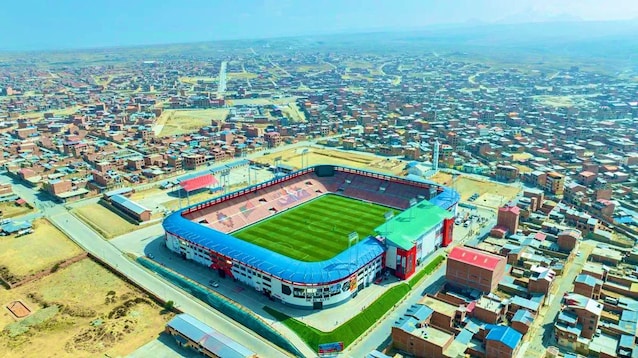
A statistical analysis conducted on over 1,400 international matches played in South America showed that for every 1,000 meters of difference in altitude between the home team and the visiting team, the home team gains on average about half a goal advantage. Brazil suffered his first defeat in the entire history of world cup qualifiers precisely in Bolivia, in 1993. Yet, the same Bolivia which is almost unbeatable at home, away he lost 67 consecutive games in qualifying before managing to win away from home in 2024. The reason is simple: Bolivian players have grown up and trained in those conditions all their lives, and their bodies have developed adapted structurally to the quota.
But if thin air damages aerobic performance in the short term, in the long term it can become an extraordinary resource. This is the underlying principle ofaltitude training: Prolonged exposure to reduced oxygen availability forces the body to produce greater quantities of erythropoietin (EPO), a hormone that stimulates the production of red blood cells. More red blood cells mean more hemoglobin, more oxygen transported to the muscles and therefore greater aerobic capacity. Upon returning to sea level, this adaptation allows the athlete to extract and use oxygen much more effectively, performing better than at the starting point. It is no coincidence that in many endurance sports, train at altitude at the beginning of the season or before a big event it has now become standard practice.
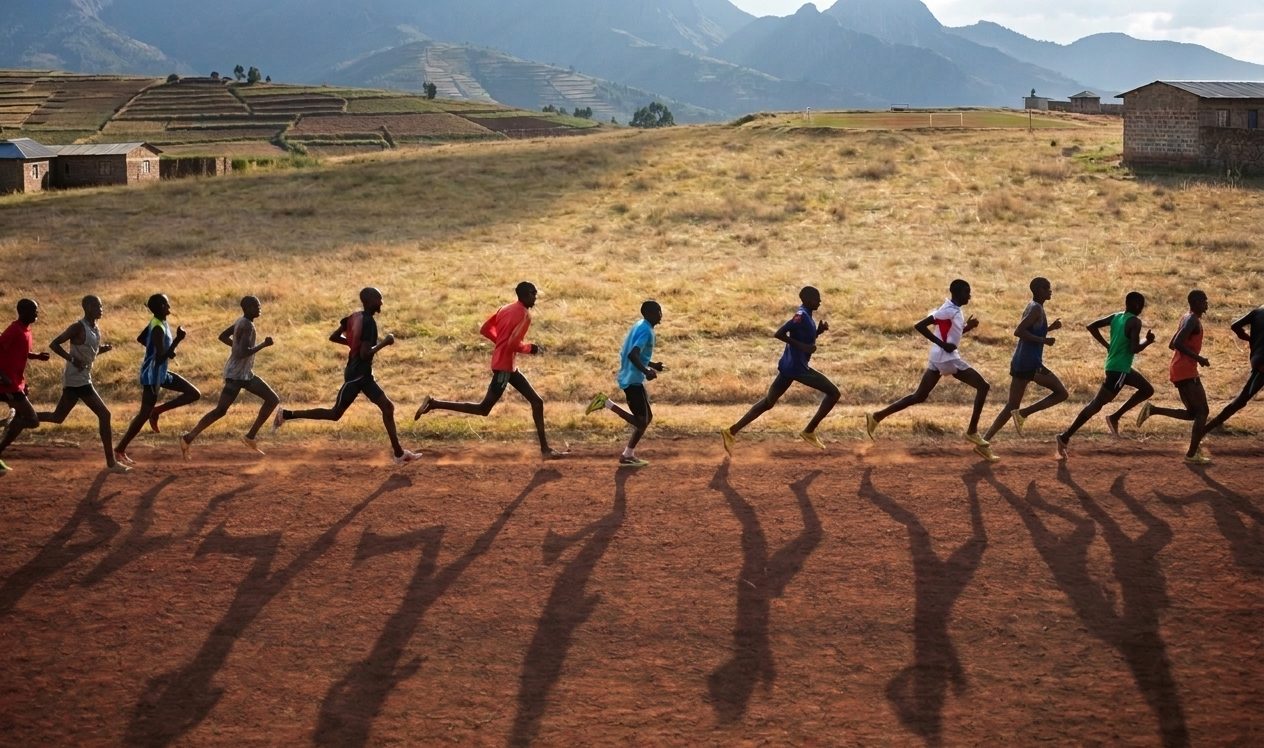
No place in the world embodies this principle better than the countries of East Africa. Kenya and Ethiopia they have dominated world distance and distance running for decades, and one of the main reasons is that their champions grow up and train in high altitude locations since childhood, with chronic exposure that produces physiological adaptations far more profound than any temporary altitude training camp. Iten, in Kenya, is nicknamed “the home of champions”: it is located at around 2,400 meters above sea level in the Rift Valley, a historic training ground for Eliud Kipchogeone of the most famous marathon runners in history. Here it is not uncommon, at the beginning of the season, to see Italian and European middle-distance runners like Yeman Crippa And Nadia Battocletti train among the red soils of the highlands. Similarly in Ethiopia, champions like Kenenisa Bekele train in the plateau around Addis Ababa, between 2,300 and 2,600 meters.
Sources
Péronnet et al., A theoretical analysis of the effect of altitude on running performance, Journal of Applied Physiology, 1991
Wehrlin & Hallén, Linear decrease in VO₂max and performance with increasing altitude in endurance athletes, European Journal of Applied Physiology, 2006
McSharry, Effect of altitude on physiological performance: a statistical analysis using results of international football games, BMJ, 2007
Daniulian et al., Training in Hypoxia at Alternating High Altitudes Is a Factor Favoring the Increase in Sports Performance, Healthcare (MDPI), 2022
