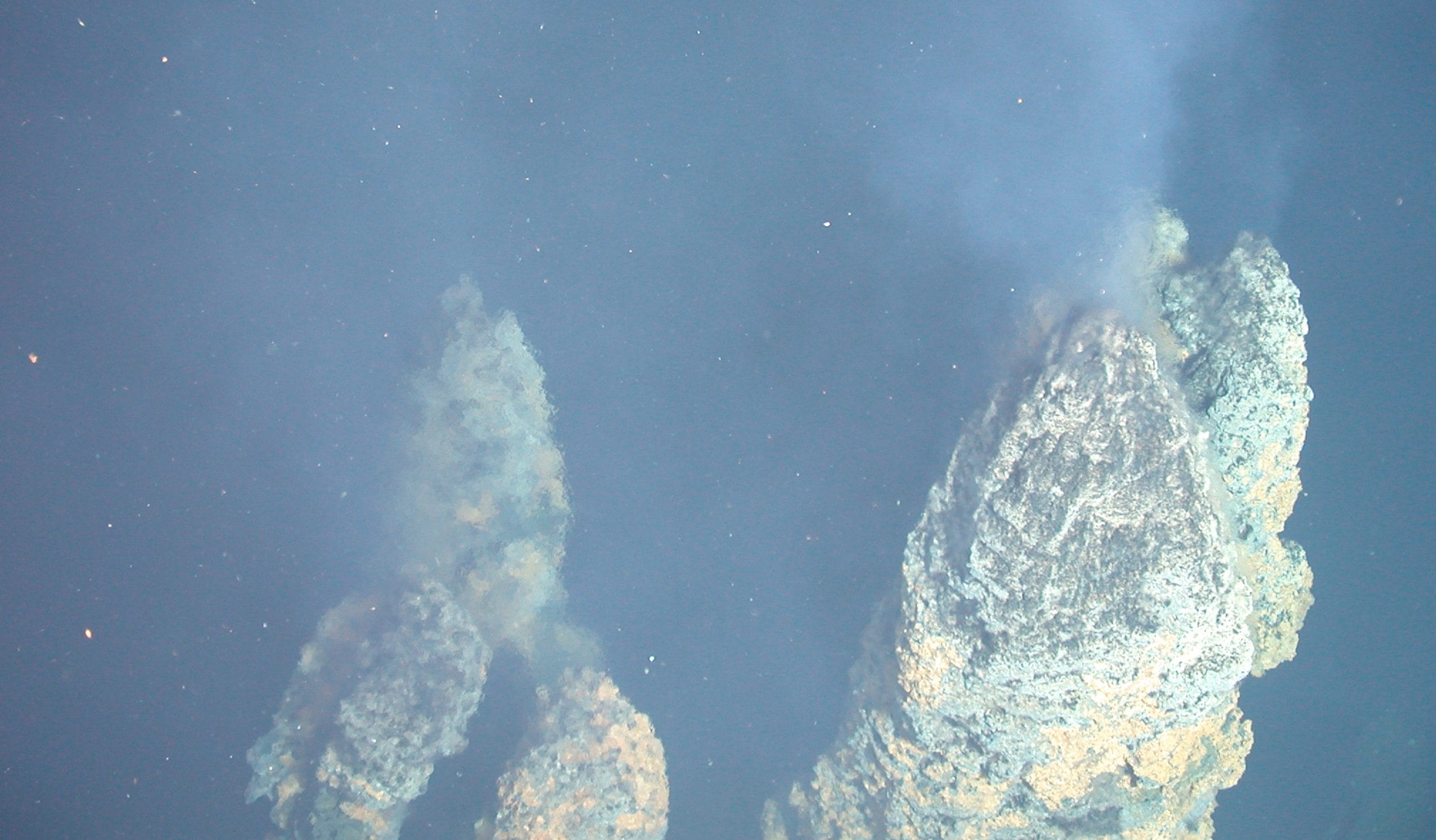
Researchers from the Spanish Institute of Oceanography have identified evidence of for the first time activity hydrothermal in the area surrounding the underwater volcano Enmediolocated approximately 1600 m of depth in the channel between Tenerife And Grand Canaryin the Atlantic Ocean. According to experts, the hydrothermalism of Enmedio (literally “in the middle”, due to its position) would have a direct influence on biogeochemical processes in the ocean waters of the volcanic area, including the increase in temperature of the water column, variations chemicals and alterations in the activity of prokaryotic organisms.
The IEO study on the volcanic area and its importance
Located approximately 25 km from Tenerife and 36 km from Grand Canarythe volcano Enmedio it is a building of conical shape with a base diameter of approx 3.5km. It rises between 560 and 730 m from the seabed and its summit is located approximately 1600 meters below the sea surface. In recent decades it has been the subject of several studies aimed at characterizing its role within the volcanic archipelago of the Canary Islands. The region surrounding Enmedio, in fact, is known for one persistent seismicity of magmato-tectonic origin.
A new study, recently published in the international journal Bulletin of Volcanology and led by a team of researchers from Oceanographic Center of the Canary Islands (Centro Oceanográfico de Canarias, Instituto Español de Oceanografía), demonstrated how the circulation of fluids hydrothermaland in particular the leakage of hot aqueous solutions and rich in minerals dissolved from the crust, has a significant impact on the balance of biological, chemical and physical processes in the waters surrounding the volcanic edifice. Although phenomena of this type are well documented in several areas of the globe, this is the first time that traces of hydrothermal circulation have been detected in the area surrounding Enmedio.
What makes this study particularly significant is the multiplicity of evidence of hydrothermalism that has emerged different areas of investigationfrom the chemical to the biological. In fact, the study is based on a multidisciplinary approach And multi-analyticalintegrating almost a decade of data collected through various oceanographic campaigns. These include analytics petrologicaltextural and mineralogical through scanning electron microscopy, along with investigations geochemicals And isotopic of rock samples. Chemical-physical measurements of the column of water (composition, temperature, pressure, conductivity and nutrients), climatological data and analysis of the abundance and composition of prokaryotic communities (bacteria and archaea). Finally, digital elevation models, seismic profiles and data bathymetricacquired through depth sounderwere used to reconstruct in detail the morphology of the volcanic edifice and the characteristics of the underlying crust.
Evidence of hydrothermal activity
On the basis of these investigations it emerged, first of all, that the release of hydrothermal fluids through fractures And faults in the crust causes an increase in temperature of water until 0.5°C compared to the surrounding areas. Added to this is a variation in the chemical composition of the water column above the volcano, which is enriched ammonia, phosphates, nitrates And silicates. In particular, the concentration of ammonia can reach values up to four times higher than in neighboring areas.
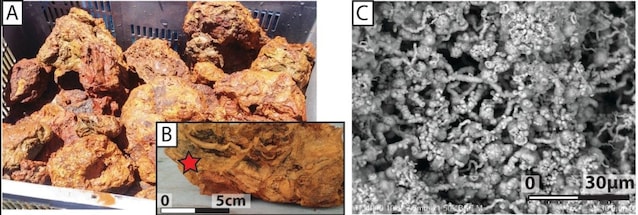
From a petrological point of view, the rocks taken from the volcanic area show rich alterations hydroxides iron and filamentous microstructures associated with biological processes, typical of low temperature hydrothermal environmentswhile such characteristics were not observed in samples from the surrounding areas. This evidence is further supported by high-resolution seismic and bathymetric data, which indicate an intense alteration of the volcanic substrate in fractured areas.
Finally, hydrothermal activity and variations in the chemical-physical properties of water also seem to influence the component biological. The percentage of prokaryotes with a high content of nucleic acids in fact, it is lower, despite a greater total abundance, suggesting the presence of a distinct microbial community. Nonetheless, only further studies will be able to fully clarify the relationship between hydrothermal activity and the evolution of marine biotic activity.
Sources
González-Vega, A., Vázquez, JT, Lozano Rodríguez, JA, Sánchez-Guillamón, O., Palomino, D., Geyer, A., Bartolomé, R., Álvarez-Valero, AM, Arrieta, JM, Villaseñor, A. and Martín-Díaz, JP, 2026. First multidisciplinary evidence of hydrothermal activity at Enmedio deep submarine volcano (Canary Islands). Bulletin of Volcanology, 88(3), p.25. ICM CSIC
