The government fines those who express dissent, under the guise of safety
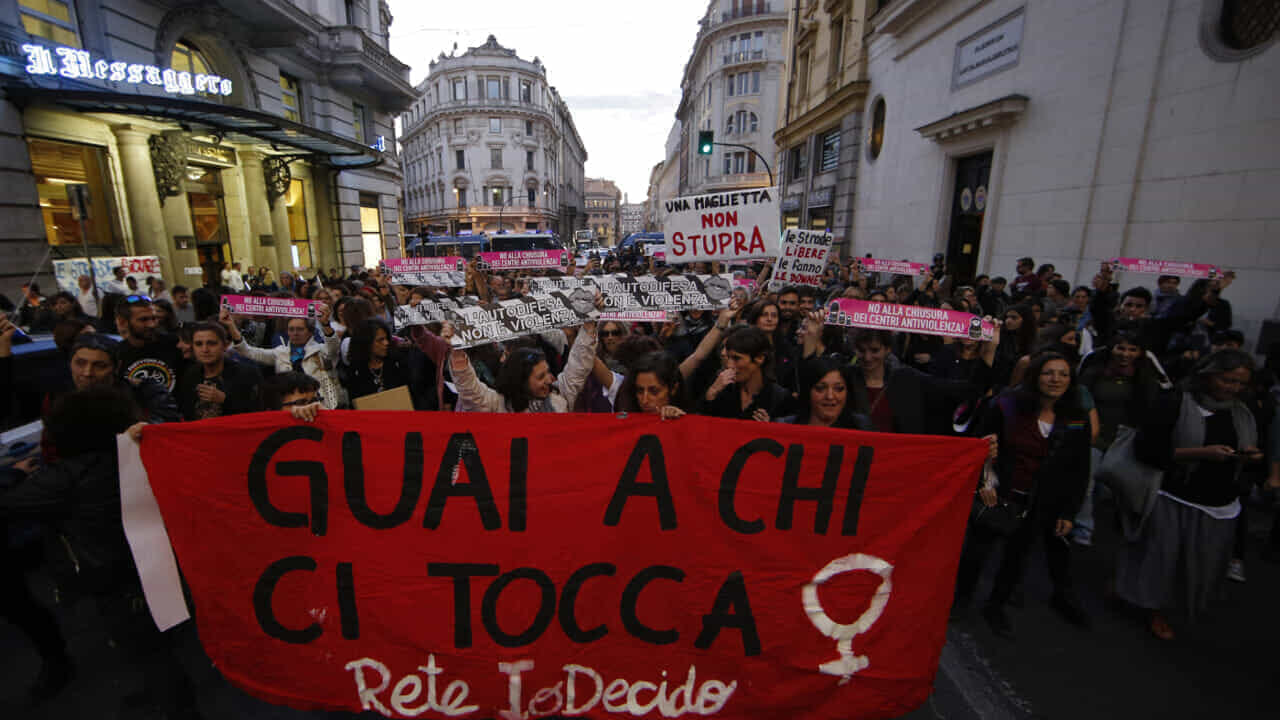
In recent days, some worrying events suggest that, in a not too hidden way, the relationship between authorities and citizens is becoming increasingly unbalanced. In Florence, some demonstrators who had taken part in a protest march against the opening of the headquarters of Vannacci’s party were handed fines of up to 10 thousand euros. In the logistics sector, some members of the Si Cobas union received the same sanction for carrying out strikes and protests. In both cases, we are faced with the use of sanctioning tools applied to conduct that, historically, falls within the context of social and political conflict.
The new safety decree
These measures are the result of the application of the recent Security Decree, whose article 9 provides for very high fines for “failure to give notice of a meeting in a public place”. The definition is very generic: what is meant by a meeting in a public place? The text states that “a meeting is also considered public which, although held in private form, nevertheless has the character of a non-private meeting due to the place in which it will be held, or the number of people who will have to attend it, or the purpose or object of it”. That is: a meeting that we decide is public even if it is private is public.
Not only that: it also states that the promoters of a meeting “via electronic communication networks, platforms and services for public or private use, or via closed groups of users” must be sanctioned. Which could mean that if I have a Whatsapp group with some friends and I propose to go and protest, I don’t know, in front of a construction site, but I don’t have enough means to make it an organized protest, I could get a fine. And naturally, the same sanction applies to “those who speak at the aforementioned meetings”.
The border between rules and censorship
Of course, there is no doubt that civil coexistence requires compliance with the rules and that public order represents a value to be protected. There are rules for organizing a rally or demonstration, which this government did not invent. But punishing a citizen because he simply stood in front of a building expressing concern and dissent is obviously another thing. The risk is that the level of legality ends up overlapping with that of dissuasion: you don’t want to risk it, who has the money to pay fines like that?
After all, how is a handful of people protesting peacefully a danger to public order? If we are talking about a procession that invades the city, this is certainly the case: the police must be there and traffic must be specially regulated. But it wasn’t about that, but about a few people exercising their right to protest simply by being in one place and saying things out loud.
It is clear that in this way conflict – healthy and democratic – is strongly discouraged. A government today cannot afford to explicitly prohibit dissent, but can implement more subtle forms of control and repression, apparently limiting itself to establishing a rule that does not prevent protest, but forces it within certain boundaries; which, on a theoretical level, should not be considered negative, because it is generally how the law works.
Concretely, free protest is discouraged
On a practical level, however, things are different, because it is unlikely to think that, for example, in a small provincial neighborhood where you want to demolish a building or close down a community center or introduce a change that the citizens consider wrong, every single protest action is organized with prior notice and authorization from the Police Headquarters (also because it is not certain that the authorization will arrive). Often these acts happen without any real idea behind them: someone goes to protest (and it’s absurd to think that they have to ask permission when perhaps it’s literally four people), someone else tags along. If it is necessary to plan everything in advance every time, the spontaneous association of citizens becomes much more difficult.
It is unacceptable that respect for the rules becomes an excuse to establish who has the right to express disagreement, where, when and how, in a completely arbitrary manner. The current government is certainly not new to more or less veiled forms of authoritarianism; the worrying thing is that citizens accept them without even realizing it.
