The growth of the search engine born in 2008 DuckDuckGo that we have witnessed recently is a symptom of a significant change in the way in which some users perceive the ongoing evolution of search engines. At the center of the debate is not so much the overall quality of the results, but the increasingly invasive role of artificial intelligence in online search. Al Google I/O 2026the annual conference for developers organized by the Mountain View giant, Google announced a radical transformation of its service: the traditional list of blue links is replaced by an AI agent capable of answering questions, performing tasks and starting monitoring agents in the background. The reaction of users and professionals was not long in coming.
Some have denounced the risks to the open Web, while others have raised concerns about the accuracy of the answers generated and the loss of control by users (the problem of accuracy has already been addressed in previous weeks in this other article). It is in this scenario that DuckDuckGo has found fertile ground. Despite only accounting for about 2% of the U.S. search market, the privacy-focused engine has seen significant acceleration since Google’s announcements. According to data released by the company, between May 20th and 25th US app installs are increased on average by 18.1% on a weekly basis compared to the period May 13-18, with a peaked at 30.5% on May 25. On iOS the growth was even more pronounced: on average +33% on a weekly basiswith a peak of 69.9%.
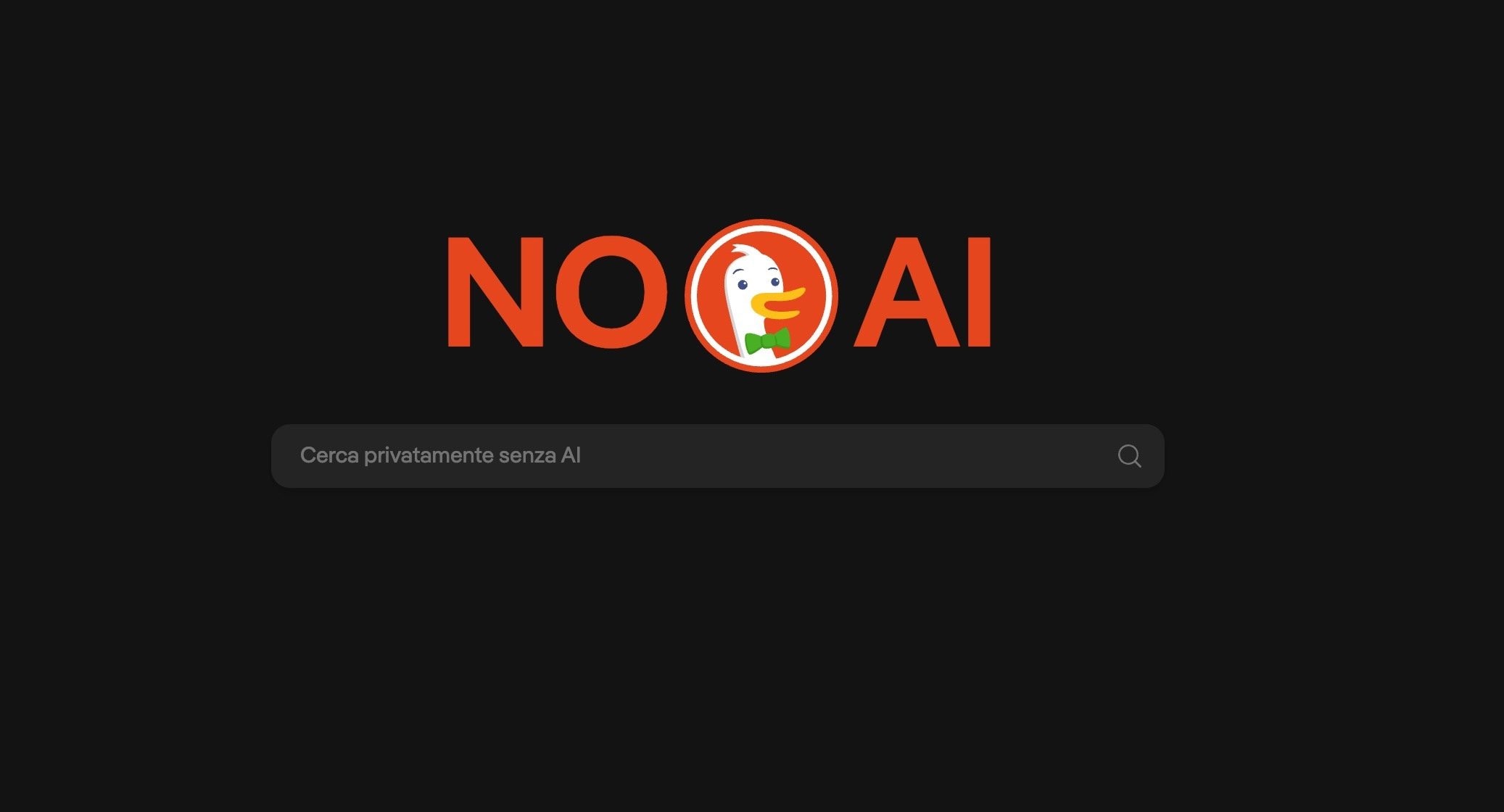
Even the noai.duckduckgo.com page – designed to offer a completely searchable lacks AI-based featuressuch as assisted responses and automatically generated images – recorded one average growth of 22.7% on a weekly basiswith a peaked at 27.7% on May 24. The trend also continued during Memorial Day weekend (the last Monday in May dedicated to celebrating all the fallen soldiers of the US military), a period in which DuckDuckGo usually sees a drop in traffic.
Third-party data confirms DuckDuckGo’s growing trend. The analytics company Apptopia detected a average increase of 29% of DuckDuckGo daily downloads in United States and of 12% globally in the same period.
«Google is imposing AI with no option to opt out», he declared Gabriel WeinbergCEO of DuckDuckGo, commenting on changes to the search engine. «We want to be the place that puts users in charge, letting them decide how much or how little AI they want».
It’s worth pointing out that DuckDuckGo is not an anti-AI service. Instead, it offers its own platform called Duck.aifree and without the need for registration, which allows access to different language models: Claude 4.5 Haiku by Anthropic, Llama 4 Scout by Meta, Small 3 24B by Mistral and GPT-5 mini by OpenAI. All conversations are private: DuckDuckGo removes IP addresses before requests reach model providers, deletes conversations within 30 days, and prohibits conversations from being used to train models.
The company also offers Search Assist, similar to Google’s AI Overview, and a filter that excludes artificially generated images from results. Second Kamyl Bazbazchief communications and policy officer at DuckDuckGo, both features are among the most popular among users. «People simply want to be able to choose“, he said.
More than a mass escape from Google, therefore, the rise of DuckDuckGo appears to be a sign of a growing demand for personalization and control in the online search experience. Who knows if, in light of these events, Google will decide to retrace its steps and offer its users the possibility of freely deactivating AI from the search engine.
