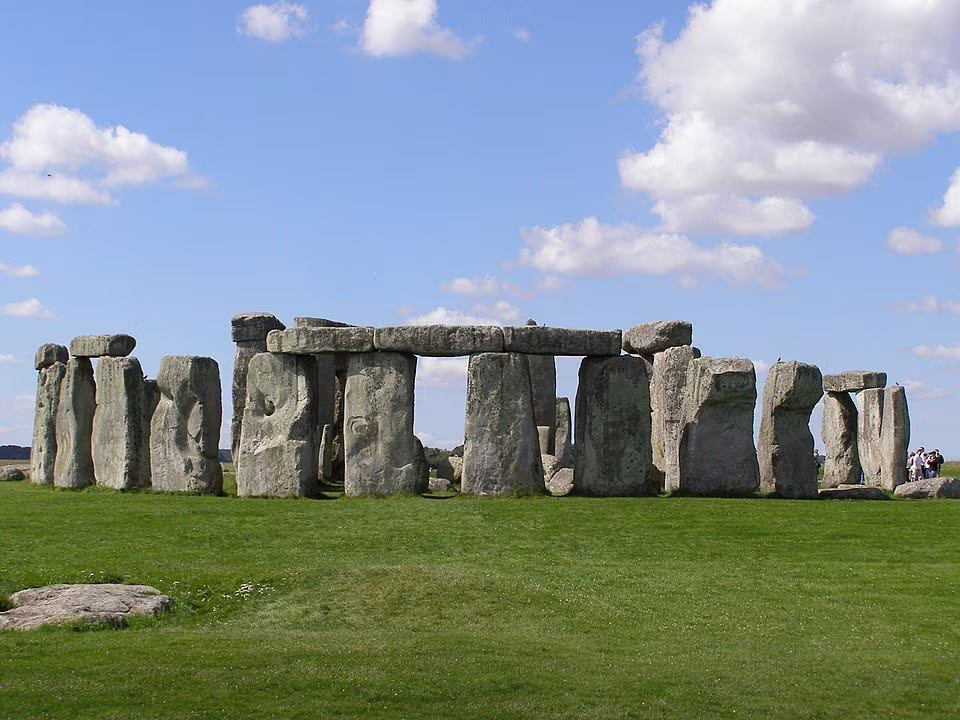
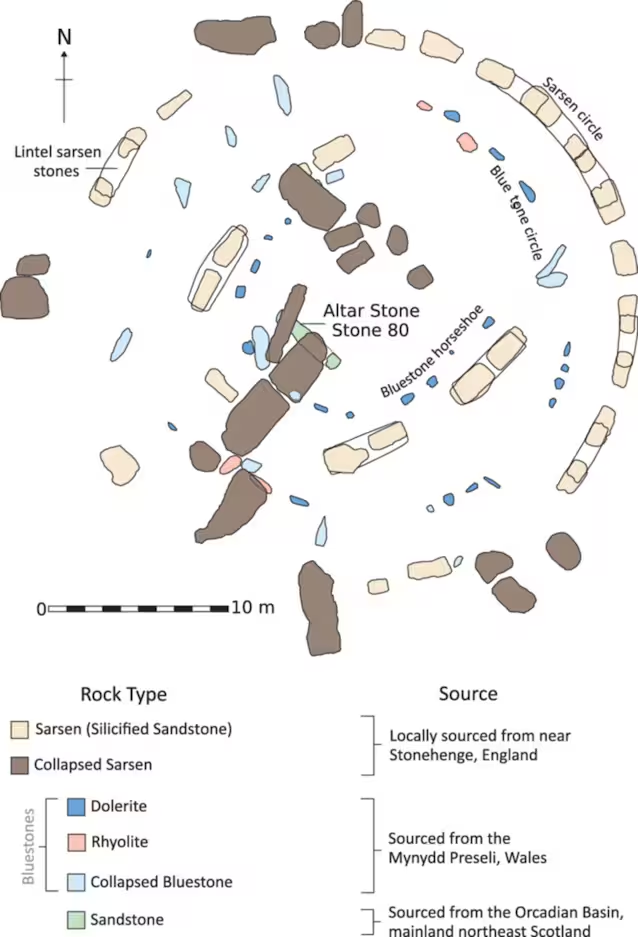
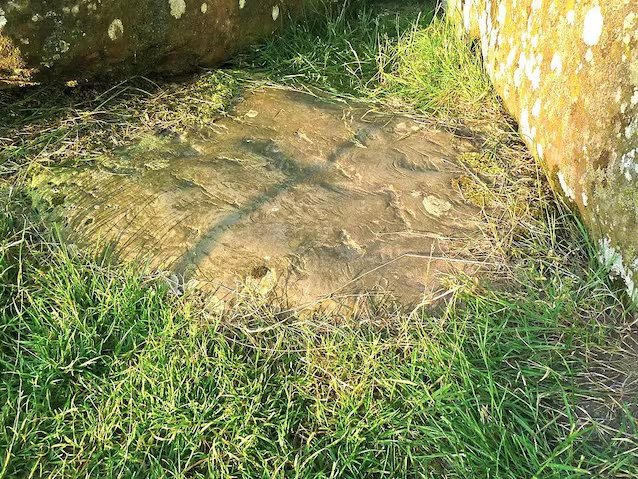
For over a century the origin of the so-called “Altar Stone” Of Stonehenge represented one of the greatest archaeological enigmas of Great Britain: this enormous sandstone monolith, almost five meters long and located at the center of the famous megalithic complex, is very different from the other stones that make up the monument. Now a new study published on Journal of Quaternary Sciencewith Anthony J. Clarke as leader, proposes a more precise reconstruction of its origin and the long journey that took it to the Salisbury plain about 4500 years ago.
Scholars have long known that the Altar Stone did not come from west Wales, the place from which many of the Stonehenge stones were transported. Recent geological analyzes had instead suggested a much more northern origin, probably in North East Scotland, transported both by land, by sea and through rivers. The new study explored this hypothesis through a detailed comparison between the mineralogical composition of the stone and that of numerous rock outcrops in Britain, with an analysis of the tiny crystals (zircon, rutile and apatite) embedded in the sandstone.
The results that emerged have strengthened the idea that the monolith comes from the Scottish Highlands or from neighboring regions: the geological imprint of the stone matches the Orcadian Basin, in north-east Scotland. If confirmed, this provenance would make the Altar Stone one of the materials transported over the longest distance in the entire Stonehenge complex: over 700 kilometers separate the north of Scotland from the plain of southern England.
The research also focused on possible mode of transport. For many years it has been debated whether the stone could have been moved by glaciers during the glaciations. However, the authors believe that geological evidence does not support this hypothesis. Instead, the data suggests intentional transportation by Neolithic communities. According to the study, the most plausible path would have exploited a combination of land, sea and river routes.
The stone may have been moved along the east coast of Britain, via huge wooden and leather rafts or catamarans, and subsequently transported across a network of rivers and land routes up to the Stonehenge region. Although such an operation required a huge organizational effort, it would not have been impossible for companies already demonstrating remarkable engineering capabilities in the construction of megalithic monuments.
The discovery once again contributes to changing our vision of British Neolithic communities. The transport of a monolith of this size for hundreds of kilometers suggests the existence of very extensive contact networks, capable of connecting distant regions to each other.
More than just a building material, the Altar Stone may have had a strong symbolic valuerepresenting cultural, political or ritual ties between groups distributed over much of the island. The study itself does not definitively resolve all the questions about the origin of the stone, but it offers new evidence in support of a Scottish provenance and underlines once again how Stonehenge is the result of a complex network of relationships that crossed Great Britain already in the Neolithic.
