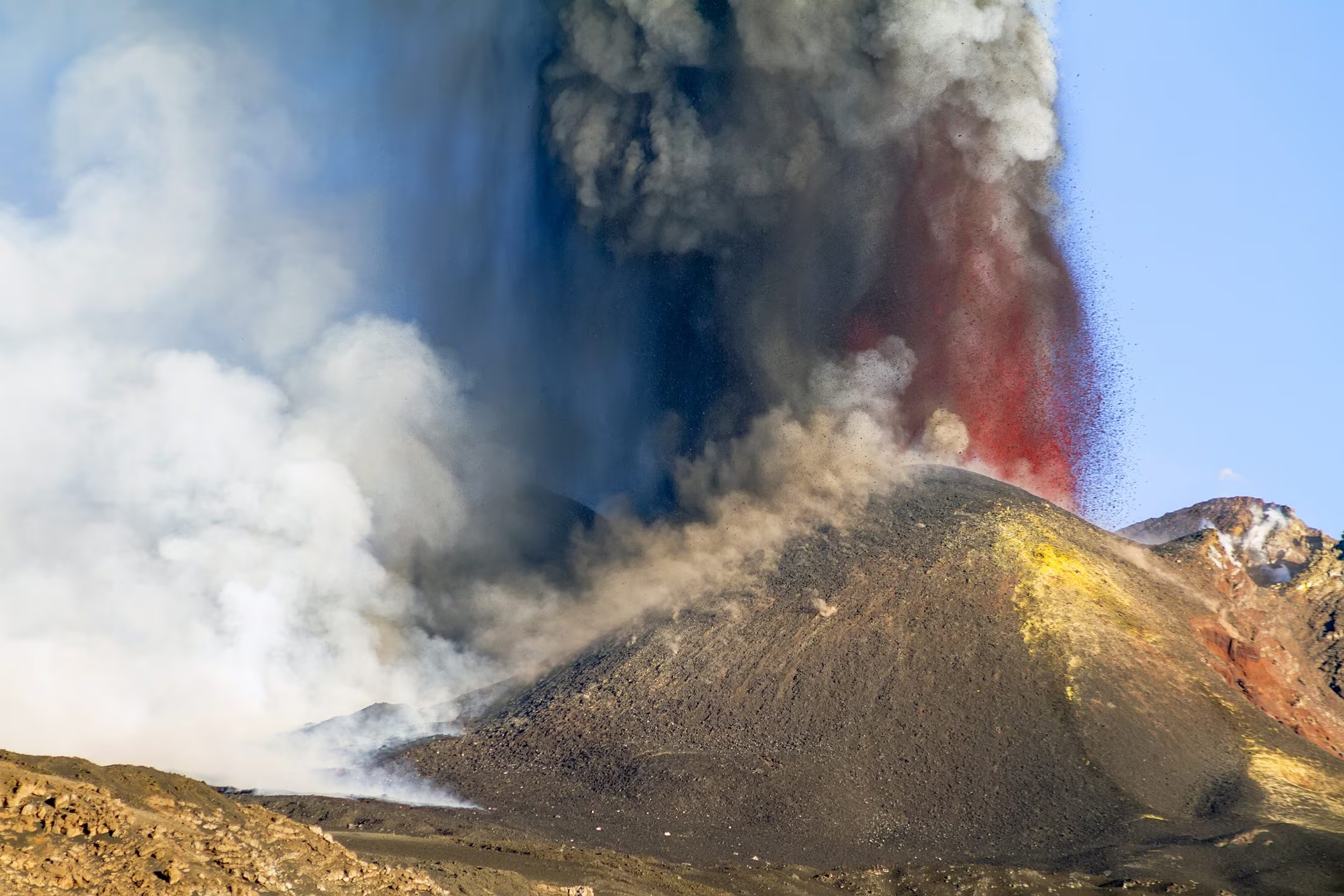
Etna is at the center of a new study which highlights how the volcano can give rise to violent explosive eruptions driven by very different mechanisms. The timing and manner in which these eruptions occur are significantly influenced by the content of water and carbon dioxide. Understanding which of the two components is dominant at a given moment is important for better evaluate volcanic risk. The study, published in the journal Geochemistry, Geophysics, Geosystems by a team of American researchers led by Cornell University in New York, is based on the analysis of samples taken from the volcano with very advanced techniques.
The role of gases in explosive eruptions
The same volcano can give rise to very different eruptions over time. This is the case of Etna, the most active volcano in Europe, which has both eruptions effusivewith basaltic lava flows, either explosivewith lava fountains and gas and ash emissions. The explosiveness of an eruption is determined by the presence of silica-rich magma and therefore very viscous and from a high gas content inside it. The viscous magma flows with difficulty and often forms a “plug” that solidifies in the volcanic vent and blocks it. The gases contained in this type of magma do not release easily, but accumulate, forming large bubbles that increase the pressure in the magma beneath the solid obstruction. When the pressure exceeds the resistance of the block above, the gases are suddenly released in an explosion, dragging fragments of magma and rock. For a long time it was believed that water was the main engine of explosive eruptions, but it has recently been discovered that carbon dioxide can also play a crucial role.
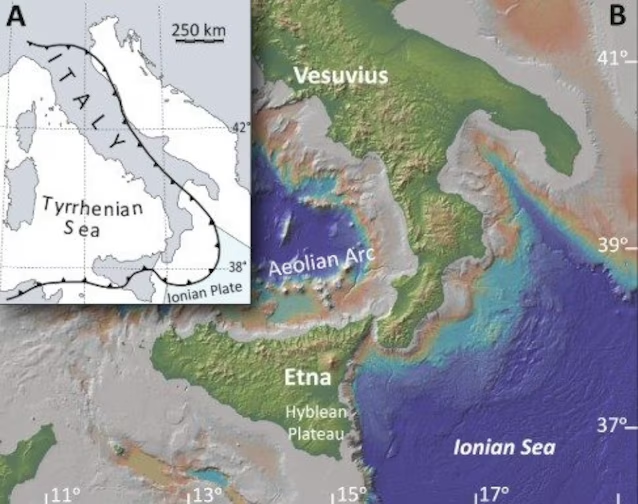
The 122 BC eruption: what researchers discovered
The researchers collected samples on Etna and then used an advanced technique in the laboratory to analyze tiny bubbles trapped in mineral crystals which were formed in the magma released during the eruptions. By measuring the density of carbon dioxide in these small bubbles they were able to trace the pressure and then to depth at which the magma was found before the eruption. Thanks to this technique it was possible to obtain important information on theEtna eruption 122 BCamong the most violent to which the volcano gave rise, which was partly effusive and partly Plinian, the most explosive category of eruptions. In this case, the magma slowly rose from a depth of 22 km, stopped for weeks between 2 and 5 km, slowly releasing gases, and then escaped to the surface in an explosion. The researchers have compared this eruption with one from 4000 years agoin which the magma rose very quickly from 24-30 km deep, pushed by a much higher concentration of carbon dioxideerupting within hours. These two violent eruptions, therefore, had very different dynamics dictated by the respective contents of the two components. Above a certain concentration of carbon dioxide, magma erupts rapidly rising from great depths, while when water prevails the process takes place slowly at superficial levels.
The importance of the study in risk prevention
Etna is an ideal laboratory in which to study the mechanisms of eruptions since it is one of the few volcanoes in the world where water and carbon dioxide compete in controlling its explosiveness. Usually, however, either water prevails, as happens with volcanoes close to subduction zones, or carbon dioxide, as happens with oceanic islands. Understanding which component between water and carbon dioxide dominates at a given moment allows us to elaborate a much more precise risk assessment. The technique applied to Etna’s magmas will also be used for other volcanoes in Chile, Hawaii and other areas of the planet.
