In 2026 the summer solstice falls June 21st at 10.24am (Italian time): this will be the longest day of the year and, from an astronomical point of view, at that moment the summer season in the Northern Hemisphere will also begin. At midday, in fact, the Sun records its maximum height from the horizon throughout the year and in Tropic of Cancer reaches it zenith: precisely this moment that marks the official starting point of the summer season.
The solstice, therefore, is a precise astronomical instantnot a whole day, which happens the moment i rays of the Sun they hit perpendicularly The Tropic of Cancer.
Throughout history, the arrival of good weather has always been experienced as a symbolic moment of passage and “return to life”. The populations living in the far North also feel it in a particular way, accustomed to dealing with long periods of prolonged darkness.
What time is the summer solstice 2026: date and time
As anticipated, the summer solstice 2026 falls Sunday 21 Juneat 08:24 UTCwhich correspond to 10:24 Italian time (summer time, i.e. the one currently in force, is in fact two hours ahead of Universal Time).
But why does the solstice happen? It all depends on theconstant inclination of the earth’s axis with respect to the plane of the orbit around the Sun, equal to 23°27′. It is this inclination that determines the variable duration of daylight hours and the alternation of the seasons: for about half of the year the northern hemisphere is more “leaning” towards the Sun, with longer days and higher temperatures, while in the other half it is the southern hemisphere that is more exposed. If the axis were not inclined we would have neither seasons nor significant variations in the length of the day, and therefore not even equinoxes and solstices.
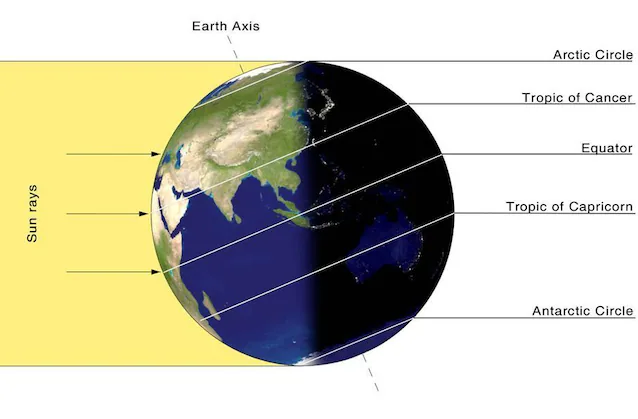
At the moment of the summer solstice, in Tropic of Canceror the imaginary line located approximately 23° north of the equator, the Sun is located at Zenith at midday, i.e. the rays fall perfectly perpendicular and the objects do not cast a shadow. At our latitudes, the Sun does not reach the Zenith, but today is the day on which it reaches its maximum height above the horizon throughout the year.
For the same reason, June 21st is also the day with more hours of light absolutely innorthern hemisphere: during the June solstice the Arctic Circle is completely illuminated, while the Antarctic Circle is in darkness. Consequently, in all locations south of the equator the day lasts less than 12 hours while in all locations north the day lasts more than 12 hours.
One question remains: why does the solstice not always fall on the same day, but oscillates between June 20th and 21st? The reason is linked to the fact that the Earth does not take exactly 365 days to complete an orbit around the Sun, but approximately 365 days and 6 hours. This small difference means that the moment of the solstice occurs when the Earth is in different positions along its orbit and it is precisely to compensate for the difference that every four years we insert a leap year.
It is no coincidence that the solstice falls on June 20th typically in leap years (the last time in 2024, the next in 2028): 2026 is not, and so the appointment returns to the 21st.
Why do we start losing light right after the longest day of the year?
Once the solstice has passed, the days slowly start to get shorter again and we actually start to “lose” light. Here, however, lies a curious and not very intuitive detail: the earliest sunrise and latest sunset of the year do not fall on the day of the solstice.
The earliest sunrise, in fact, occurs on days that precede on June 21st, while the sunset later arrives in following daysusually between the end of June and the beginning of July. In other words, even if the longest day has already passed, for some time the Sun continues to set later and later.
The reason for this misalignment has to do with thetilt of the Earth and with the way our planet moves around the Sun. They are small but decisive variables, which create a gap between what our clocks show and the real position of the Sun in the sky. That’s why the earliest sunrise and latest sunset dates change from city to city, depending on your latitude and location within your time zone.
Some concrete examples, taken from the data: June 21st Rome the Sun will rise at 05:31 and it will set at 8.47pma Milan will arise at 05:33 and it will set at 9.15pma Naples will arise at 05:30 and it will set at 8.37pm ea Palermo will arise at 05:43 and at 8.32pm.
A week later, the June 28tha Rome the Sun will rise at 05:34 and it will set at 8.48pm, to Milan will arise at 05:36 and it will always set at 9.15pma Naples dawn will be at 05:32 and sunset at 8.38pmwhile a Palermo sunrise and sunset will be at respectively 05:45 and at 8.33pm.
In short, in the days immediately following the solstice, sunset will be slightly later but, overall, the day will last less.
Meaning, traditions, bonfires and Stonehenge
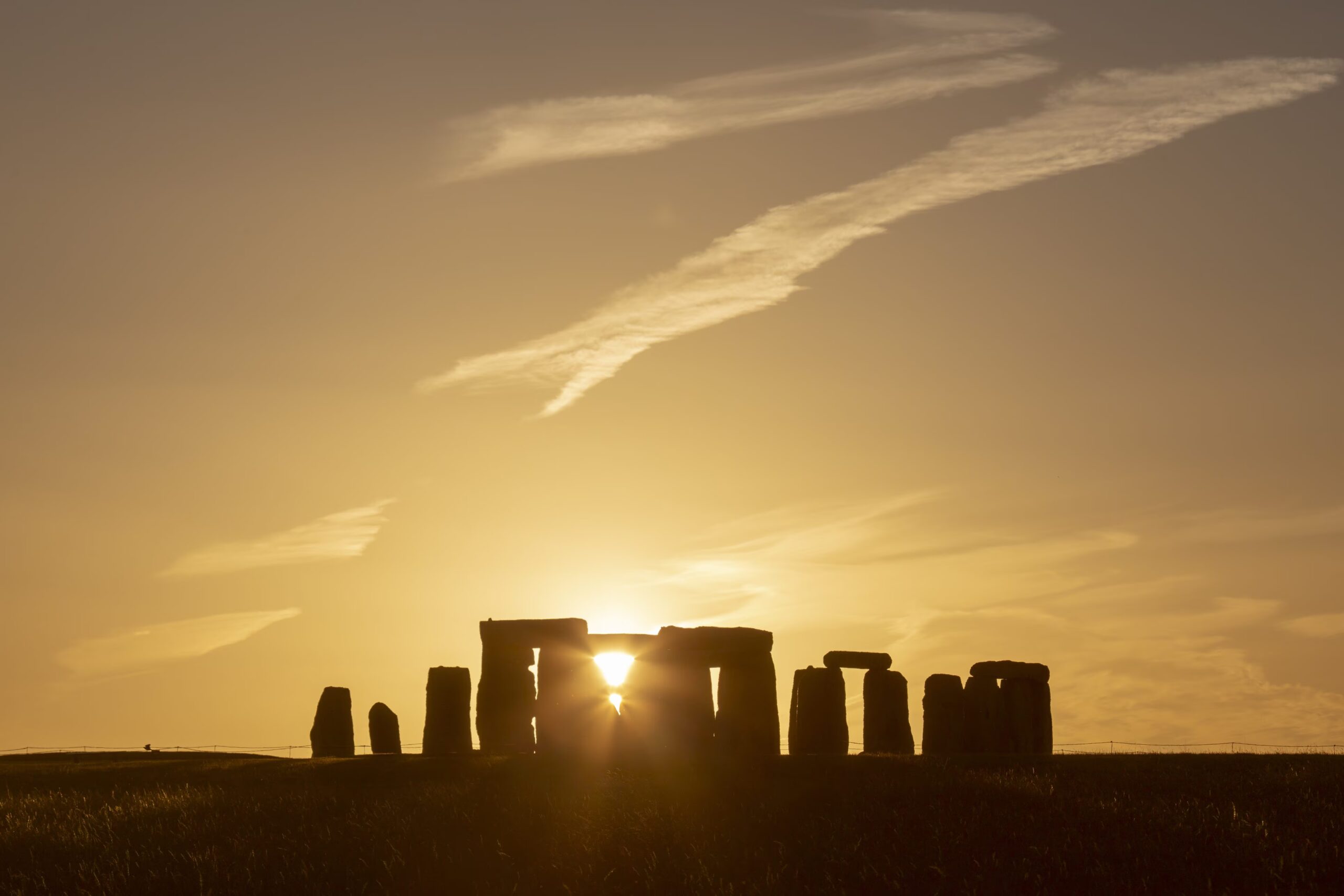
Even today, around the world, the summer solstice is celebrated in very different ways: one of the traditions with the greatest impact is undoubtedly thesunrise at Stonehenge. During the summer solstice, the first rays of the Sun align perfectly with the arrangement of the megaliths inside the English archaeological site: the Sun rises to the left of the Heel Stonethe largest of all megaliths (about 30 tons in weight), and passes exactly through the central axis of the entire complex.
In Spainhowever, the major celebrations are held a few days after the solstice, in night between 23 and 24 Junethe so-called Noche de San Juan. During what is actually one of the shortest nights of the year, the Spaniards gather on the beach and light bonfire near the sea: tradition requires that participants they skip the fireas a symbolic rite of purification. The same night is also celebrated in Sardiniain particular ad Algherodue to the Catalan influence linked to the centuries of domination of the crown of Aragon.
But they are the Scandinavian countries to experience the solstice with greater intensitythrough pagan rites handed down over time and linked to the fertility of the earth, the connection with nature and the end of the long winter.
In Sweden, for example, it is held the Midsommar partywhich takes place on the weekend around the solstice: the community gathers outdoors wearing floral-themed clothes and the traditional blomsterkransa handmade wreath with wildflowers and green branches. The real center of the party is the majstånga pole decorated with leaves and flowers and surmounted by two intertwined rings, around which popular dances accompanied by folk music take place.
In Norwayhowever, it is tradition to build impressive bonfires: in 2016 the citizens of Ålesund built the largest bonfire in the world, approximately 48 meters and composed of a massive structure of stacked wooden pallets.
Moving to the other side of the globe, in Alaska June 21st is dedicated to baseballwith the Fairbanks Midnight Sun Baseball Gamea tradition that dates back to 1906 and was even born from a bet between two local bars. The name Midnight Sun («Midnight Sun») derives from the fact that during the entire match no artificial lighting is used, but only and exclusively sunlight, which in these parts remains until late in the evening: being close to the Arctic CircleIn fact, Alaska experiences the “Midnight Sun” phenomenon for about three months of the year.
