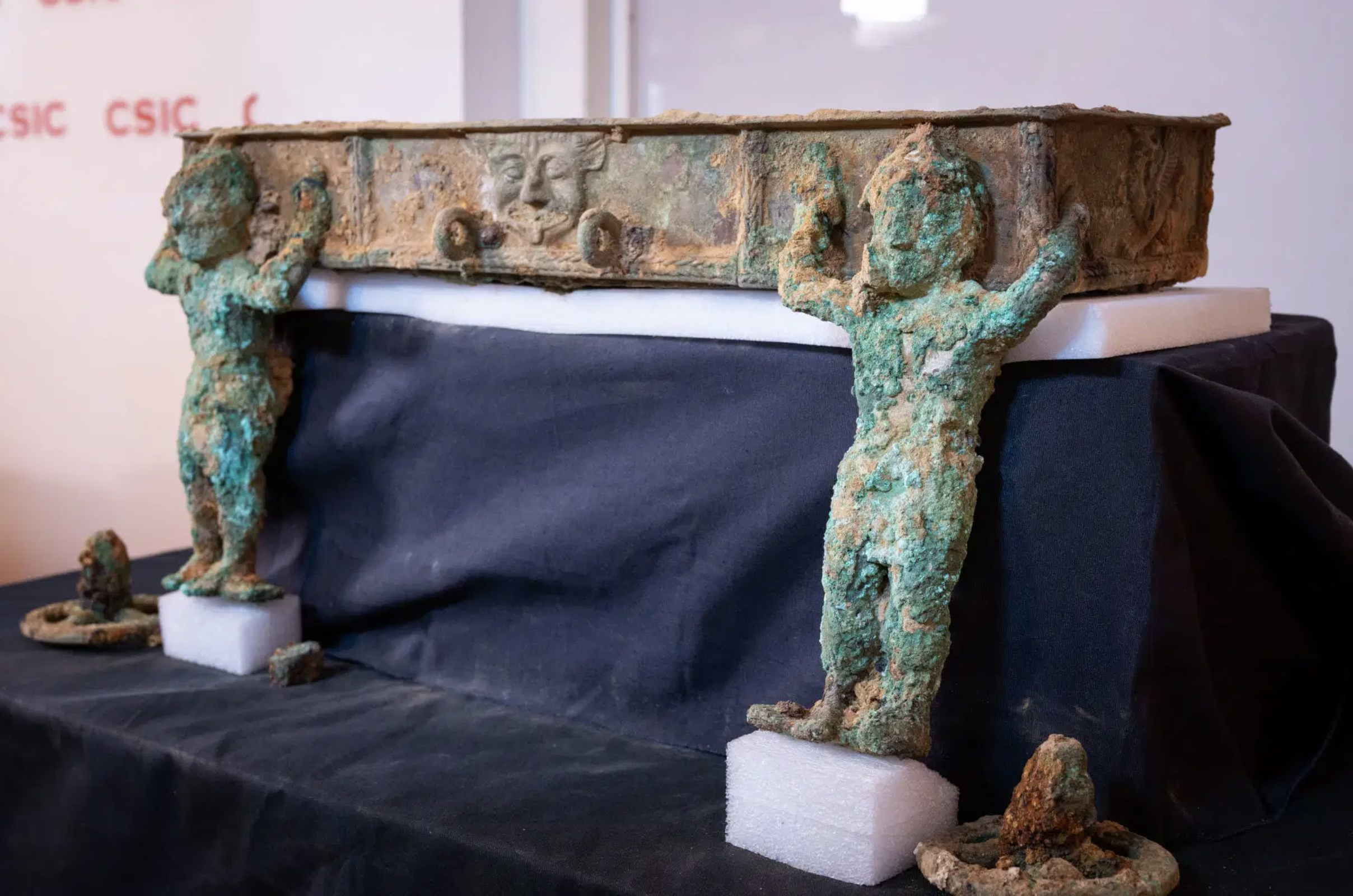
A bronze chariot without comparison in the Iberian Peninsula, Greek ceramics, oriental ivories and a alabaster vase of Egyptian origin. These are some of the finds that emerged during the eighth excavation campaign at the site Casas del Turuñueloin Extremadura, in southwestern Spain, which offer new information on the relationships between the civilization of Tartessos and the great cultures of the Mediterranean in the 5th century BC
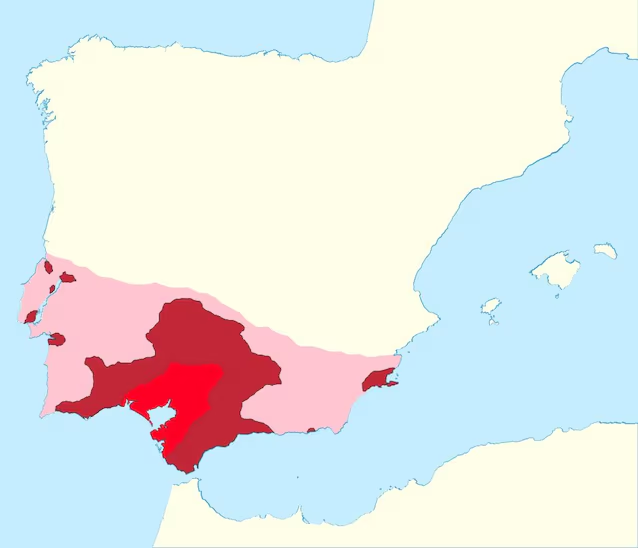
There Tartessian civilisation it was one of the most important in protohistoric Spain, that is, before the arrival of the Phoenicians, the Carthaginians and the Romans. The Tartessians gave birth to a refined and complex civilization, which ran a commercial network which spread along the entire Mediterranean. The discovery, announced by the Instituto de Arqueología de Mérida (CSIC-Junta de Extremadura) as part of the project Building Tartesusconcerns a monumental building already known for the exceptional discoveries of recent years, including the famous one ritual sacrifice of dozens of animals and the first depictions of human faces attributed to the Tartessian culture.
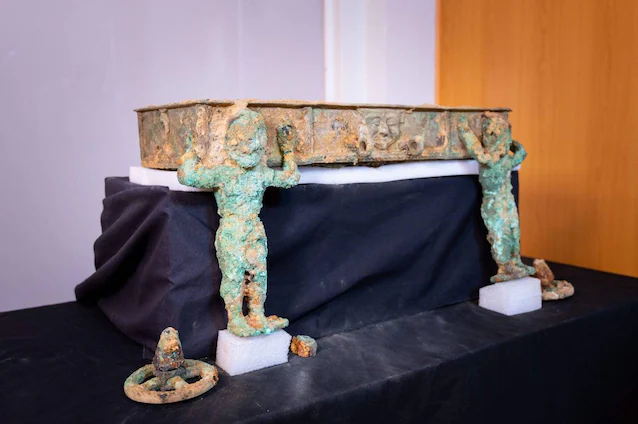
The most significant finding of the new campaign is a preserved bronze chariot in an extraordinary way. Archaeologists interpret it as an object intended for ceremonial or prestigious contextsrather than daily use.
It is an artifact without direct comparisons in the Iberian Peninsula: the most similar examples in fact come fromEtruriain central Italy, confirming the contacts that the Tartessian elites had with other regions of the Mediterranean. Numerous were found next to the wagon, as proof of this import objects. Among these are Greek ceramics, ivories of oriental origin and a vase made in Egyptian alabaster.
The collection of finds testifies to the arrival, within the Tartessian reality, of luxury goods coming from very distant areas, probably through one dense network of commercial exchanges which connected the south of the Iberian Peninsula to the main centers of the Mediterranean.
According to the researchers, these findings they confirm the role of Tartessos as hero of the trade routes of the time. The communities of the far western Mediterranean they were not isolated realitiesbut actively participated in the circulation of goods, raw materials and valuable artefacts. The objects found in Casas del Turuñuelo therefore represent not only luxury goods, but also indicators of economic and cultural relations that characterized the Mediterranean of the 5th century BC
The excavation campaign also allowed us to broaden our knowledge of the monumental building, which continues to yield finds of exceptional interest. Archaeologists underline how the site constitutes a unique site for understanding the last decades of the Tartessian civilisation, shortly before its disappearanceprobably due to thecommercial rise of the Phoenician centers on the coast.
