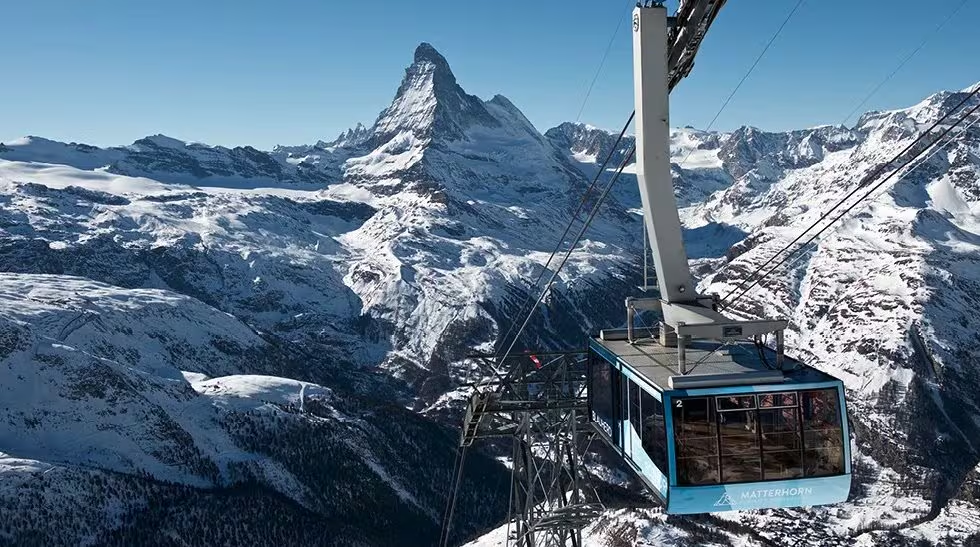
Reaching the impressive height of 3,883 meters above sea level, the Piccolo Cervino cable car (also known as Matterhorn Glacier Ride) it is the highest in Europe. Breuil-Cervinia connection (Italy) in Zermatt (Swiss) exceeding the 900 m difference in altitude on a 4,000 meter route, and was created thanks to an investment of 140 million Swiss francs (CHF), approximately 150 million euros.
The plant is able to withstand winds over 240 km/h and at temperatures of -30 °C via 2 carrying ropes from 64 mm and 1 55 mm hauler. With well 25 cabins with 28 seatswhich travel at 7.5 m/s (27 km/h) this system offers a range of 2,000 passengers/hour.
The project required 9,000 m³ of rock excavation2,500 m³ of concrete and exceeds a suspended span of 2,700 m without pillars, increasing tourism by 20% 365 days a year.
The 3S gantry technology: description of the project
The Piccolo Cervino cable car, known as Matterhorn Glacier Riderises to the impressive height of 3,883 meters above sea level, hosting the highest arrival station in Europe. In order to cover the 900 meters of height difference that separates it from the 2,939 meters of the Trockener Steg departure station along a route of approx 4,000 metersthe work was designed to employ the 3S gantry technology.
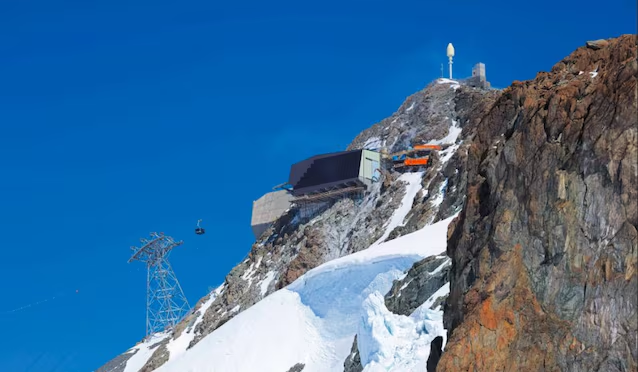
This system combines two 64 mm diameter load-bearing ropes and a 55 mm hauling rope, guaranteeing the structure the ability to resist stress due to winds reaching over 240 kilometers per hour.
To carry out the work it was necessary to remove further 9,000 cubic meters from rock to wall, laying approx 2,500 cubic meters of concrete processed with antifreeze additives to withstand temperatures that drop to – 30 degrees.
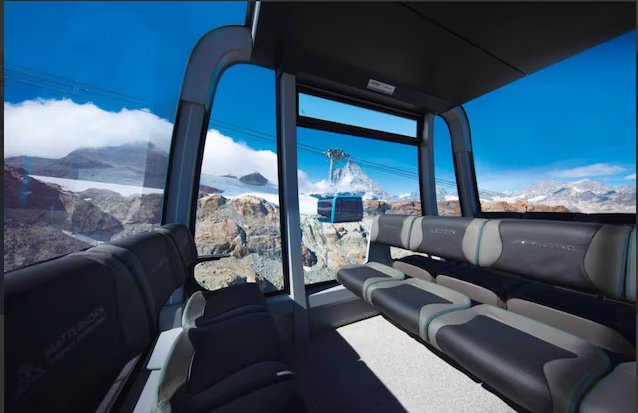
Among the most impressive structural features of the project is the suspended span beyond 2,700 meters which overcomes the glacier without any intermediate support. The 25 cabins, designed by Pininfarina and capable of carrying up to 28 passengers each at a speed of 7.5 meters per secondare powered by DirectDrive direct drive motors, which are capable of reducing energy consumption by approximately 5% bringing the total transport capacity to 2,000 people per hour.
Investment of 140 million Swiss francs: socio-economic impact
The investment total of 60 million Swiss francs for the first leg, which then increased, going to exceed 140 million with the completion of the Matterhorn Alpine Crossing, it entailed a radical transformation of the economy alpine between the Canton of Valais and the Aosta Valley.
Managing to connect in about 45 minutes Breuil-Cervinia (Italy) e Zermatt (Switzerland) during all 365 days of the year, the implementation of the project was able to reduce the historical one dependence from seasonality winterconverting the area into a destination that can be used every month. This direct link generated a increase estimated of 20% in tourist flows non-ski cross-border, intercepting in particular the demand of international and Asian markets.
The related industry economic for local hospitality translates into a presumed growth in the value of residential and hotel properties between 10% and 15% in the neighboring municipalities, as well as giving strong support to direct and indirect jobs related to maintenance, reception and high-altitude services. The transition from a purely ski model to a global panoramic hub guarantees a constant return on investment with an important and profound stabilization of employment for the mountain communities on the two sides.
