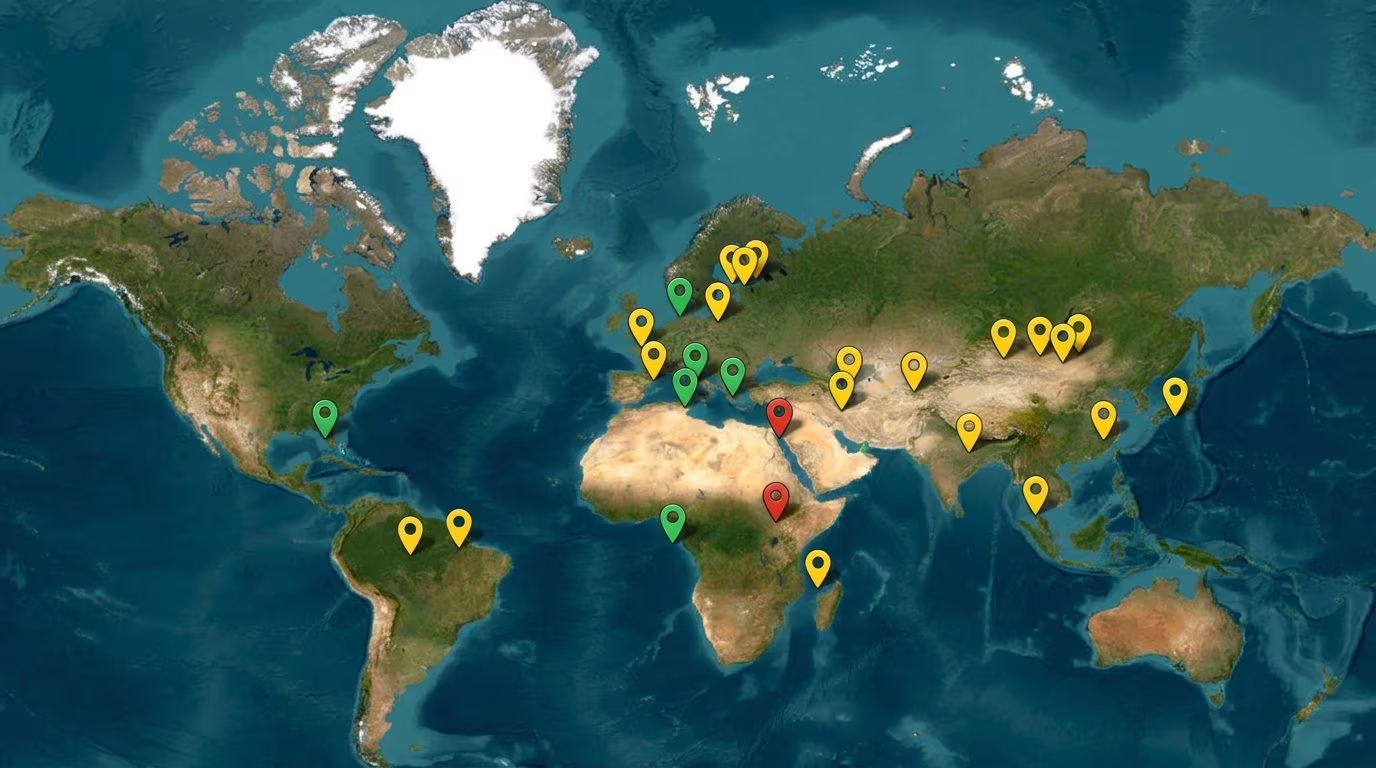
The United Nations Educational, Scientific and Cultural Organization, better known as UNESCOhe entered 25 new locations in the list of world heritage sites, during its 48th session organized in Busan, South Korea. Of these 25, 19 are cultural heritage sites, 5 are natural heritage sites and 1 is considered a mixed heritage site (Mount Olympus).
Among the many new places there is also theItaly: the World Heritage Committee has in fact registered the serial site among the world heritage sites “The Italian-style condominium theater system in central Italy between the 18th and 19th centuries”. It is a site that is made up of 10 theaters located in three regions (in Marche, Emilia-Romagna and Umbria) recognized as an exceptional representation of the experimental ferment that developed around theatrical architecture in central Italy in the 18th and 19th centuries.
They thus rise to 62 Italian sites registered in the list of world heritage UNESCO.
From Mount Olympus to Normandy
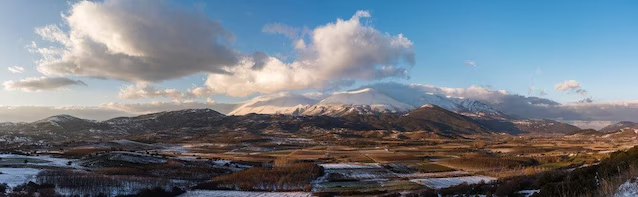
Among the other new entries you can find the famous home of the gods on the Mount Olympusa central landmark of Greek mythology throughout the Greek world, right down to the beaches of landing in Normandya site along approximately 50 miles of coastline that includes Utah, Omaha, Gold, Juno and Sword beaches, as well as Pointe du Hoc, locations directly associated with the Allied landings of June 6, 1944.
The first registrations of have also been included among the new places Comoros, São Tomé and Príncipe – a historic achievement for Africa – but also the migratory landscape of Boma-Badingiloin South Sudan, which includes Boma National Park, Badingilo National Park and the surrounding landscapes of floodplains and savannas in South Sudan.
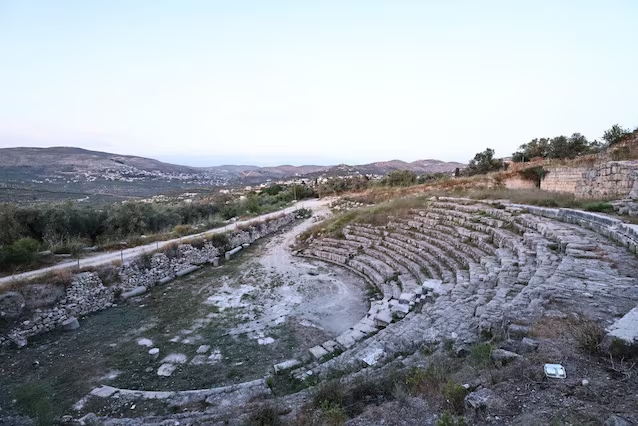
And again five sites fortifications located in the historic region of Jabal Amel, in Southern Lebanon: Qalaat Al Chakif (Beaufort Castle), Qalaat Tibnin (Toron Castle), Qalaat Chakra (Dubieh Castle), Qalaat Deir Kifa (Maron Castle) and Qalaat Chama’ (Chama’ Castle), and Sebastia, Palestinea site that preserves the archaeological traces of the many civilizations that have occurred there over the centuries.
From Europe to Asia: architecture and craftsmanship
The picture is completed by Aalto Works in Finlandthirteen buildings designed by the Aalto family, works that distinguish Finland’s contribution to modern architecture, the castle of Alamūt perched on the Alborz mountains in Irana fortified network that functioned both as a refuge and as a center of study and culture.
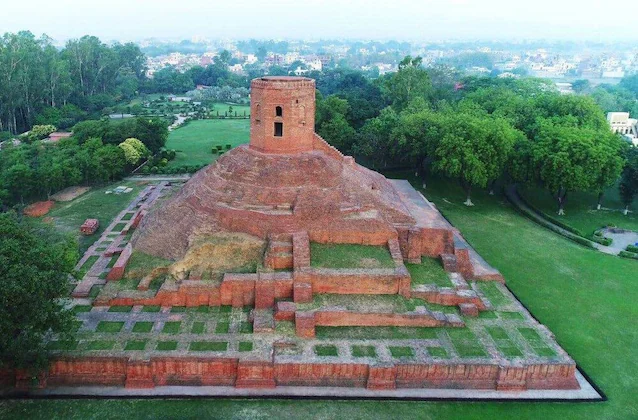
And again, the Buddhist site of Sarnath in Indiathe sacred site where the Buddha is believed to have delivered his first sermon and met his first disciples.
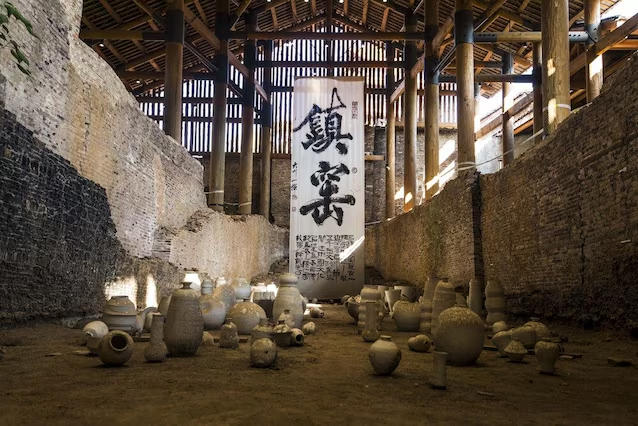
Also registered on the list the modernist architecture of Tashkent in Uzbekistana total of ten modernist buildings and urban complexes built between the 1960s and the early 1990s, a fundamental period in the reconstruction of Tashkent following the ’66 earthquake, the porcelain sites of Jingdezhen in Chinawhere porcelain of the highest quality was produced.
Finally, the ancient Japanese capitals, Asuka and Fujiwarawhich include 19 archaeological areas that include government buildings and offices, Buddhist temples and mound tombs, which preserve archaeological evidence of the capitals.
