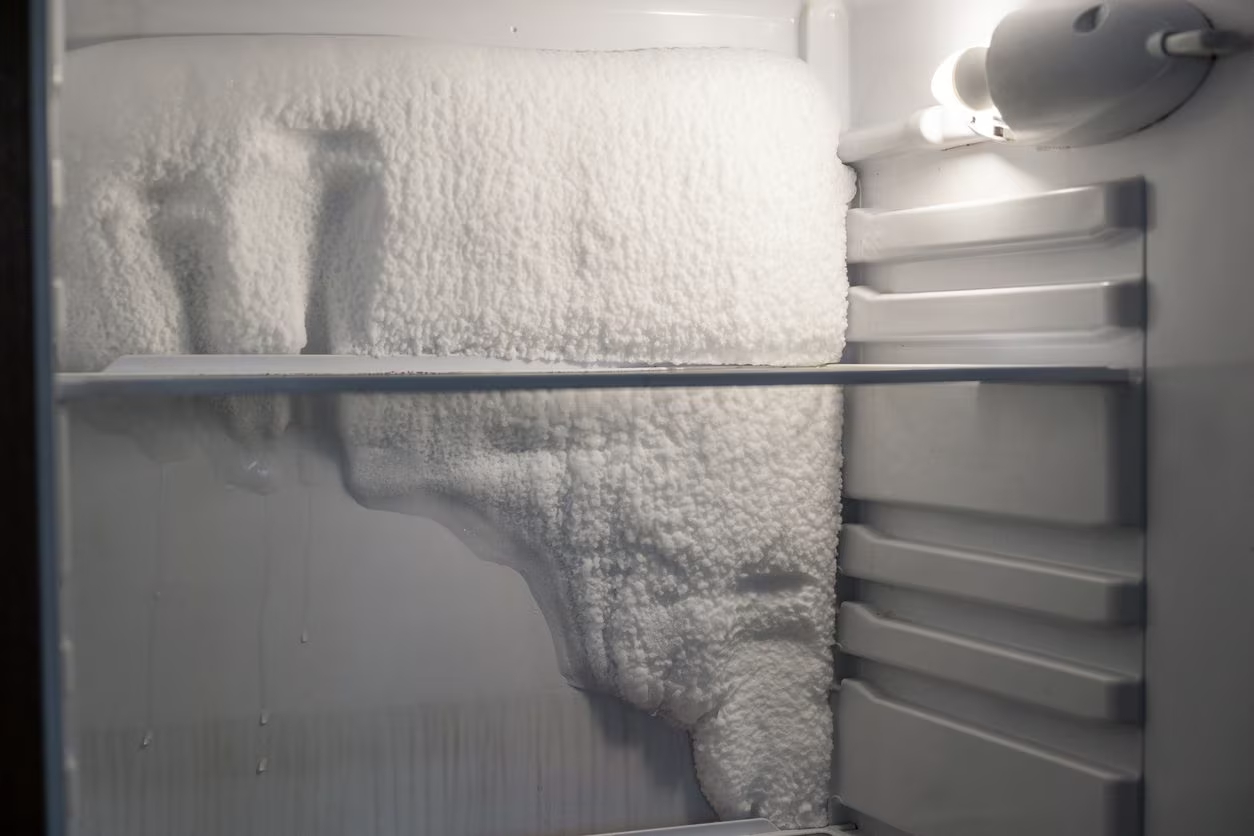
If ice forms on the walls of the refrigerator, it’s our fault! Let’s open the refrigerator every day, and each time a small amount of air present in our kitchen enters it. This air contains water vapor which upon encountering the cold walls of the fridge can change state, transforming into that thin layer of ice also known as frost. The area in which the phenomenon is most often observed is the wall in contact with theevaporatorthe portion of the internal system responsible for cooling, as reported by a 2023 review. Some daily habits can limit the formation of ice inside our refrigerators: do not place hot foods insideavoid leaving the door open more than necessary and check it periodically state of the seals These are just a few examples that can make the difference.
When the fridge makes ice and the role of condensing water vapor
Have you ever opened the refrigerator and noticed one thin layer of ice that covers the internal walls, especially the rear one? It is the consequence of physical phenomena that have been well known since elementary school: transitions of state.
Air always contains a certain amount of water vaporthat is, water in a gaseous state. When we open the refrigerator door some of the outside air enters: this enters contact with the coldest surfaces of the fridgeand here the vapor begins to lower its temperature, passing into a liquid state and forming tiny droplets of water. If the temperature of the surface they touch is around or drops below 0°Cdroplets yes they freeze transforming into ice crystals. This is how that famous thin layer also known as is born frost.
How come ice forms on the back wall
According to a review published in 2023 in the scientific journal Energiesmuch of the research on frost formation in domestic refrigerators focuses onevaporatorthe component responsible for cooling. It is a serpentine inside which flows a coolant which absorbs the heat present in the fridge and transfers it outside. Precisely for this reason it is about one of the coldest areas of the entire system.
In many domestic refrigerators the evaporator is often found behind the rear wallconsequently it will tend to cool more than the others and this is why it can become the main place for the appearance of frost.
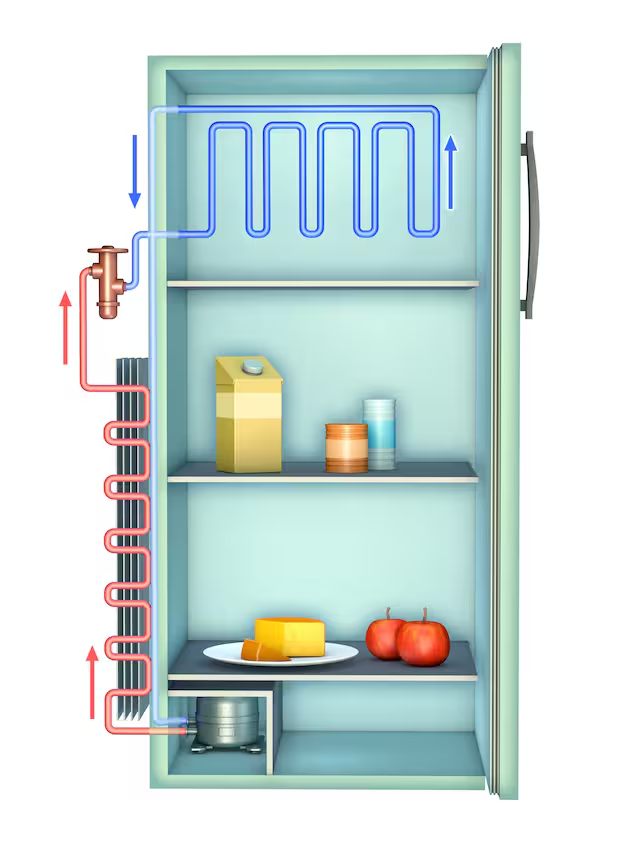
Then there are the so-called refrigerators NO FROSTwhere the evaporator is not in direct contact with the compartment that houses the food, but is in a separate and hidden behavior. In these models, frost tends to accumulate directly on the evaporator, but is periodically deleted from automatic defrost cycles thanks to a fan that circulates the air continuously. In this case the internal walls of the fridge generally remain dry and free of visible ice.
How to avoid ice buildup in your refrigerator
Is frost forming in the refrigerator a problem? Not necessarily. Ice formation is one almost inevitable consequence of the normal functioning of the fridge: each opening of the door, even if rapid, introduces a certain quantity of more humid and warmer air coming from the outside. The occasional presence of a thin layer of frost on the rear wall it doesn’t automatically indicate something negative. A different situation is where the ice is too thick, extends to other surfaces of the fridge or reappears very quickly immediately after being removed: in these situations it would be advisable to check the correct functioning of the fridge.
To reduce the phenomenon, it will be enough to apply physics knowledge and some common sense rules. Since the formation of ice on the walls of the fridge depends greatly on the amount of humidity present in the air, it is advisable avoid placing still hot food in the refrigerator: during cooling they will release large quantities of water vapor which will then condense against the walls of the fridge, turning into ice. Also store food in closed containers can help limit indoor humidity, as well as avoid prolonged door openings.
Another aspect not to be underestimated is the state of the gaskets, that is, the rubber portions that ensure the hermetic seal between the door and the refrigerator. The review published on Energies in fact, it indicates that deformations or damage to the seals can favor the continuous entry of hot air from the outside.
Finally, also set temperatures lower than necessary This can be a problem, as it would increase the temperature difference between the internal surfaces of the refrigerator and the air, creating conditions more favorable to the condensation and freezing of water vapor.
