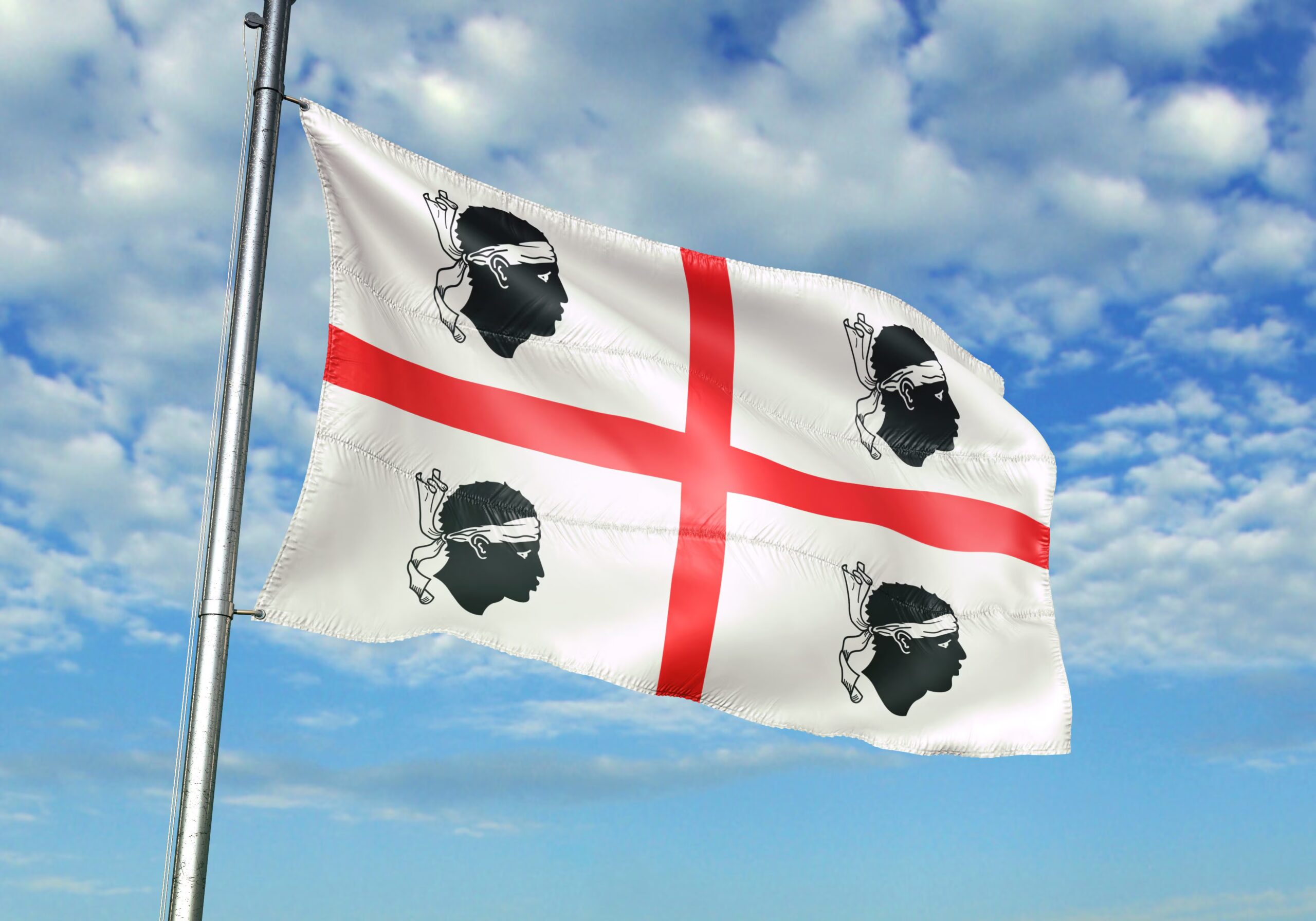
There Sardinian language it is mistakenly called dialect, a generally incorrect categorization, not dictated by linguistic reasons but by political and cultural issues.
Sardinian is one independent language because it has its own grammara lexicon of distinct origin, an autonomous historical evolutionwhich does not derive from Italian but directly from Latin, and one written tradition. It is mainly divided into the two large groups of campidanese and of Logudorese-Nuoro. It has also been recognized as a language institutional level. It was recently included in the Atlas of World Languages by UNESCO in danger.
The Nuragic language and Latin
As already mentioned, Sardinian cannot be defined as a variant of Italian or a dialect, because it is one Romance language born autonomously, exactly like French, Spanish or Portuguese. After the fall of the Roman Empire in 476 AD Latin progressively ceased to be the language of daily use, being replaced in spoke come on local vulgarwhile in the written language – especially religious, philosophical, medical-scientific and legal – it remained common for centuries.
Sardinia is no exception and sees the birth of a local vernacular. Its training took place between the end ofancient times and the early Middle Agesvery early in comparison with Italian. Since Sardinia is isolated, due to its geography, the traits of Latin selected by the Sardinian were particularly conservative than other Romance languages develop on the continent. Linguistically isolated areas tend to be more conservative, this phenomenon is explained through the theory of peripheral areas. Sardinian, in addition to its Latin heritage, retains traces of Nuragic languagepresumably spoken in the area in pre-Roman age. This leaves traces in Sardinian as substrate language. Thanks to this phenomenon, names of places and inhabited centers from very ancient times survive in the current way of speaking. Some toponymic reconstruction studies have tried to identify the origin of these terms, managing to date some even before the Phoenicians. Most of this lexical baggage remains, however etymologically obscure.
Subsequently, contacts with Byzantine Greek, Catalan, Castilian and other languages of the Italian peninsula contributed to substantially modify Sardinian over the centuries. Between the 11th and 12th centuries centurySardinian appears for the first time in official administrative documentsa sign that it was not simply a language of use, but an idiom also used in areas such as law, politics and administrationat the time monopolized by Latin in the rest of Europe.
The Aragonese conquest, literary production and variants
Starting from the fourteenth century, therefore, the Catalan-Aragonese conquest profoundly changed the political structure of Sardinia, affecting its linguistic balance. First the Catalan and then later the Castilian they became the languages of power, administration and written culture. These languages will influence Sardinian as overlayercontributing to the formation of different linguistic varieties on the island: in particular the differences between campidanese And Logudorese, spoken respectively in the centre-south and in the centre-north, they can be attributed to the influence of Catalan and Castilian.
In these centuries the linguistic plurality of the island was also consolidated as in addition to Sardinian and its varieties, the Catalan from AlgheroThe SassariThe Gallura (an Italian-Romance linguistic variety, very close to Corsican) and, subsequently, the tabarchinoa variant of the Ligurian language.
The result was a Sardinia that was linguistically very rich, but also marked by a strong hierarchy: while the Iberian languages occupied the official and written spaces, Sardinian was increasingly confined to daily and oral communication. It is precisely in this phase that a true situation arises diglossiathat is, the coexistence of a “high” language, used in public and institutional contexts, and a “low” language, spoken by the people but excluded from the centers of power.
This situation also directly influenced literary production. Many Sardinian authors between the sixteenth and seventeenth centuries chose to write in Castilian, Catalan, Latin or Italianlanguages considered more prestigious and capable of guaranteeing greater circulation of literary works, relegating Sardinian only to religious, popular or texts intended for a purely local audience. However, there are literary testimonies in Sardinian, even very ancient ones, such as the poem Sa Vitta et sa Morte, et Passione de sanctu Gavinu, Prothu et Januariu (circa 1463) by Antonio Canoconsidered the first important literary work in the Sardinian language. This text excellently shows a characteristic that will accompany the Sardinian tradition for a long time, that of the encounter between cultured culture and oral tradition.
Sardinian as a means of identity reappropriation: recognition
Today Sardinian continues to occupy a central place incultural identity of the islandeven if it experiences a complex condition, suspended between family transmission, generational loss, constant attempts at valorization and emigration of its population. Speaking Sardinian brings with it a cultural system built for centuries: it is a way to preserve memories, relationships and affections, landscapes and history, all elements that enhance one’s belonging.
Sardinian is recognized as historical linguistic minority give it Italian state. This recognition falls within the framework of Law 482 of 1999which protects various historical languages present on the national territory. The language has always existed independently of the law, but institutional recognition gives it a new importance, making it a historical linguistic heritage worthy of protection.
In this sense, continuing to call it dialect is as much a linguistic imprecision as it is the reflection of a cultural hierarchy that for centuries has devalued local languages compared to those of power. From here we must therefore recognize that Sardinian, like other languages spoken on the peninsula, have always had value and continue to have their own voice.
