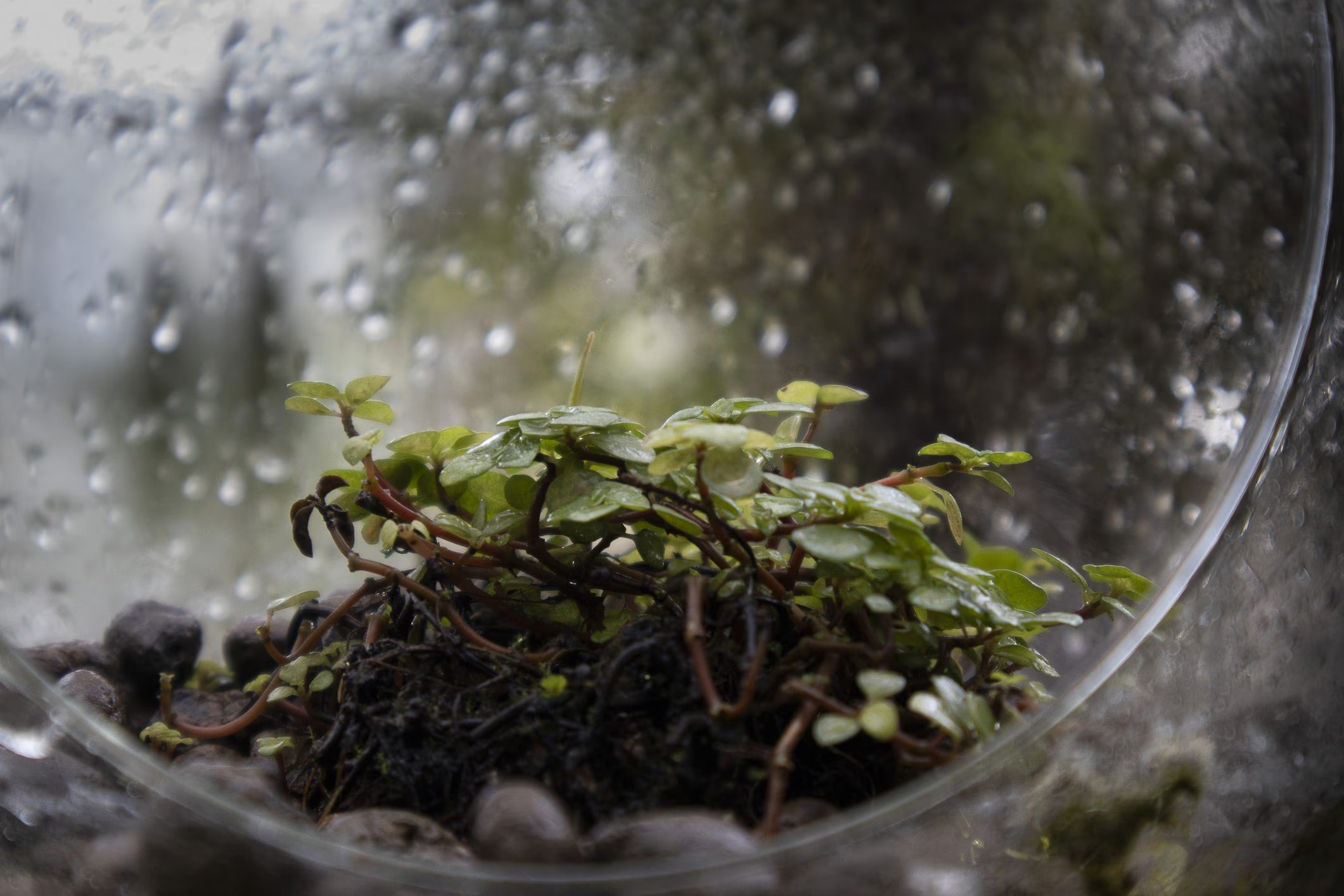
A terrarium (or terrarium) can be considered a real “land aquarium” inside which do not live aquatic creatures, but plants of all kinds. Inside it, in fact, we can recreate a real one miniature ecosystem almost entirely self-sufficient, with a microclimate precise that regulates the internal temperature and the cycle of water and gases necessary for the survival and growth of plants. In some terrariums a microfaunathat is, tiny organisms that live in the soil and keep decomposition going.
But what exactly is a ecosystem? It is the set of all the environmental factors (such as soil, light, water, climate) and all the living organisms within it, which interact in a given area by exchanging matter and energy. A forest, for example, is an ecosystem, as is a meadow, with its flowers and the bees that collect pollen. A terrarium does exactly the same, on a smaller scale, with all its balances.
What’s in the terrarium land
Looking at a terrarium from the side, the soil looks like a painted canvas, with different substrates layered on top of each other. It’s no coincidence: each layer has a function.
That inferior it is fundamental, because in saturated soil the air no longer passes between the pores, and the roots remain without oxygen, a bit like us when we hold our breath for too long under water. For this reason, large, porous and stable materials are used such as gravel or expanded clay, coconut fiber or peat, which retain humidity. The layer, which can be lightened with perlite or pumice (useful for promoting aeration of the roots) is necessary for the drainageand collects excess water.
Above this layer is that superficialthe actual substrate, where the roots anchor themselves and absorb water and nutrients: a mixture of soil, coconut fiber and sand that combines anchoring, water retention and aeration.
Let’s imagine a basket of balls: at the bottom there are large basketball ones, which leave large empty spaces; above the tennis balls, smaller and more dense. By pouring water, it passes through the balls and accumulates below, between the balls — just as it does in the soil, where it falls by gravity into the drainage layer and prevents stagnation at the roots.
From climate to microclimate
Another important factor is the climate.
The climate is defined by multiple elements – temperature, humidity, pressure, wind, precipitation – which together establish the atmospheric conditions. All these elements, in the right balance, are essential for the growth of a plant: in African deserts, where the sand exceeds 70 °C and rainfall is rare, vegetation struggles; in the Amazon rainforest, with humidity close to 100%, Dassociazione excelsa trees reach 80-90 metres, like a 25-30-storey skyscraper.
In a terrarium, however, we are talking about microclimatebecause the conditions that are established inside it are valid only there and differ from those outside. It is a very delicate balance: even during maintenance, every exchange with the environment must be calculated so as not to compromise it. The two key factors to keep an eye on are therelative humidity and the temperature.
Humidity and the water cycle
THE’humidity it is the amount of water vapor dispersed in the air. And water is one of the essential “ingredients” of a plant: it transports nutrients up to the highest leaves and allows photosynthesis. The plants in a terrarium, however, require very little water, because they obtain it almost by themselves thanks to transpiration. But what does this phenomenon consist of?
From the leaves, through tiny openings called stomata, plants continuously release water vapor. It seems like a waste, but it is precisely this slow loss that allows new water to be absorbed from the soil. It works like a syringe: when we pull the plunger, a vacuum is created, a negative pressure that sucks the liquid inside. Likewise, evaporation from leaves generates negative pressure which, along with other forces, pulls water from the roots up to the canopy.
What happens to that steam? In a forest it disperses into the air; in a closed terrarium, however, it remains trapped. It meets the colder glass walls and condenses, becoming liquid again. The droplets slide down to the ground, penetrate it and are enriched with nutrients: the water is ready to be absorbed again. It is such an efficient recycling system that some closed terrariums only need to be watered after months.
How often should it be watered?
There is no single rule. The frequency depends on the climate of the environment in which we keep the terrarium (the drier it is, the more often it must be wet), on the type of plant (a succulent requires much less water than a tropical one), on the composition of the soil and on the configuration of the terrarium, which can be open or closed. Open terrariums, which exchange air with the outside, need more frequent watering than closed ones, where humidity remains sealed inside.
Temperature and light: the right balance
All terrariums share one characteristic: they are almost always made of transparent material glass. Light is in fact essential for photosynthesis, with which the leaves, thanks to chlorophylltransform CO2 into organic molecules – the building blocks of branches, roots and fruits.
Too much light, however, is a problem, because it raises the temperature and accelerates the water cycle. With excessive heat the leaves perspire more and the soil evaporates more: the air becomes saturated with vapor and a lot of condensation forms on the walls. This is not a good sign, because excess water favors mold. On the contrary, a climate that is too cold slows everything down. There is not just one ideal temperature: it depends on the plant and its original environment. Glass helps precisely because it absorbs and releases heat slowly, keeping conditions stable.
The cycle of matter: detrivores and decomposers
Soil also stores the mineral nutrients that the plant uses to grow. In nature, when plants and animals die or lose leaves and roots, their organic matter is “processed” and returned to the soil as new minerals, in a continuous cycle. Two teams are thinking about it. THE detrivores – like earthworms, snails, earth pigs – they chop up the dead matter: in its entirety it would be difficult to degrade, a bit like eating a pizza in one bite. THE decomposers actual nutrients (especially bacteria and fungi) then transform it into inorganic nutrients. Without them the cycle would stop and, once the minerals were exhausted, first the plants and then the animals would disappear.
Microfauna and bioactive terrariums
And in a terrarium? There are two ways: add fertilizers periodically, or insert one microfaunathat is, tiny organisms that live in the soil and keep decomposition going. In this second case the terrarium becomes bioactive: much more stable and almost independent of external interventions.
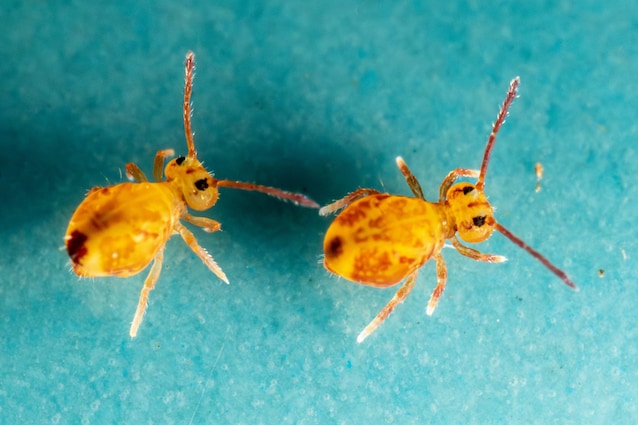
There are two typical guests: the first are i Springtailssmall arthropods that feed on fungi and molds and, thanks to their very fast reproduction, block their proliferation as soon as they appear. The latter are the isopodsthe wood pigs, detrivores that fragment dry leaves and decaying wood. Together they form a real “cleaning team” that maintains the balance and enriches the soil with nitrogen, phosphorus, potassium and calcium. Thanks to them, we can replicate at home the same cycle of matter that occurs in nature.
This is the beauty of a closed terrarium and bioactive: a small world where matter and energy flow in cycles, and where we can keep a little piece of nature inside our home.
