The honey bee (Apis mellifera) is perhaps themost important insect for our speciesresponsible for the pollination of many crops and the production of honey. But this is just one of more 20 thousand species of bees currently known, a group with high biodiversity. Like honey bees, these species also have a very important ecological role in the pollination of plants, both wild and cultivated. To the untrained eye they may appear similar to honey bees, or even be confused with other insects such as wasps and hornets, but it is possible to distinguish them based on details such as size, colors and behaviour.
Unlike honey bees, which can be dangerous especially in swarms due to their territoriality and the effects of their sting, lEncountering these animals is very low risk: Most are not aggressive and do not sting unless inadvertently pressed into the skin or purposely mistreated. With the exception of bumblebees, the effect of a sting is usually one mild itching and the sting is completely absent in males. Although very rare, adverse reactions such as anaphylactic shock can still occur in particularly allergic individuals.
Bumblebee
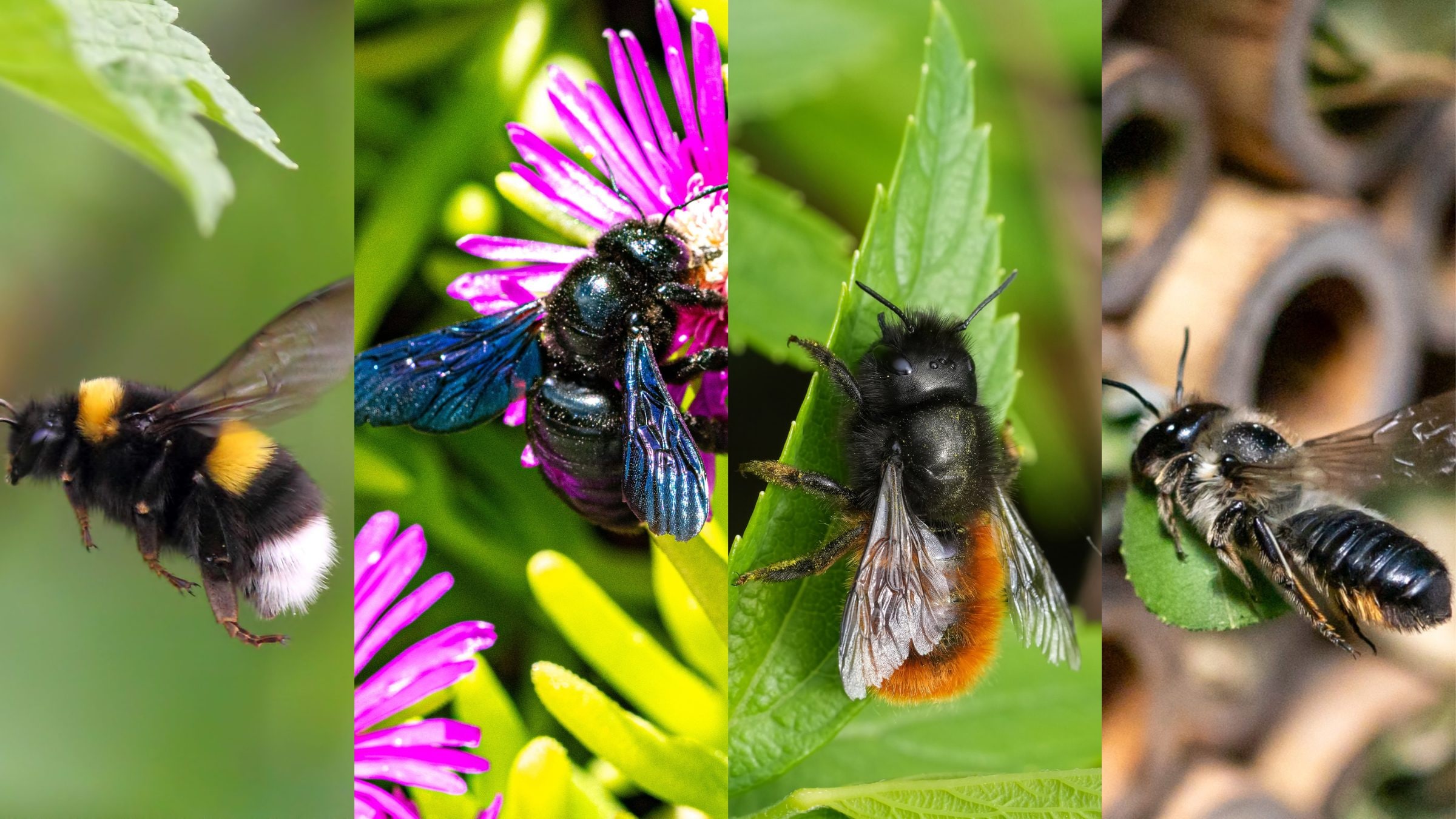
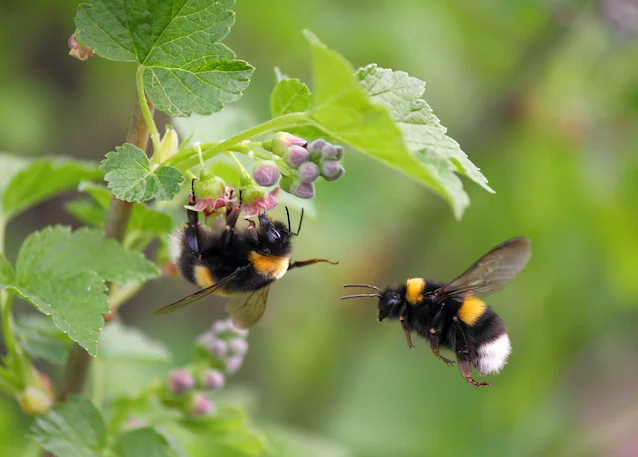
Big, hairy and often confused with hornets, members of the family Bombicides they are actually easy to distinguish both from bees, due to their size (much larger, up to 25 millimeters in length) and from real hornets, due to their shape (they have a stocky body that resembles a wad, while hornets are tapered and with much less visible hair). Like theApis mellifera, the bumblebees they live in colonies with a queenbut they do not produce honey and do not build structured hives. The nests, which rarely exceed 50 individuals and last just a few months, can be found on the ground between bushes, in the hollows of trees or under stones. In Italy, the most common species are yellow and black banded with white abdomen (Bombus terrestris, Bombus hortorum), but they are also found with a browner color (Bombus pascuorum) or black with a red abdomen (Bombus lapidarius).
Among non-honey bees, bumblebees are the ones whose sting has medical significance. They have a large stinger that causes inflammation comparable to that of bees, and being stung by a group of bumblebees can be risky. However, in contrast to honey bees, bumblebees are notoriously placid and they only sting if handled carelessly, or if we are threatening their nest.
Carpenter bee
These species are also often incorrectly called “hornets” due to their large size, or confused with bumblebees, but don’t be fooled: the xylocope they are actually solitary bees, meaning they do not live in social colonies. Typical for their smooth abdomen and dark color with metallic tones, wood bees can often be found among piles of wood or near old dead wood structures, inside which they dig their nest. Very common in Italy is the Xylocopa violaceaeasy to recognize due to the purple reflections of its body.
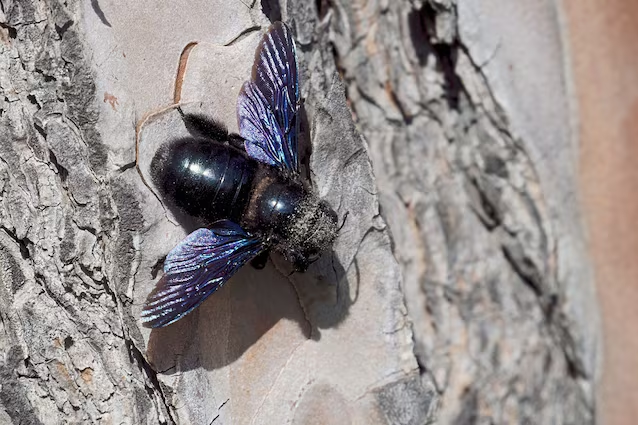
Although its size may alarm us, wood bees are harmless: the female is in fact very peaceful and only stings if mistreated. The male, on the other hand, is territorial and can fly close to our face aggressivelybut other than trying to scare us it cannot harm us: as a male, it is in fact completely devoid of sting.
Mason bee
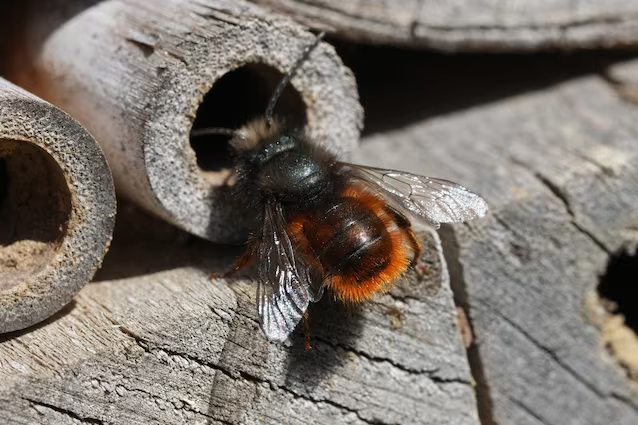
If we see a bee emerge from a tiny ravine of some old stone wall, it is probable that we are faced with amason bee. This solitary bee occupies natural crevices or abandoned nests on rocks and wood and uses mud and chewed plant fiber to protect her eggs indoors, a behavior reminiscent of that of much larger mason wasps. The eggs are placed on a bed of pollen and nectar and walled in separate compartments, and then hatch in sequence. The most common species in Italy belong to the genus Osmiarecognizable by its dark color without bands and by bristly red-brown hairs.
Mining bee
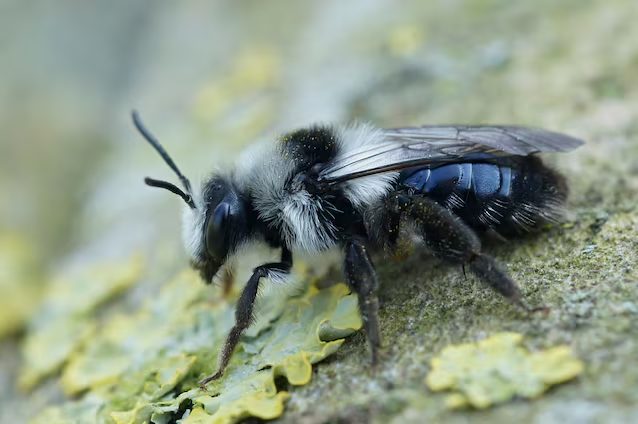
A similar behavior is that of mining beeseven if they prefer to create holes in the ground instead of crevices in the walls. Belonging to the Andrena genus, they dig tunnels covered with shiny secretions and create small cells where they deposit pollen for their larvae. You can recognize their nests by the small earthy mounds at their entrance. These bees prefer sandy soils and that’s why they are easy to meet at the seasidenear sandy coasts with spontaneous vegetation. The most common and most recognizable species is the Cinerary Andrenaa small bee with a flattened abdomen and the characteristic light gray hairy band color on its back.
Leafcutter bee
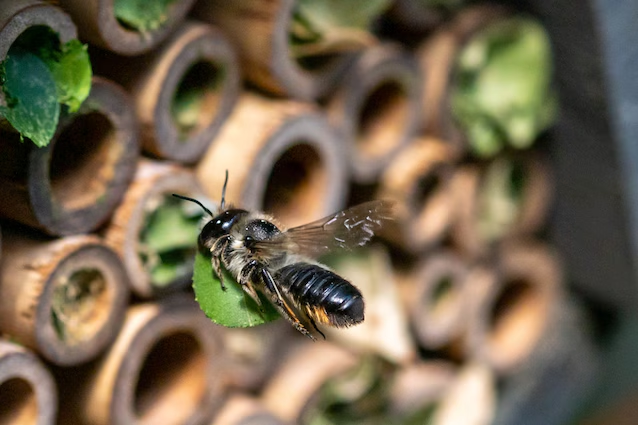
More common in wild areas or with greater vegetation, the Megachile, or leafcutter beesare a family of solitary bees known for cutting out small pieces of leaf with their mandibles with which they carpet their nests, to prevent their larvae from drying out. The most common species resemble honey bees in size and color but have a smaller abdomen with a brush-shaped structurecalled a broom, which they use to trap pollen, while honey bees carry it in sacs on their legs.
Sweat bee
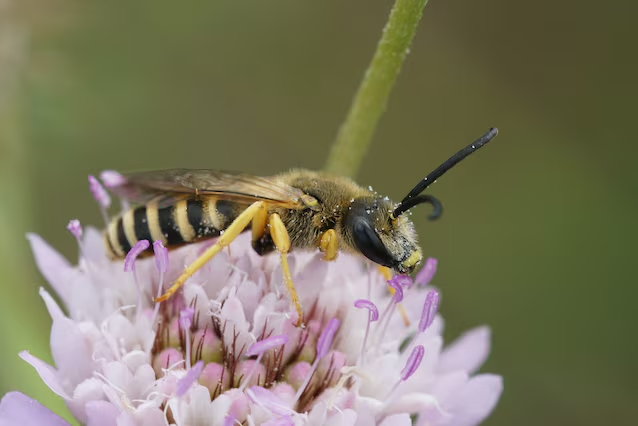
Unlike wasps, which are carnivorousall bees are herbivores and therefore no one will be interested in approaching a ham sandwich. However, there is a family of bees that may occasionally land on your skin looking for something… the sweat! The Halictidae, known as sweat bees, are in fact attracted by liquids rich in mineral saltsof which their nectar-based diet is poor. They perch to lick drops of sweat (sometimes even tears) for a few moments, and immediately move away if chased away: like the other species mentioned here, they are harmless and then consider having them do a short pit stops on your skin.
They live underground, some species solitary while others aggregate in small colonies, in a more primitive version of the honey bee caste system. In Italy the most common species is Halictus scabiosae: the female is similar to a honey bee while the male has a very elongated abdomen. Other sweat bees are easily recognized by their small size and metallic color. A new species, Lasioglossum inexpectatumwas recently discovered: this black sweat bee it lives only in Sardinia and Corsica.