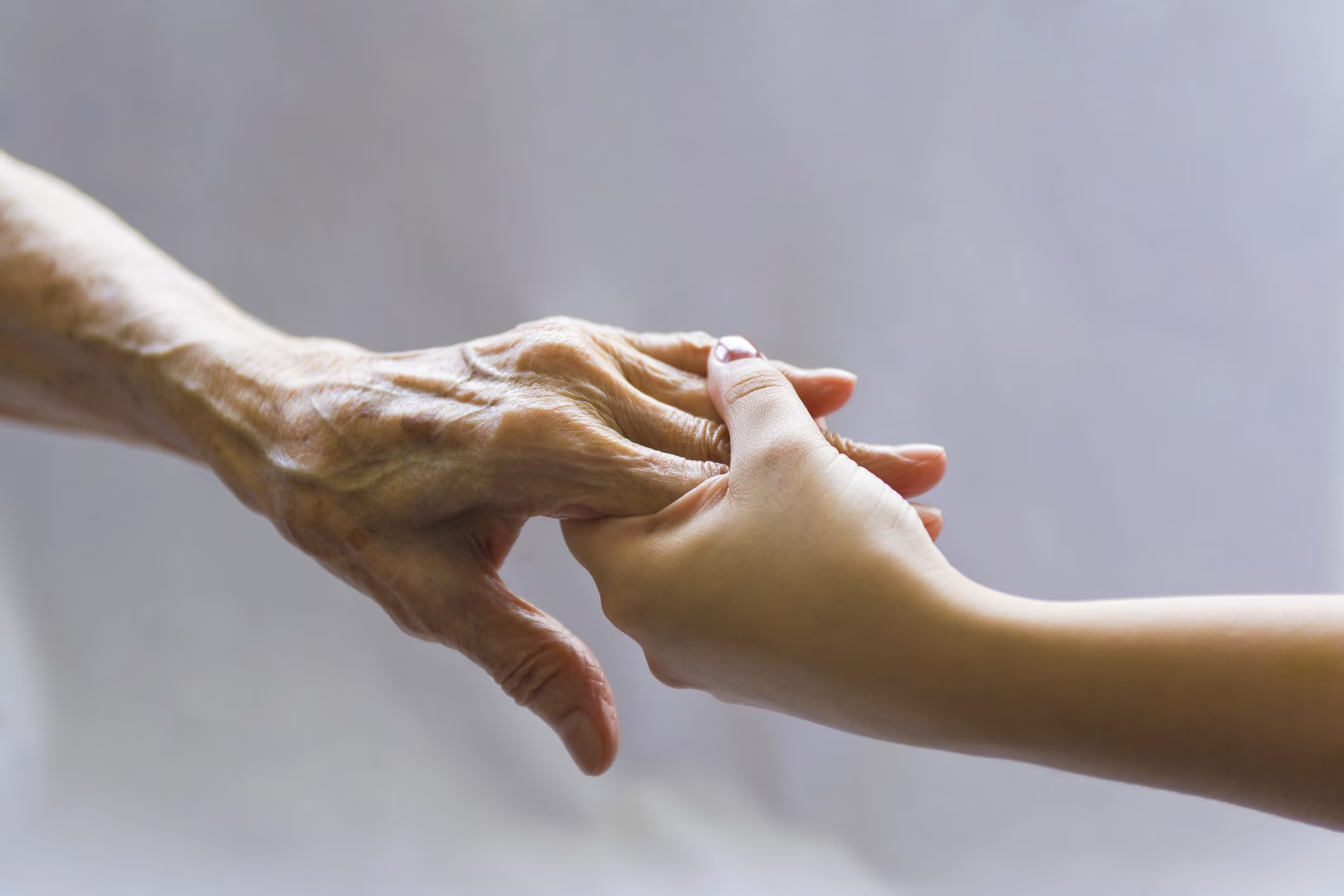
Almost two out of three Italians when they think about old age they are scared of the idea of losing mental clarity. According to a recent study by LongevityLab, this is in fact the main fear linked to aging, more than the loss of autonomy and independence and physical deterioration.
THE’Italy it is among the countries with the highest life expectancy in the world. According to Istat data, the over 65 represent approx a quarter of the population Italian and their share will continue to increase in the coming decades. This means that we will live longer on average compared to previous generations, but this does not automatically mean that we will live a better old age. Despite medical advances, improved nutrition and hygienic conditions, most of us, despite wanting to live longer, still fear what a longer old age: chronic diseases, memory loss, dependence on others, loneliness and physical decline.
A recent survey conducted by LongevityLab on a representative sample of Italians between 18 and 60 years old shows that what we fear more than old age are the cognitive dementias. Although with age it may be normal to decrease the speed with which we retrieve information or learn something new, as many as 60% of Italians are afraid that old age also leads to the onset of some form of dementia, that is, a progressive loss of cognitive functions such as to compromise daily life, such as the possible onset of a form of Alzheimer’s.
51% instead fear the loss of independencethat is, no longer being able to drive, go shopping, cook, remember appointments, climb stairs or take care of yourself independently. On the other hand, this fear also has a biological explanation. Human beings are an extremely social but also profoundly autonomous species: the brain interprets the loss of one’s abilities as a threat to well-being and survival.
The fear of old age also concerns the body. In fact, 34% of respondents fear the physical deterioration. Muscle mass physiologically decreases with age, a phenomenon called sarcopenia. At the same time, bone density decreases, the risk of falls increases and cardiovascular diseases, diabetes and osteoporosis become more frequent.
More than a quarter of those interviewed are instead frightened by the thought of losing loved ones (28%) and the onset of diseases or development of disabilities (28%).
Less common, however, are fears linked to becoming a burden on family members or other people (19%), not being able to afford the necessary care and assistance (18%).
However, one of the least considered aspects concerns the social dimension. Numerous studies show that isolation and loneliness increase the risk of depression, cognitive impairment and mortality. Having satisfying social relationships therefore represents a real protective factor for health. However, only 17% say they are scared of it loneliness and only 7% from the idea of no longer being able to pursue their hobbies.
When we say we are afraid of old age, we are actually talking about something much more complex and articulated by age. Overall, thoughts on the old age of Italians they are quite pessimists: just over one Italian in five (21%) believes that their expectation of old age will be better than that of those who are experiencing it today, while more than a third (37%) predicts a future even worse than the current one. However, many (41%) are willing to make sacrifices today to gain years of good health. In fact, over a third of Italians believe that it is important to start thinking about it before entering the “ages”, while 26% between the ages of 40 and 50.
However, knowing correct behavior does not necessarily mean adopting it. Many people who say they want to age well, in their daily lives struggle to maintain healthy behaviors over time that promote better living conditions even in old age, such as a balanced diet, physical activity, regular sleep and prevention.
