The scent of basil it is one of the symbols of summer and Mediterranean cuisine. Originally from India and then spread throughout the world, this plant owes its success to essential oils responsible for its characteristic scent. To obtain truly aromatic leaves, the most important factor to take into consideration during cultivation is the light. An exhaustive review published in 2021 conducted by the University of Budapest in collaboration with the Hungarian Horticultural Institute and the Hungarian Institute of Cartography and Geoinformatics, shows that a high light exposure it favors both the growth and the production of the molecules that determine flavor and fragrance, while too much shade reduces them. This is why basil gives its best on balconies, windowsills or in the garden, and in some cases even withLED lightingif the available sunlight is not sufficient. Collection also plays a fundamental role: trim the stem above a node, instead of tearing the leaves, stimulates the birth of new shoots and allows you to obtain an increasingly thicker and more productive plant.
Ocimum basilicum, an annual and aromatic plant
The basil (Ocimum basilicum) is a plant native to India which reached Europe already at the time of the Roman Empire, progressively spreading throughout the entire basin of Mediterranean until it became one of the most appreciated aromatic species of the European culinary tradition. According to theOnline Etymology Dictionaryits name derives from ancient Greek basileus (“king”) or basilikon (“regal”, “worthy of a king”), probably because the plant was used in royal environments to obtain perfumes. This is no coincidence: basil, in fact, is rich in essential oilsa mixture of volatile substances (i.e. which pass very easily into the air) responsible for its characteristic aroma. Among the main components we find the linalool and phenolic compounds such aseugenol el’rosmarinic acid (molecules characterized by the presence of a specific chemical ring called phenolic group). It is precisely this richness of fragrant compounds that makes basil one of the most widespread spices in the world and the symbolic ingredient of many dishes, first of all Genoese pesto.
Where to grow and harvest basil at home: sun or shade?
Basil is one of the aromatic plants that is best suited to home cultivationbut only if he receives alighting adequate. According to a review by Sipos and colleagues published in the journal Scientia Horticulturaebasil is a species that grows best in bright environments, so much so that it requires a total of 1500 hours of light per year. It’s not just about growth: the amount of light also directly influences the production of seeds essential oils and other aromatic compounds responsible for the characteristic scent and flavor of the leaves. On the contrary, when the plant grows in shaded conditions, it tends to produce a smaller quantity of these substances, resulting in it being less aromatic.
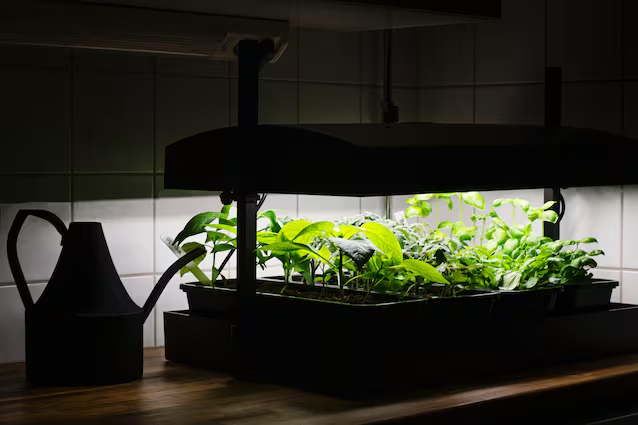
For this reason, if you grow basil at home, it is advisable to place it in one spot very bright such as a balcony, windowsill or garden. In environments where natural light is not sufficient, some growers also resort toLED lighting artificial, which the Sipos review and other studies have shown to be able to promote the growth of the plant and, if appropriately regulated, also the production of aromatic compounds.
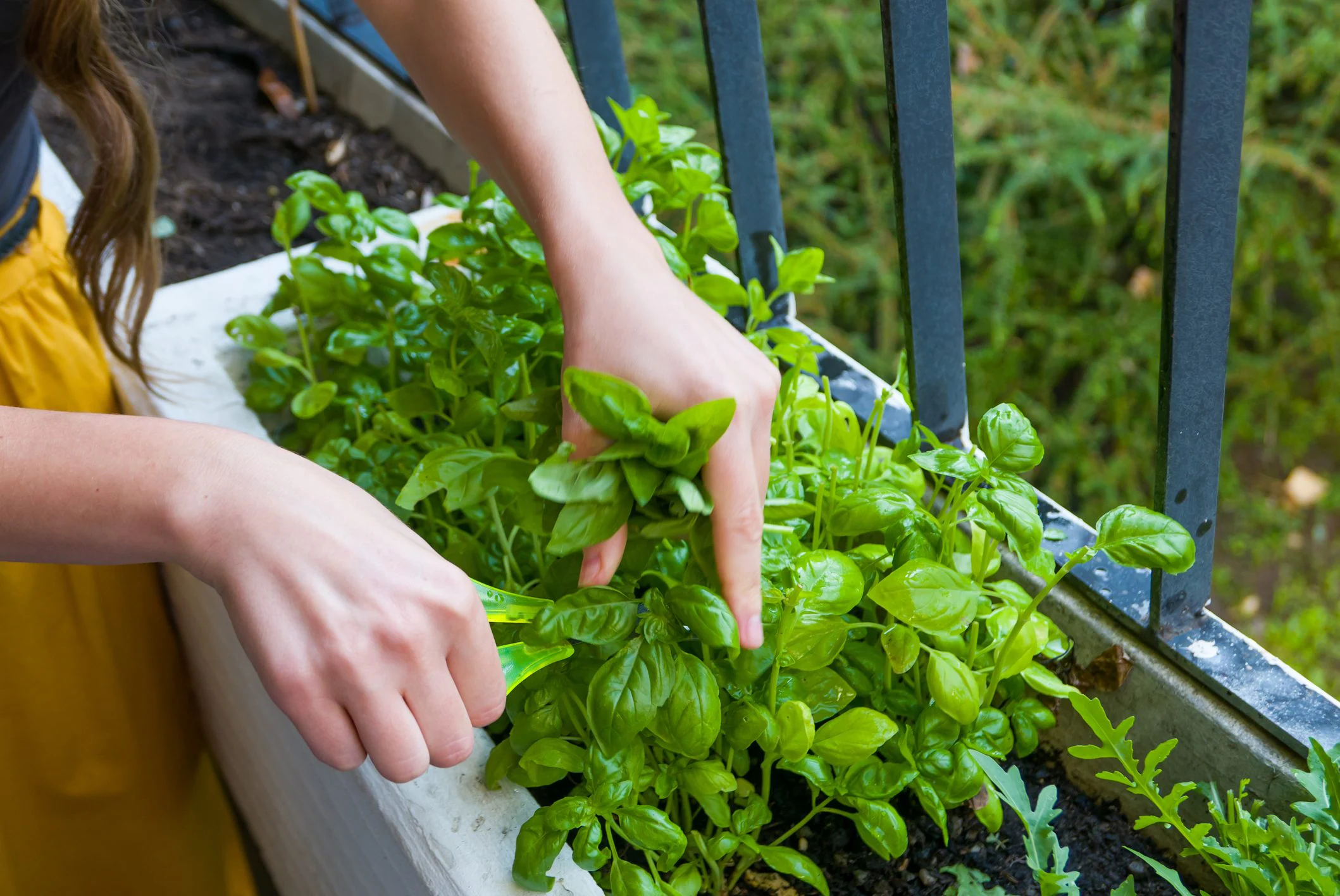
According to a technical sheet from the University of California dedicated to the cultivation of basil, the best technique for harvesting the leaves is trimming: Yes severs (also using simple scissors or pinching with your fingers, without tearing) the end of the stem just above the nodethe point from which the leaves originate. Thus the plant will react by producing two new shoots instead of one, progressively becoming more and more bushy.
