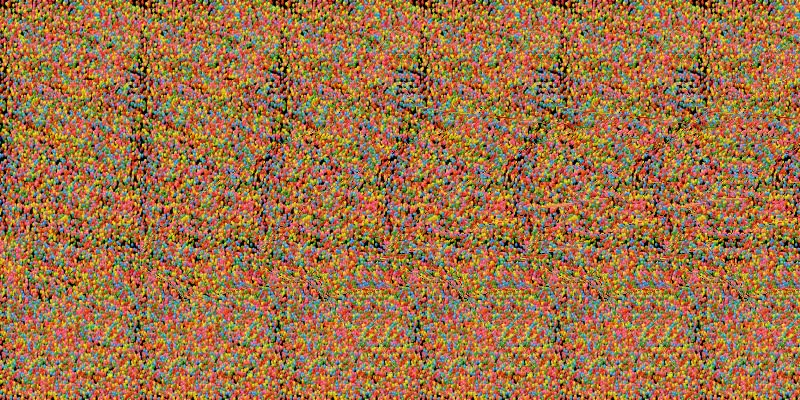
A stereogram it’s there combination Of two two-dimensional images which, if you look at it right, there they appear three-dimensionalperhaps revealing a hidden image with particular practical applications.
Their operation is inspired by the way ours brain determines the depth of a scene by combining the image received by the right eye with that received by the left eye, which are each slightly different from the other. A particular type of stereogram is theautostereogram which is composed of a single apparently indecipherable image but which, to those who manage to visualize it, reveals a three-dimensional image.
To understand how a stereogram works we can try looking at an object closing first one eye and then the other. The object will appear to move from right to left and vice versa, this is because the two eyes are not exactly in the same position and offer two different views: our brain processes the two images and is able to determine the depth of the scene that we will see as a single 3D image. This phenomenon is described with the term stereoscopic vision and was studied in the 1930s by the English inventor Charles Wheatstone.
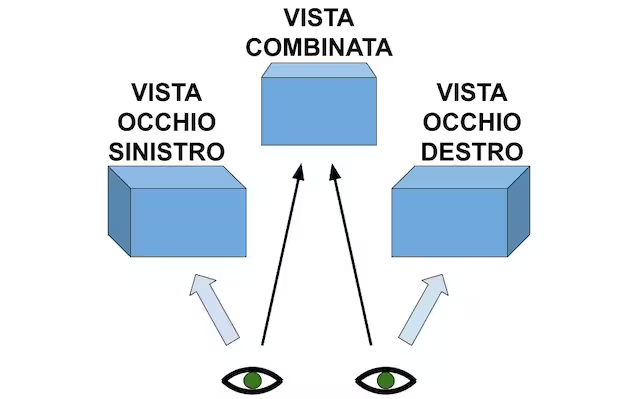
The idea of stereograms is precisely this: put two images together slightly different planes so that our brain can merge them into one image three-dimensional. This ability to pop out a 3D image from two 2D images can have practical applications, for example during the Second War it was used to find camouflaged military devices which, by combining 2 aerial photographs taken from slightly different angles, revealed themselves in 3D to the observer’s eyes. Similarly, the researchers of NASA they can visualize the surface of Mars in 3D thanks to images taken by rovers exploring the planet.
For display a stereogram to naked eye must
look at the image as if we wanted to focus on a point outside the image (further or closer depending on how the stereogram is made), but keeping attention on the image.
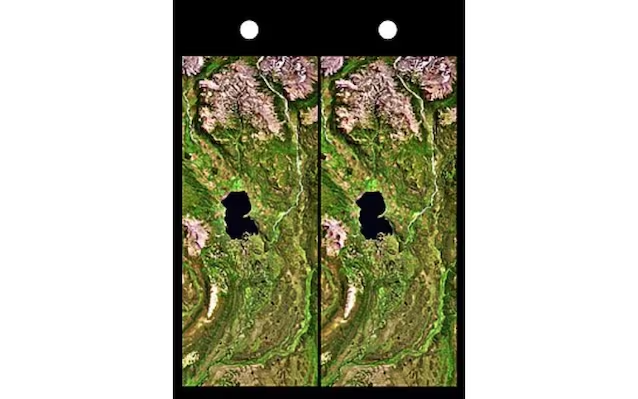
In some cases, like the one in the image above, stereograms present 2 guide pellets which help to focus in the right way, in this case we can proceed like this:
- yes concentrate on the white dotsand they are put out of focus until they become 4
- we continue to blur until the two central dots merge perfectly so that they remain alone 3 dots
- Without losing focus on the 3 dots, take a look at the images below which have now become 3: the central one will be three-dimensional.
The technique we have just described is the same one that is also used for autostereogramseven in the absence of guide pellets. Let’s try to apply it with a simple one like this to wallpaper like the one in the image below where you see 3 repeated series of objects, like the pattern of a repeating wallpaper.
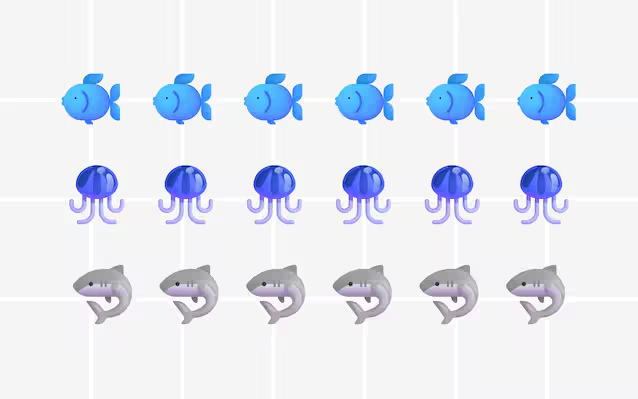
In this case, if we manage to stare at the situation long enough so that the 7 figures of each type are very clear, we will see that fish, jellyfish and sharks appear on different levels: sharks are closer to us, fish are further away and jellyfish are in the middle. The effect can be further highlighted by moving the head slightly to the right and left. If we look carefully at the image we realize that the jellyfish I’m a little close together between them and him sharks there are even more neighbors between them: with this trick we can create autostereograms like this at will.
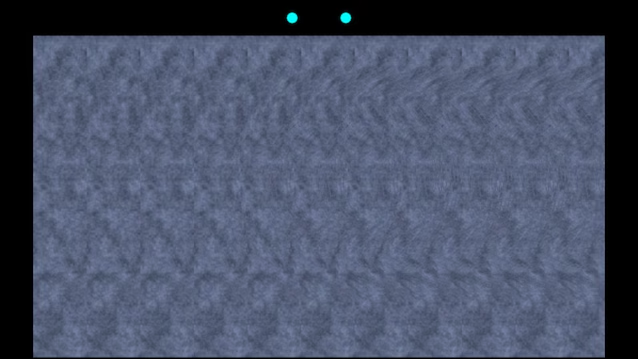
But how do you visualize a more complex stereogram like the one in the image above? This image also appears somewhat repetitive, a bit like the jellyfish above: the technique for visualizing it will then be the same and can be implemented either doubling and fusing i guide pellets, which (in their absence) doubling and merging two repeated parts close to each other (as we had done with jellyfish).
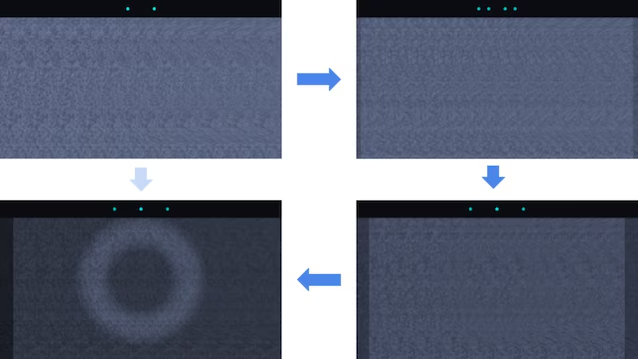
In words it seems easy, but not everyone can visualize autostereograms, for this reason we have schematized (see image above) the phases that you go through during visualization: in this way it is possible to know what to expect to see while trying to visualize an autostereogram, as described in the video below.
