
Someone has a habit of wash eggs before use or storage in the refrigerator: it seems like a good hygienic measure before preparing a good tiramisu, however, it can prove to be a dangerous practice. The eggshell is in fact of porous nature, but it is covered externally by a thin cuticlea sort of protective “film” that prevents the entry of bacteria. Washing with running water tears the cuticle, favoring the entry of any pathogens present on the surface of the egg. A particularly feared contaminant is la Salmonella enteritidiscause of the most common gastrointestinal infections, which, passing through the pores of the shell, can reach the egg white and yolk directly. In this regard, there is a European Regulation, N. 589/2008, according to which fresh eggs intended for human consumption should not be washed after laying and before sale. Community legislation grants a derogation to those Member States that have packing centers equipped with certified egg washing systems, although these products cannot be exported and marketed in other states.
How an eggshell is made and its protection from external agents
The eggshell of birds is the barrier mechanics, physics and biochemistry to protect the embryo. It is a multi-layered structure, comparable to a kind of bio-ceramic and is composed of 94-97% calcite crystals with a columnar structure, immersed in an organic matrix of a protein nature. It is porous, with pores averaging 12-20 µm in diameter essential for gas exchange during embryo development. Let us consider in this regard that a bacterium of the Salmonella genus is 0.7-1.5 µm wide and 2-5 µm long and therefore would easily pass through a pore if there were no protection. The shell, in fact, is internally lined with two layers of protein membrane (the testaceous membrane) and by one cuticle external composed of proteins and carbohydrates. The outer cuticle layer creates not only a physical and antimicrobial barrier against pathogens thanks to the presence of proteins such as lysozyme, but also gives the egg a certain waterproofing to prevent moisture ingress and dehydration. The cuticle is secreted by the so-called “shell gland“, placed in the hen’s oviduct and we can say that it is the final packaging of the egg.
What happens with washing: the protection of the egg is damaged
Eggs are subject to possible contamination for various reasons and at different stages: from the moment of production by the hen to our table. Pathogenic microorganisms can penetrate the yolk and egg white already during egg formation in the hen’s ovaries, in this case we speak of “vertical transmission” and it is a less frequent case. Once laid, they are exposed to a variety of potentially contaminated environments: the hen’s fecal material, the nest or cage, storage and transport areas, even human handling. Various bacteria can deposit on the outer surface of the shell (among the most common are genres Pseudomonas, Proteus, Escherichia, Salmonella, Staphylococcus And Bacillus), in this case we speak of “horizontal transmission“of pathogens.
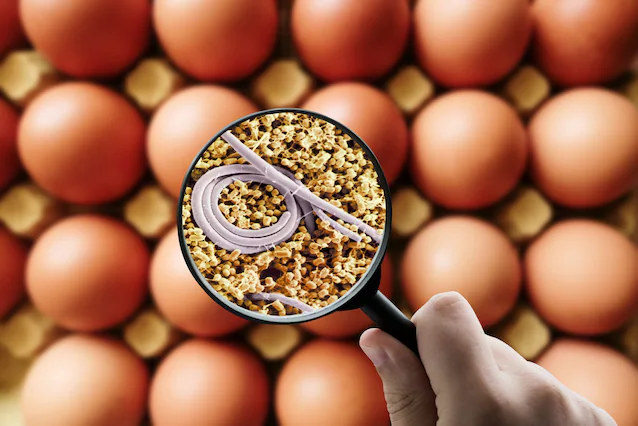
However, eggs with intact shells are protected by cuticle: the use of detergents, mechanical brushing to remove dirt or a jet of water can remove or partially damage this layerthus increasing the risk of contamination during the subsequent stages of handling and storage.
What the European legislation says
For this reason, the marketing of eggs at community level is strictly regulated and even the European Food Safety Authority (EFSA) advises against washing before marketing. A specific Regulation, n. 2295/2003, classifies eggs into two groups: the type A intended for human consumption, must be clean and with shell and cuticle intact. Eggs should not be washed, but those that are dirty or have damaged shells should be discarded before grading. The type B which does not have these integrity characteristics, can only be used for the food or non-food processing industry.
Although current European legislation does not allow the washing of eggs for hygienic reasons, traditionally some European Member States such as Sweden, or outside of Europe, even the United States continue to carry out industrial washing of eggs before packaging, to reduce their surface bacterial load. Obviously washing must be carried out according to very specific operational protocols. A particular precaution, reported by the Opinion Panel of the European Food Safety Authority (EFSA), is linked to the water temperature which should be at least 11°C higher than that of the egg. If the temperature of the water is lower than that of the egg, a pressure gradient is created between the inside and the outside which tends to suck the bacteria present on the shell through the pores, thus contaminating the yolk and egg white. It is also important that the egg comes perfectly dried after the washing phase to avoid the proliferation of equally dangerous mold. Washing in less than optimal conditions can not only encourage contamination, but accelerate the general deterioration of the product.
