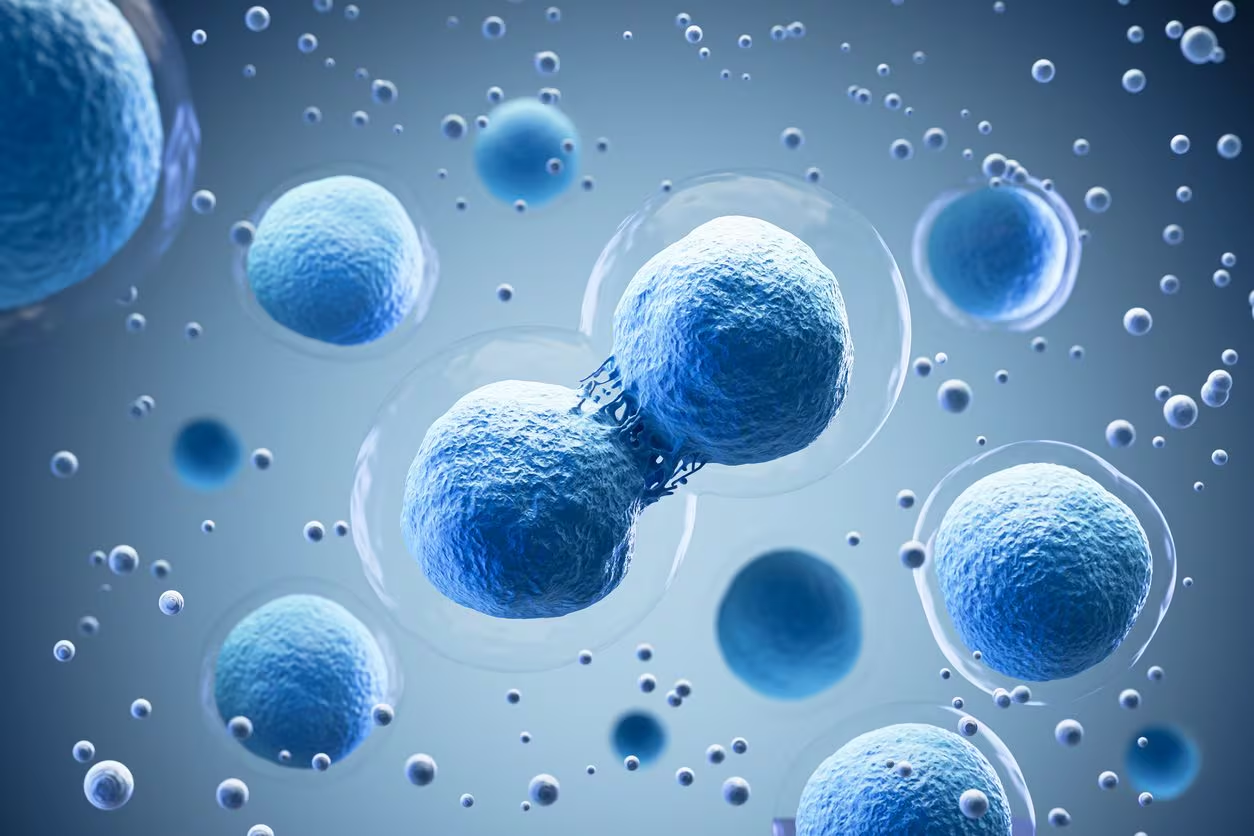
A research team led by Massachusetts General Hospital, MIT and Harvard Medical School developed RamanOmicsa new technology that allows you to identify and map the zombie cells (or senescent) directly inside the tissues without destroying them, combining the light of Raman spectroscopy with high-resolution spatial genetics. Reading a real one “chemical fingerprint” researchers have managed to discover how molecular aging changes between different organs such as lungs and skin, revealing the fundamental role of senescent cells in wound repair.
The platform presented in the study “RamanOmics decodes the spatial vibrational–molecular architecture of senescence in aging and repair“, combining vibrational chemistry and genetics guarantees aaccuracy in identifying zombie cells superior to traditional methods based only on RNA.
There are zombie cells in our body
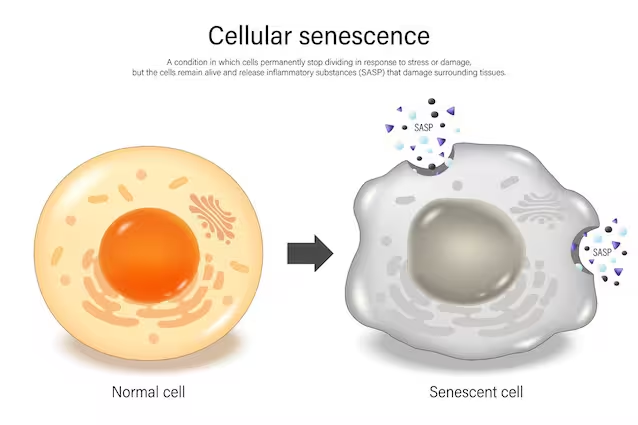
As time passes or following injuries, some cells in our body stop dividing and enter a state called cellular senescence. Often nicknamed “zombie cells”, these cells do not die: they remain biologically active, modifying the surrounding tissue through the secretion of inflammatory signals and the reorganization of the molecular structure.
To date, their study has been based almost exclusively on transcriptomics, that is, the study of RNA transcripts. However, read which genes are active only tells part of the story. Traditional transcriptomics often requires sample destruction and does not show actual chemical and metabolic composition, such as fat distribution or protein structure.
How RamanOmics works: the technology that maps them without eliminating them
To overcome this limitation, an international research team led by Massachusetts General Hospital and from MIT has developed RamanOmicsa platform whose study was published in the journal Nature Aging.
The system projects a laser light onto the tissue and analyzes how the molecules respond by vibrating the chemical bonds. In this way, it returns a complete biochemical fingerprint without the use of markers or dyes and without damaging the cell. At the same time, a spatial genetics technique allows us to read the active genes and the exact position of each cell in the tissue. Through artificial intelligence algorithms, RamanOmics links genetic programs to real chemical composition for the first time.
Spicy lipids, aging and their role in wounds: the results of the study
By analyzing lung and skin tissues in animal models, the study found that zombie cells share a common chemical signature: a accumulation of lipids (branched chain fats) on their membrane. This accumulation alters membrane fluidity and cell signaling, functioning as a real “barcode” chemical that allows the laser to recognize them instantly.
At the same time, however, Aging manifests itself in completely different ways depending on the organ. In the lungs, senescence mainly affects the cells of the alveoli and blood vessels, activating chemical and genetic signals linked to inflammation and stiffening of the tissue (fibrosis). In the skin, however, zombie cells are concentrated in the superficial epidermal layer. Here they attempt to strengthen the external skin barrier, while at the same time reducing collagen reserves and the ability to repair damaged DNA.
Zombie cells are not just a sign of deterioration, but play a vital role in tissue repair. By applying RamanOmics during skin wound healing, researchers observed a temporary spike in senescent cells just three days after injury. At this precise moment of emergency, the cells reactivate to coordinate the reconstruction of the epidermal barrier and remodel the wound, demonstrating that Senescence is an essential physiological response for regeneration.
Since it is an optical and non-destructive method, the Raman fingerprint may allow in the future monitor tissue aging in vivo in humans and to evaluate in real time the effectiveness of Senolytic drugs (therapies aimed at eliminating zombie cells) without having to carry out destructive biopsies.
