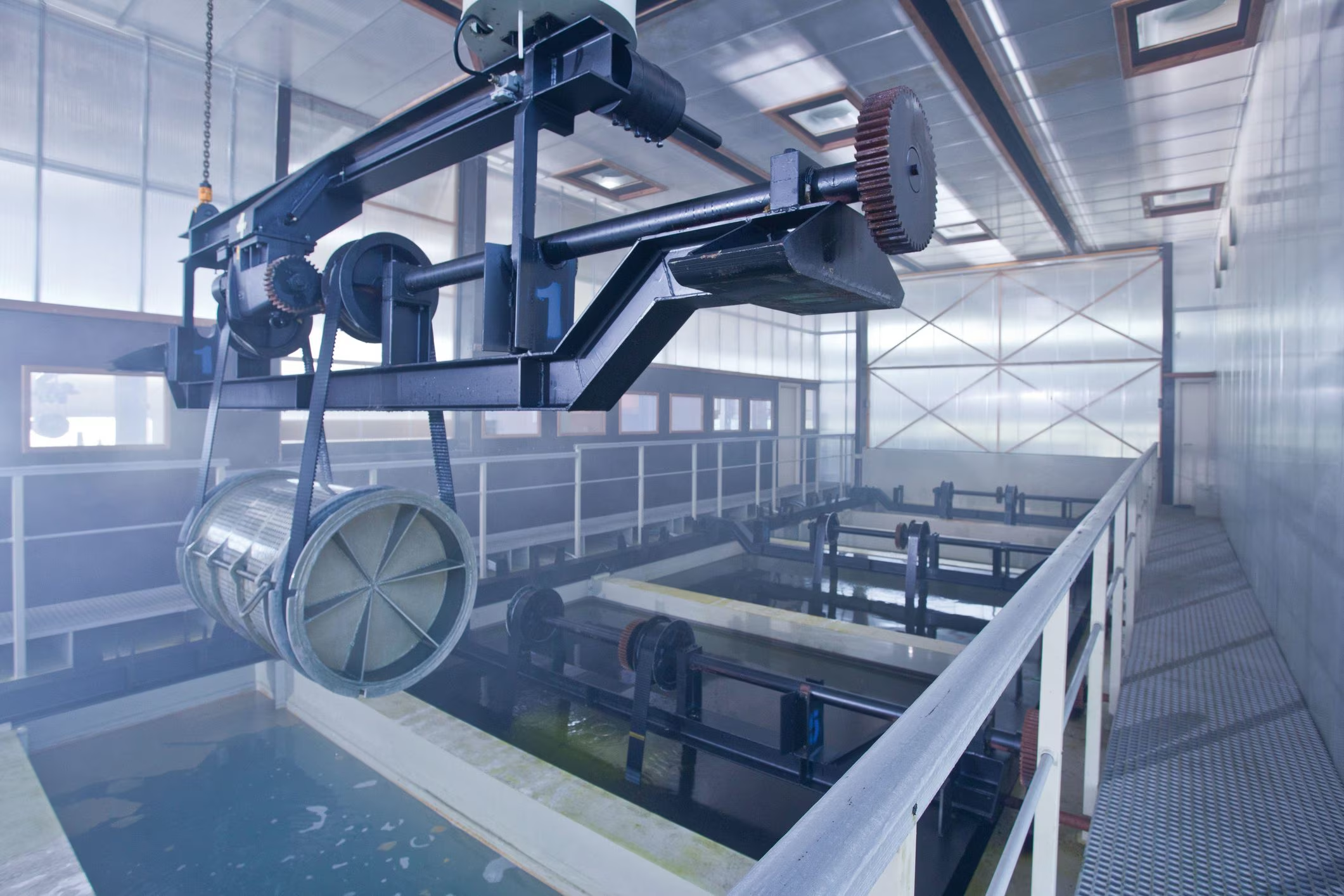
Steel, despite being among the most used construction materials in industrial and civil sectors thanks to its exceptional mechanical characteristics, it shows notable weakness due to its natural exposure tooxygen and to thehumidityà, which makes it vulnerable to an inevitable degrading phenomenon: corrosion. To protect metal structures from this process, a specific one is widely used surface treatment called galvanizinga real metallurgical process capable of isolating and preserving the base material, significantly extending the useful life of the work.
What is galvanizing used for: its chemistry
Galvanizing consists of coat a steel element with a superficial layer of zincwhich offers a protection active from the aggressive characteristics of the environment to the base metal. This protection differs from a traditional paint, which instead limits itself to forming a simple physical barrier between the metal and the atmosphere, thus being able to create preferential infiltration lanes up to the base metal due to impurities or the simple microscopic porosity of the paint. Zinc is in fact a less noble metal than iron (the basic element contained in steel alloys), which, coupled with oxygen, spontaneously generates rust as a result of an electrochemical reaction. Zinc behaves like a sacrificial anode: the spontaneous reaction with oxygen now occurs with this new metal, which it will oxidize instead of steel due to its chemical characteristics. Consequentially, it will wear out progressively protecting the base material of the load-bearing element for the time necessary to guarantee the useful life of the work.
How metal elements are galvanized: the types
By far the most widespread industrial process is hot galvanizing. Since zinc does not adhere to surfaces with impurities, the steel element requires thorough preliminary cleaning to remove all traces of rust, surface oils and other possible impurities. To this end, the element passes through special degreasing and preliminary pickling tanks. Next, the item comes immersed in tanks containing molten zincmaintained at a temperature of approximately 450°C. The working temperature in this phase is essential: the high heat in fact triggers the interpenetration between the metals (zinc and steel alloy) at the atomic level. Thus a series of surface layers in iron-zinc alloyon which a final layer of pure zinc finally solidifies, giving the finished product its characteristic shiny colour.
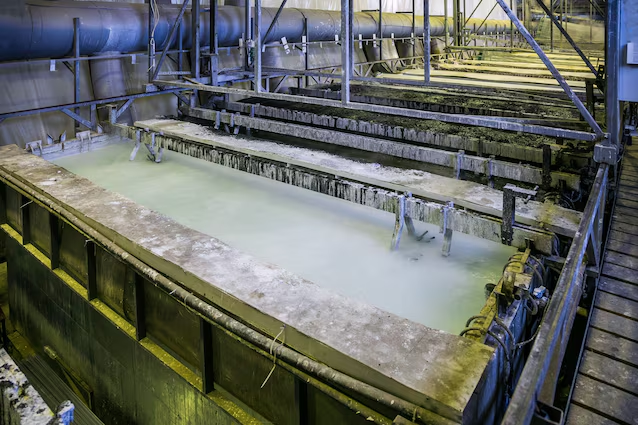
There are also alternative variants to hot-dip galvanizing: la electrolytic galvanizingfor example, is carried out cold through the use of electric currents. The limit of this type of treatment is the formation of limited protection thicknesses, which makes the process mainly suitable for components of minor importance or for elements intended for environments without particularly severe climatic aggressions.
How long does it last?
The useful life of a structure protected by galvanization must be evaluated in relation to the speed with which the surrounding environment will consume the surface layer over the years. The technical regulations consequently classify the environments in relation to theirs corrosive aggression: give it dry internal spaces (class C1) at marine atmospheres or highly industrial (class C5). The sizing of protection therefore translates into thickness of zinc requiredmeasured in microns. It represents the thickness destined to wear progressively over time, but capable of guaranteeing the required years of service.
The possible alternatives
The basic alternative to galvanizing is plain protective paintalthough this presents an intrinsic structural limit linked to the solo barrier effect: damage to the paint layer leads towater infiltration and the immediate corrosion of the underlying steel. This solution therefore requires assiduous maintenance cycles in the long term. There are also alternative metal alloys, which perform like classic steel from a mechanical point of view, but with an edge from a protective point of view:
- Stainless steel: it is an alloy containing Chromium which has the ability to self-passivate in contact with oxygen, creating an invisible protective film. The main disadvantage of this alloy is the high cost compared to the steel plus galvanization compromise.
- Corten steel: further engineering alternative. Alloy with a chemical composition designed to form a protective oxide patina, which takes on the characteristic color of rust (although it isn’t!), this time to protect the internal steel core.
- Aluminum alloys: increasingly common as a building material. Its great advantage is the natural protection thanks to the spontaneous oxide that forms. However, it suffers from having poorer mechanical characteristics than common steel alloys, especially with regards to welding processes.
