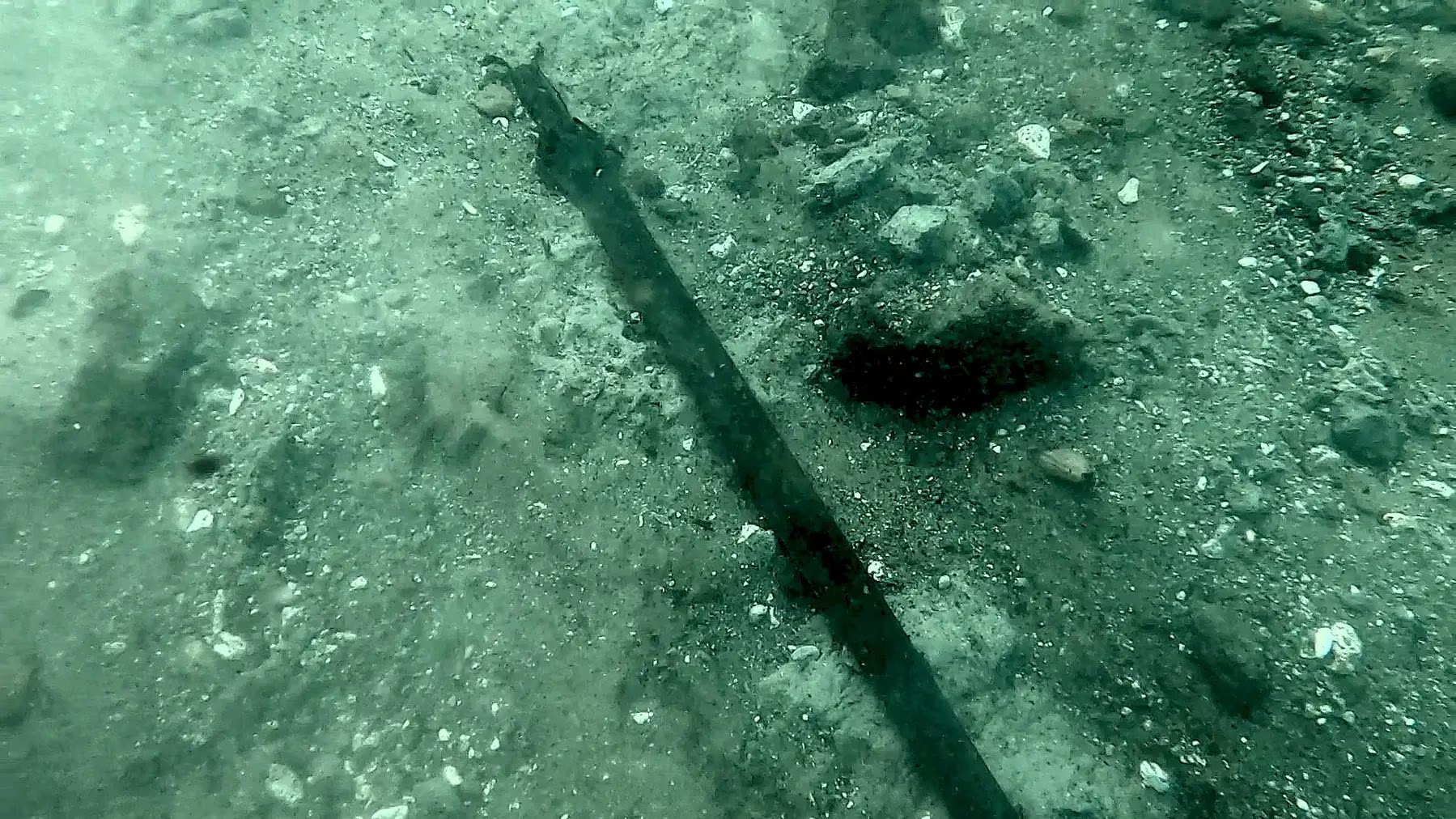
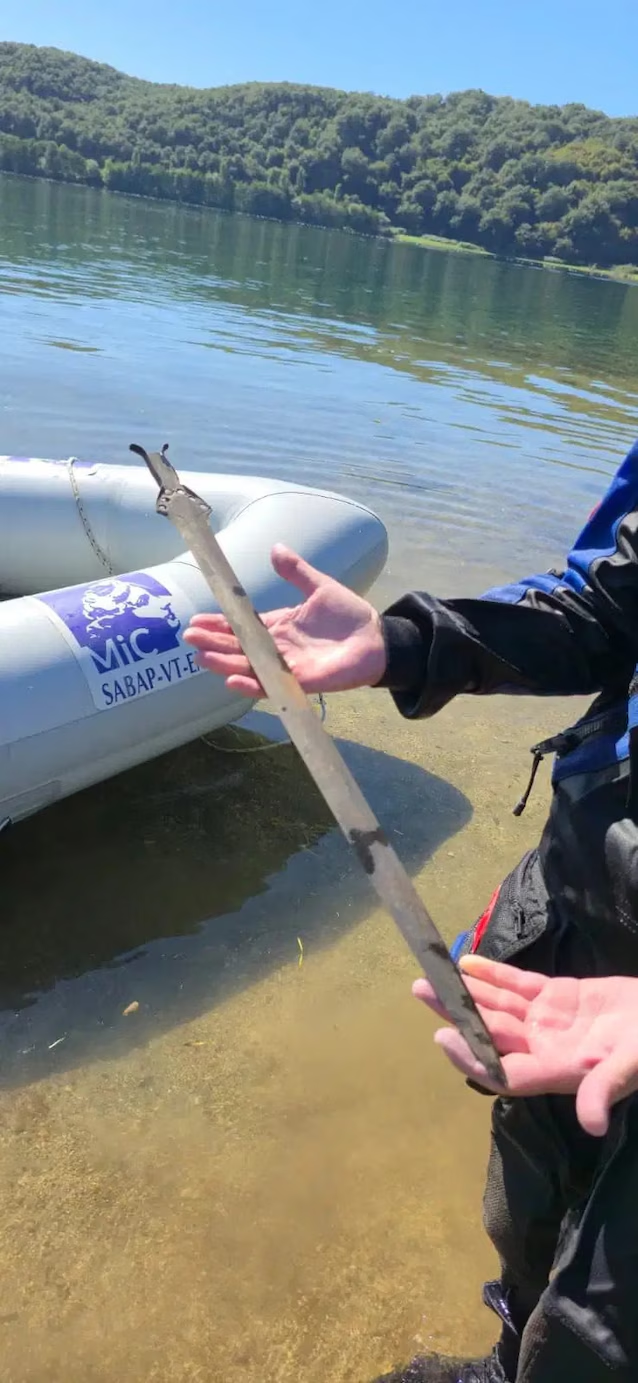
A bronze sword datable to 13th century BC was recovered in the waters of Mezzano lakein the territory of Valentanoin the province of Viterbo. The discovery occurred during the final stages of the search campaign conducted by the Superintendency of Archaeology, Fine Arts and Landscape for the province of Viterbo and for Southern Etruria through the Underwater Archeology Servicewith the support of Carabinieri Underwater Unit of Rome and gods restorers of CSR Restoration of Cultural Heritage. It is the third sword recovered from the site since the 1970s.
The find comes from southern shore of the lake, a sector that has so far been little investigated, and presents a exceptional state of conservation: despite more than three thousand two hundred years of being underwater, the blade still retains its sharp edge. The Superintendency places the sword in theRecent Bronze Age (13th-12th century BC) and underlines how its characteristics fall within the framework of weapons production in central Italy of the late Bronze Age. The cultural context is pertinent to what until a few years ago was defined by archaeologists as the Apennine Culture, a network of heterogeneous communities that populated peninsular Italy in the Bronze Age. In current protohistoric studies this term is being redefined.
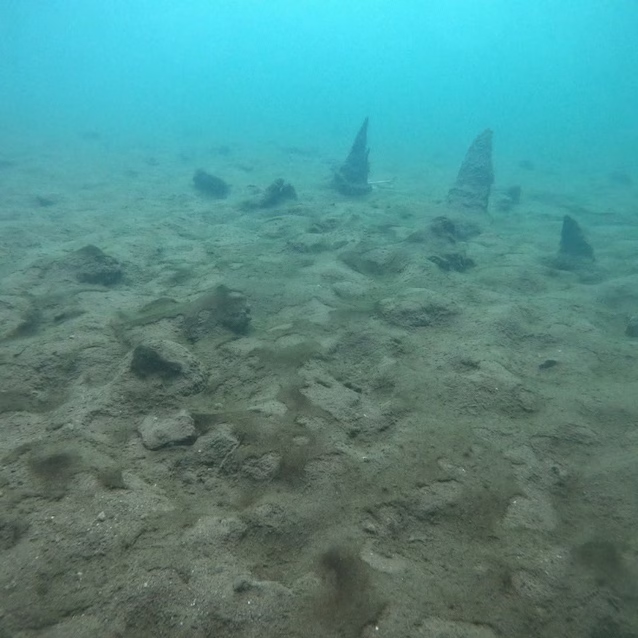
The discovery acquires greater significance if inserted into the context of research started in 2025. The lake occupies the crater of an ancient volcano and preserves on the bottom the traces of a vast pile-dwelling settlement, frequented from the end of the Ancient Bronze Age to the Recent Bronze Age, between approximately 1700 and 1150 BC The first campaign allowed us to map further 600 polesdistributed over approximately a third of the known extension of the town. Depths included between 10 and 2.5 metres they also indicate that the settlement followed the fluctuations in the lake level over the course of about six centuries.
They were identified under the clay seabed more than 25 bronze artefactsincluding wing axes, spearheads, fibulae, rings, pins and a sickle. Fragments of panelle, i.e. bronze ingots, have also appeared, which could indicate how they took place in this settlement metallurgical activities. There conservation is favored precisely byclayey environment and by the poor oxidation of metals; some finds instead show traces of exposure to fire, perhaps in relation to a fire that destroyed wooden structures in the town.
The shape of the new sword is also significant, with its hilt “dovetail“. It would seem to belong to the macrotypology of gripping tongue swords, characteristic of the transformations of the armament of the Recent Bronze Age. In this panorama it would be ascribed to the group of Naue IIspread from Central Europe to the Mediterranean starting from the 13th century BC: they were robust swords, with a relatively wide blade and a handle system designed for effective combat, especially cutting. Their diffusion is considered one of the indicators of the dense circulation of technologies, artefacts and military models that connected Central Europe, Italy and the Mediterranean in the 13th century. The definition of the group of swords comes from the name of the archaeologist who made the typological classification, the German Julius Naue (1835-1907).
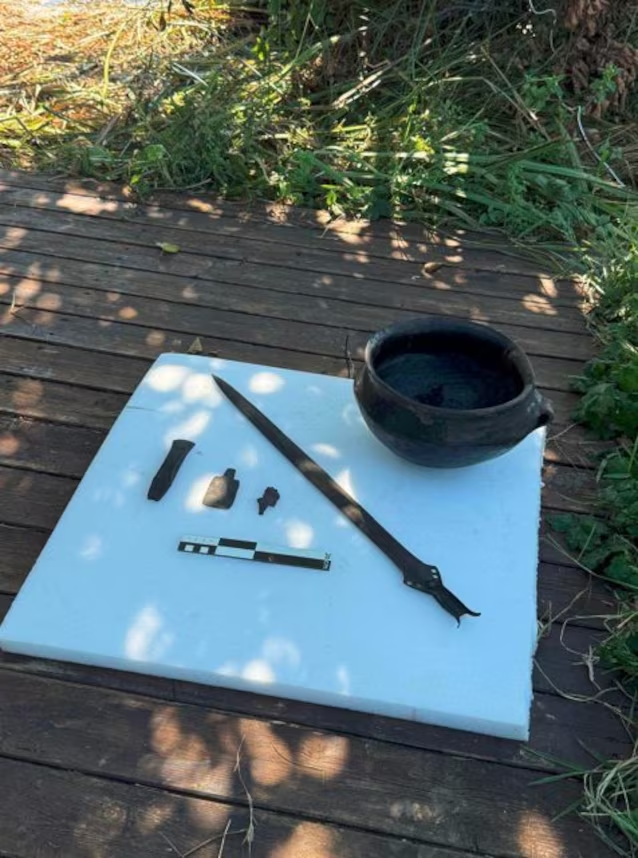
The new campaign also gave back intact vases, axes, arrowheads and spearheads, daggers, pins and a razor. Precisely the proximity between the sword and this last artefact could be significant: associations of this kind are known in other Bronze Age contexts and have been linked with high status individuals. The nature of the deposit, however, will have to be clarified through further stratigraphic excavations. The next campaigns will in fact serve to reconstruct the distribution of the finds with respect to the different levels of the seabed and to understand how the archaeological deposit was formed. The recovered bronzes will also be presented in the near future an exhibition dedicated to the heritage returned from Lake Mezzano.
