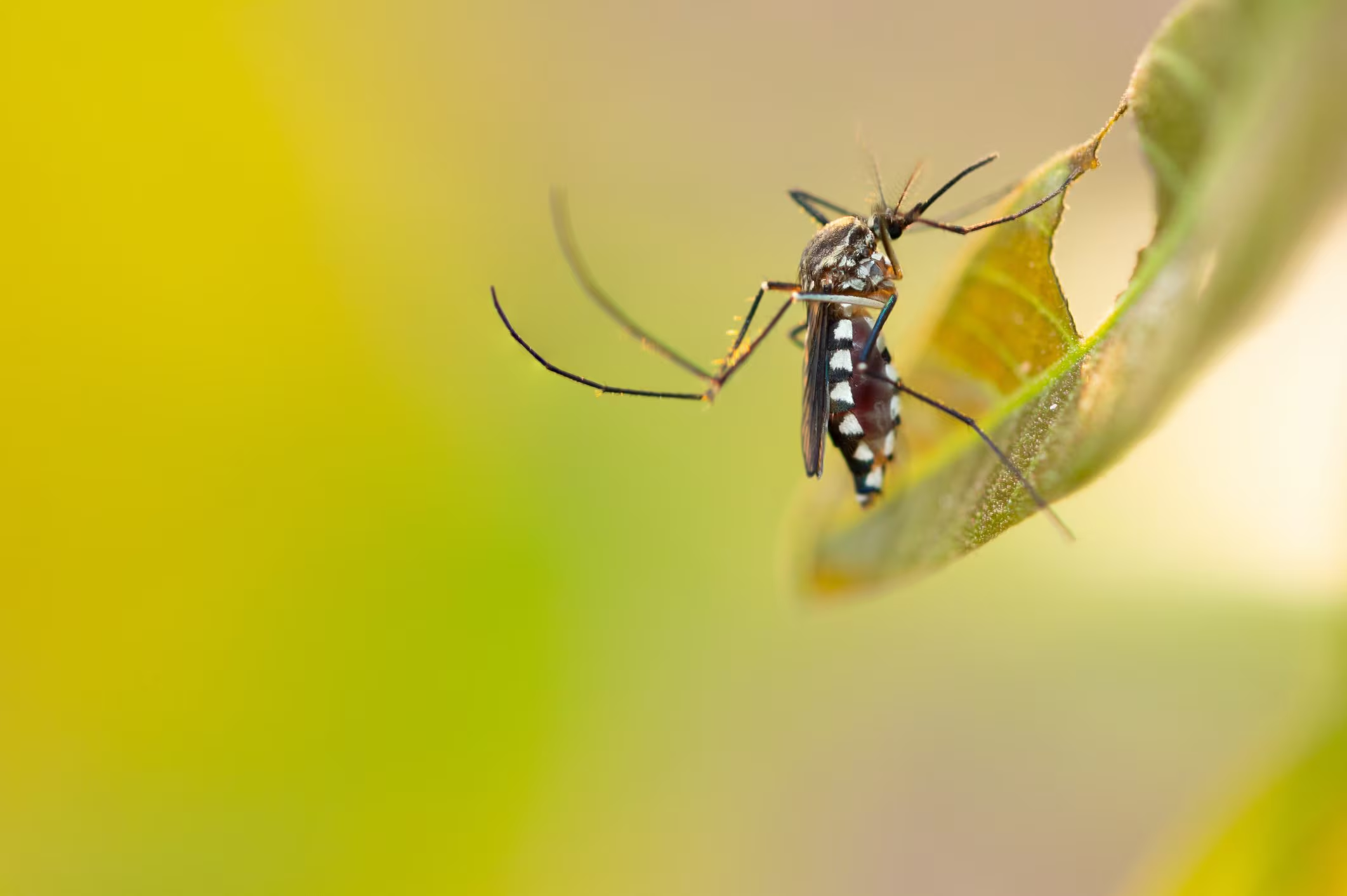
AND Octoberthe days are getting shorter and summer should now be a memory. Yet, especially in some areas of Italy, the mosquitoes they continue to sting. It is not an anomaly: their presence during autumn depends on environmental conditions and as long as temperature, light and water availability remain favourable, their life cycle can continue even after the end of summer.
To avoid their spread, the ISS suggests avoid water stagnation: regularly empty saucers, buckets and watering cans, eliminate outdoor materials that can collect water, keep gutters clean and clear and adequately cover containers intended for collecting rainwater.
If it is still warm, mosquitoes can continue to breed
In Italy, one of the species that contributes most to the presence of mosquitoes during the hot season is the tiger mosquito (Aedes albopictus). A study conducted in 21 municipalities in Lazio followed his activity for three years, finding egg laying from May to December. 95% of eggs were laid between early June and mid-November, with activity peaking in late August. The quantity of eggs laid was also positively associated with temperatures accumulated in the previous four weeks.
Even studies conducted directly a Rome show how long the tiger mosquito season can be. In a monitoring carried out in the capital, adults were observed from February-March until Decemberwith a peak between August and September. The authors also linked the persistence of autumn activity to the presence of mild temperatures until the end of November.
The temperature, in fact, directly influences the activity of mosquitoes. In a study conducted in Northern Italy, the presence of females searching for a host was strongly influenced by the minimum temperature: the activity began above a threshold of approximately 13 °Cwhile it tended to end when minimum temperatures dropped to around 9 °C. Temperatures in previous weeks also influenced the abundance of adult females.
This means that a Particularly mild October can maintain favorable conditions for several more weeks. And it doesn’t need to be as hot as in the middle of summer: as long as temperatures remain above the thresholds that limit development and activity, a part of the population can continue its cycle.
Cold weather and short days trigger winter mode
However, it is not just the thermometer that determines the end of the mosquito season. Even the length of the day it is an important seasonal signal. In temperate populations of Aedes albopictusin fact, the shortening of the days induces the females to produce eggs intended for diapausea phase of suspended development that allows the species to survive the winter.
A study conducted on a French Mediterranean population identified a critical threshold of approximately 13.5 hours of light: when the length of the day falls below this value, the percentage of eggs destined for diapause rapidly increases. Also interesting is the fact that this process begins before temperatures drop: it is therefore an anticipatory signal that allows the mosquito to prepare for winter.
But temperature and photoperiod do not necessarily act independently. In Lazio, for example, the egg-laying activity of Aedes albopictus it decreased with the reduction of accumulated temperatures and when the photoperiod fell below 10 hours of light.
There is another interesting element: heat can delay preparation for winter in other mosquito species as well. An experimental study on Culex pipiensthe common mosquito, has shown that higher temperatures, similar to those associated with the urban heat island, can hinder the entry of females into diapause, maintaining reproductive activity and host-seeking behavior for longer.
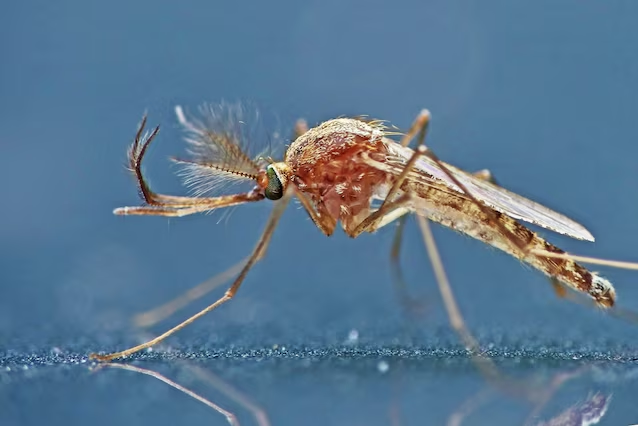
So, if in October it feels like it’s still summer every time we hear that annoying buzz, it’s not necessarily an illusion: if temperatures remain mild, mosquitoes may still have sufficient conditions to remain active. The calendar says it’s autumn, but for them the season doesn’t end until the environmental signals become unfavorable enough to start the real preparation for winter.
Sources
Romiti F, Ermenegildi A, Magliano A, Rombolà P, Varrenti D, Giammattei R, Gasbarra S, Ursino S, Casagni L, Scriboni A, Puro V, Ruta A, Brignola L, Fantasia O, Corpolongo D, Di Luzio G, De Liberato C. Aedes albopictus (Diptera: Culicidae) Monitoring in the Lazio Region (Central Italy). J Med Entomol. 2021 Mar 12;58(2):847-856. Toma L, Severini F, Di Luca M, Bella A, Romi R. Seasonal patterns of oviposition and egg hatching rate of Aedes albopictus in Rome. J Am Mosq Control Assoc. 2003 Mar;19(1):19-22. PMID: 12674530. Roiz D, Rosà R, Arnoldi D, Rizzoli A. Effects of temperature and rainfall on the activity and dynamics of host-seeking Aedes albopictus females in northern Italy. Vector Borne Zoonotic Dis. 2010 Oct;10(8):811-6. Lacour G, Chanaud L, L’Ambert G, Hance T. Seasonal Synchronization of Diapause Phases in Aedes albopictus (Diptera: Culicidae). PLoS One. 2015 Dec 18;10(12):e0145311. Fyie LR, Tronetti HR, Gardiner MM, Meuti ME. Potential for urban warming to postpone overwintering dormancy of temperate mosquitoes. J Therm Biol. 2023 Jul;115:103594.
