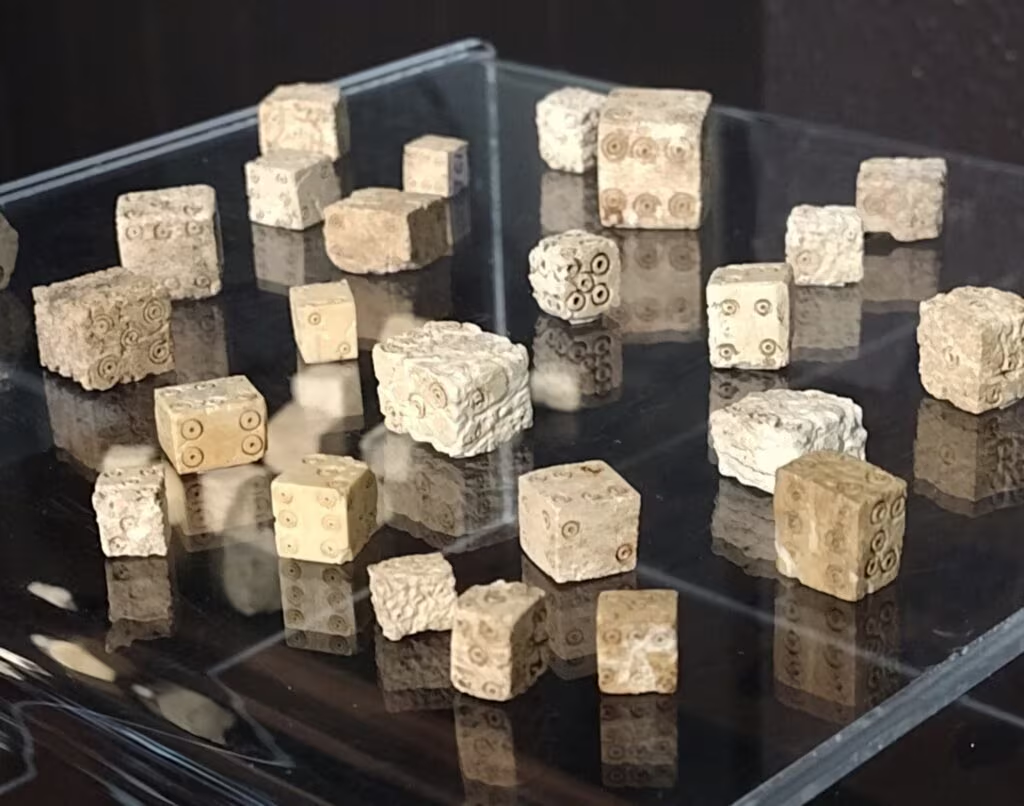
More than 1000 bone gaming dice, engraved with extreme precision, they were discovered by archaeologists during the excavation campaign conducted in July 2026 to Grandin the Vosges, in the France eastern, on the site of the ancient Gallo-Roman sanctuary city of Andesine. According to available information, this is the most important concentration of ancient dice identified so far. The finds were found around a small building measuring 4.5 × 3.8 meters, located along an ancient road oriented in an east-west direction. The archaeological context is dated between the 1st and 3rd centuries. d. C. The excavation campaign was directed by Thierry Dechezleprêtre, chief heritage curator at the Musée d’Archéologie nationale Of Saint-Germain-en-Layeand continues the operations carried out in 2022, 2023 and 2024. Approximately they participate fifteen archeology students from various French universities. The research is organized by the Conseil départemental des Vosges with the support of the Ministry of Culture.
The excavated building presents walls decorated with red mural paintingsset on a yellow base, but its function still remains uncertain. Archaeologists have put forward several hypotheses: it could be a artisan workshop for the production of diceof a sanctuary linked to ritual and divinatory practices, or of one space intended for playa sort of clandestine gambling den. A particularly interesting element is the presence of three nuts directly inserted into the foundations of the structure, which could indicate a relationship with its original function. The dice found have the numbers across ocellethat is, small double circles engraved on the surface. The concentration of the finds constitutes the most significant aspect of the discovery, because it is not simply a matter of a few isolated objects, but of an exceptionally large group gathered around a single structure. The analyzes will have to establish whether the nuts were used in the same building or whether they were stored there subsequently.
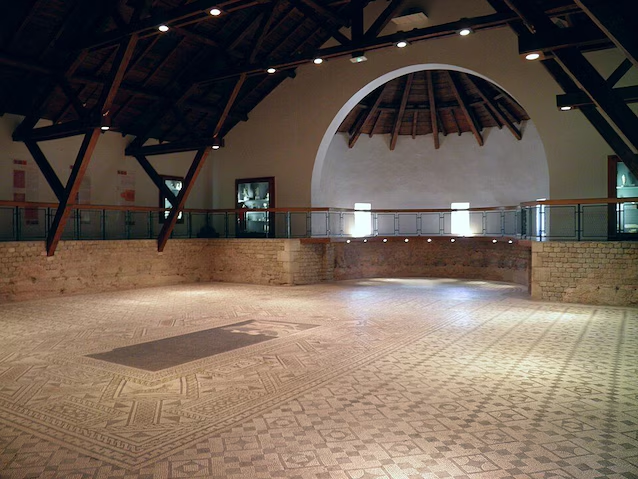
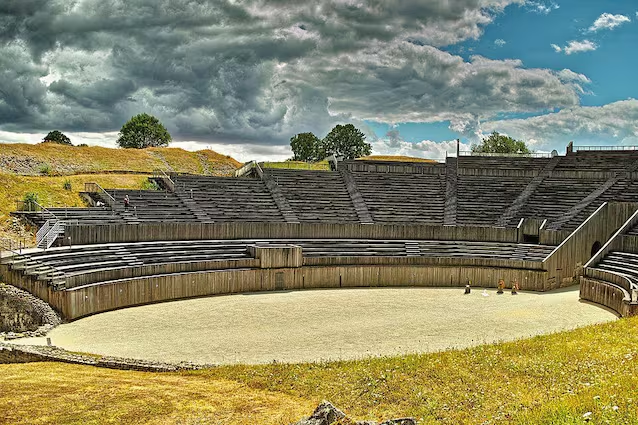
However, the dice are not the only finds recovered in the area. Archaeologists have found bronze coins, fibulae, ceramic fragments, bone remains, shoe nails and needles with eyesmaterials that contribute to reconstructing the daily activities carried out in this sector of the ancient city of Andesine. A wooden canalization approximately 20 meters long was also identified, preserved with its original iron bands from the Roman era. The dating indicated for the finds is preliminarily placed between 1st and 3rd centuries ADduring the phase greater development of the Gallo-Roman city, known for the sanctuary dedicated to the god Apollo Grannus, but not only that. The ancient one Andesinein fact preserves important monumental remains, including an amphitheater capable of hosting approximately 17,000 spectators and a large mosaic of 232 square meters.
The meaning of the dice concentration remains however clarify. Their relationship with the small building could provide new elements on the recreational and perhaps cultic practices of the city, but for now archaeologists keep it open different interpretations. The analysis of the dice and the rest of the recovered material will continue in the coming months at the Musée d’Archéologie nationale.
