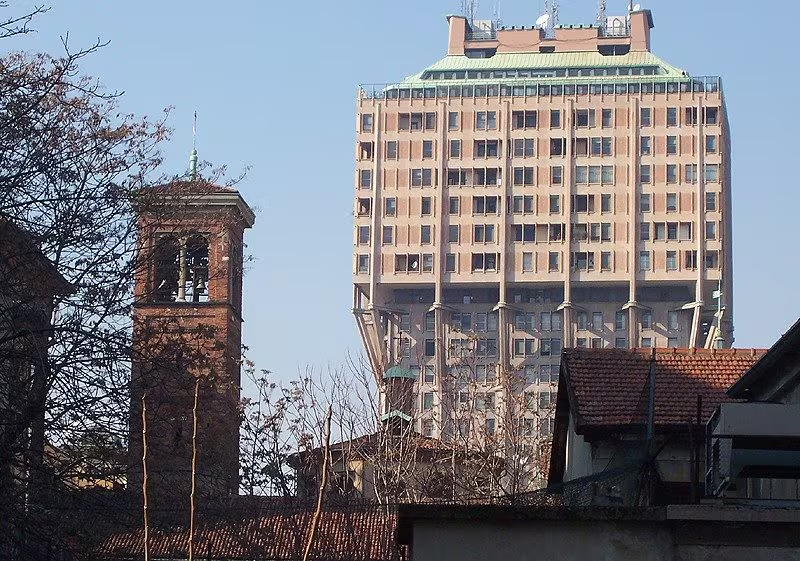
The Brutalism it is one of the easiest architectural currents to recognize there is: this is because brutalist buildings expose in plain sight the materials they are made of, mostly concrete (hence the name brutalism, from French brut concreteraw concrete), with exposed systems. Developed after the Second World War in England, it soon reached Italy, where it spread from north to south with examples of buildings that became famous, even if often with a bad name. Let’s see the 10 most famous.
Ten Italian brutalist buildings
The Velasca Tower in Milan
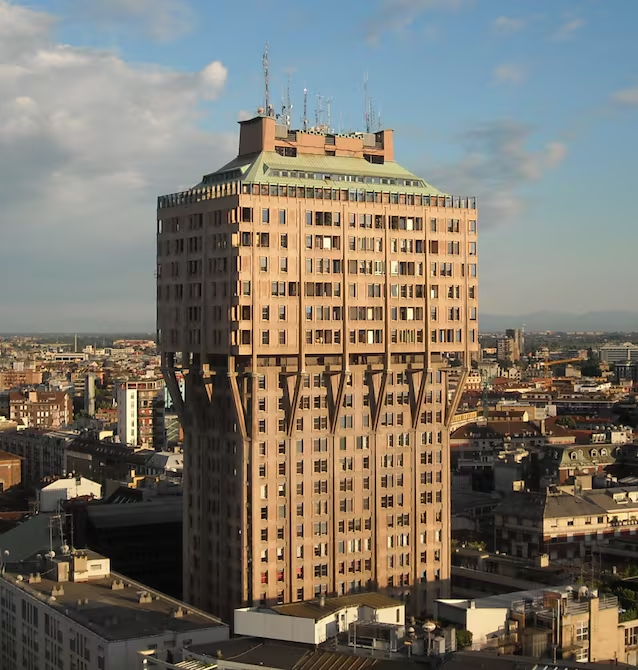
In 1951 the building site opened in the historic center of Milan (a stone’s throw from the Duomo). Tower Velasca: commissioned by Società Generale Immobiliare to the Milanese studio BBPR (founded by Gian Luigi Banfi, Lodovico Barbiano di Belgiojoso, Enrico Peressutti and Ernesto Nathan Rogers), it is today one of the most famous and controversial landmarks of the city. Together with Gio Ponti’s Pirelli skyscraper, it embodied the economic and cultural rebirth of Milan after the Second World War, accompanying Italian architecture towards its post-modern season.
The washing machines of Genoa
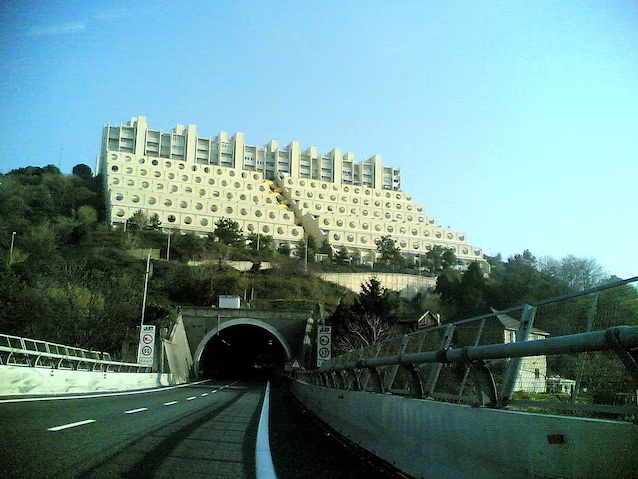
The residential complex in the San Pietro district of Genoa is officially called Pegli 3 but is known to most as “Washing machines” because of the characteristic portholes. The project, signed by Aldo Luigi Rizzo and Aldo Pino (in collaboration with Angelo Sibilla and Andrea Moro) is one of the many brutalist examples in Liguria – from the Palace of Justice in Savona to the Case Rosse in Framura – and represents, dating back to the 1980s, one of the last cases of large-scale public housing projects in Genoa. It is considered an eco-monster, and over the years it has caused many difficulties for tenants, including infiltrations and detachment of the plaster.
The Rozzol Melara complex in Trieste
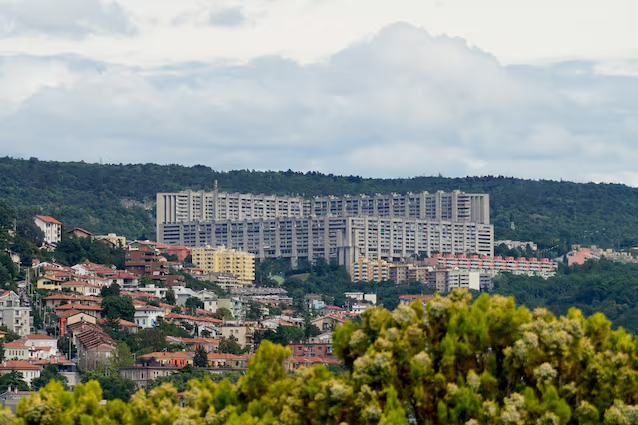
Built between 1969 and 1982, the complex Rozzol Melar it is a gigantic social housing experiment promoted by the autonomous Institute for Social Housing. Built by a team of thirty architects led by Carlo Celli, the Melara was imagined on the basis of the works of the architect Le Corbusier as an example of “social housing” for 2500 people, with 400 apartments distributed in two L-shaped buildings, connected by corridors, stairs, turns and covered squares. The social difficulties have been partially compensated over the years by the neighborhood associations.aa
The Sails of Scampia
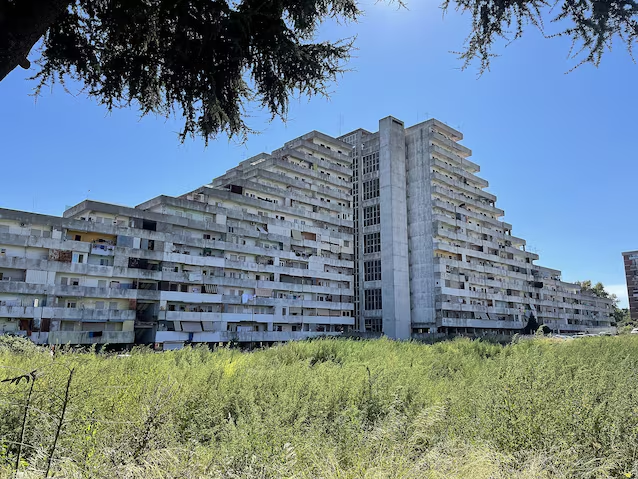
Le Vele di Scampia, north of Naples, is a residential complex built between 1972 and 1980: it took its name from the triangular shape, which recalls that of a sail. The complex, designed by architect Francesco Di Salvo, was originally composed of 7 buildings on an area of 115 hectares: six of these were demolished in 1997, 2000, 2003, 2020, 2025 and 2026 respectively, and the last remaining one is under redevelopment. This intervention was justified by the reputation of infamous places in the common areas of the complex and the neighborhood: the sails themselves had become, since the 1990s, a symbol of the degradation of the neighborhood.
The Sanctuary and Basilica of the Madonna delle Lacrime in Syracuse
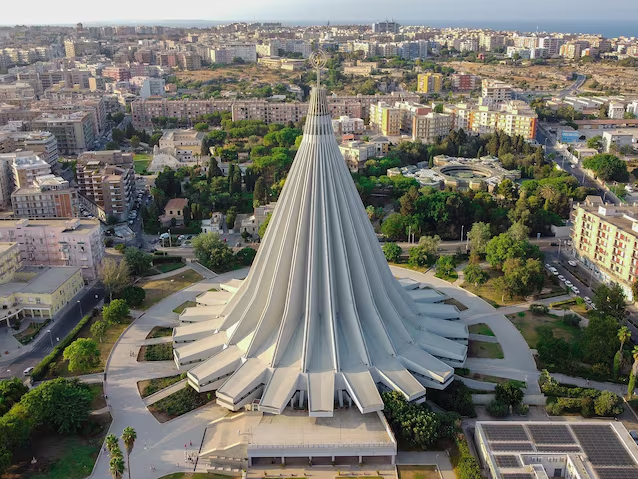
Also known for the miracle of the tearing of a plaster effigy of the Immaculate Heart of Marythe Sanctuary of the Madonna delle Lacrime of Syracuse has become a minor basilica since 2002 and a regional sanctuary since 2019. The work was designed in 1957 by the French architects Michel Andrault and Pierre Parat, with structural works by the engineer Riccardo Morandi. Its construction was very longalso due to the controversy and discontent of the inhabitants: it began in 1966 and was only completed in 1994.
The Cipriano Facchinetti State Institute of Higher Education in Castellanza
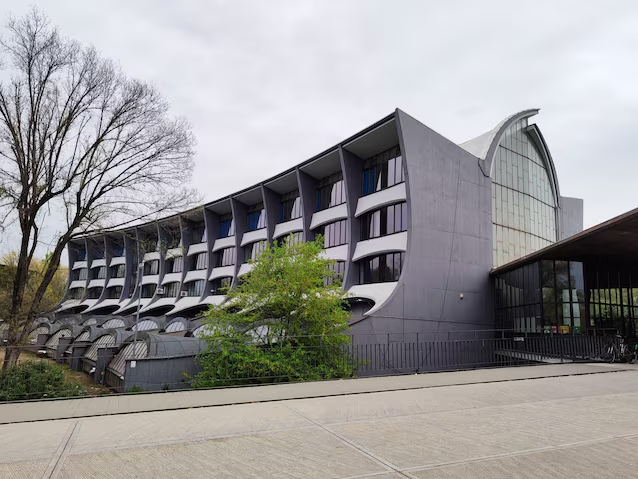
The building in Castellanza (Varese), one of the most famous works by the architect Enrico Castiglioni, is the result of collaboration with the engineer Carlo Fontana. Seen by experts as “one of the best examples of brutalist architecture”, Castiglioni’s building leaves its complex structure in evidenceimpressive despite the poverty of the materials. Castiglioni wrote: “This building introduced into school buildings – perhaps for the first time in Italy – the identification of architecture with the structure, in this case very complex in the vault system”.
The Marchiondi Institute of Milan
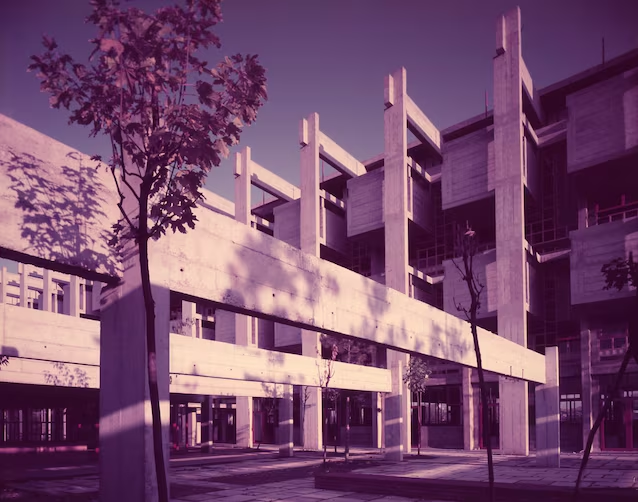
The building is considered a masterpiece of brutalist architecture but is currently in a state of serious abandonment. Connected to each other by covered paths and greenery, the four main building nuclei (built during the 1950s) respectively house the offices and management of the Marchiondi Spagliardi Institute, the boarding school for students, the volume for teachers and a school centre. The choice of the architect Vittoriano Viganò is interesting abolish traditional dormitories in favor of duplex accommodation for twelve boys.
The Church of the Highway of the Sun
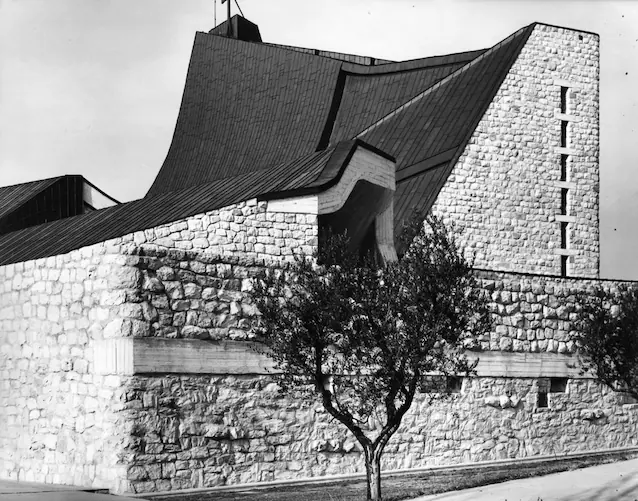
Built to remember killed at work caused by the construction of the Autostrada del Solethe Church was built, designed by the architect Giovanni Michelucci, in a symbolic midpoint between Milan and Naples, the two cities connected by infrastructure. «The general shape is that of a tent, which can mean, analogically, the “transit”, and not the definitive home of men on earth», said the architect himself. Made of San Giuliano stone and white cement from Sardinia, it was completed in 1964.
The Church of San Giovanni Bono in Milan
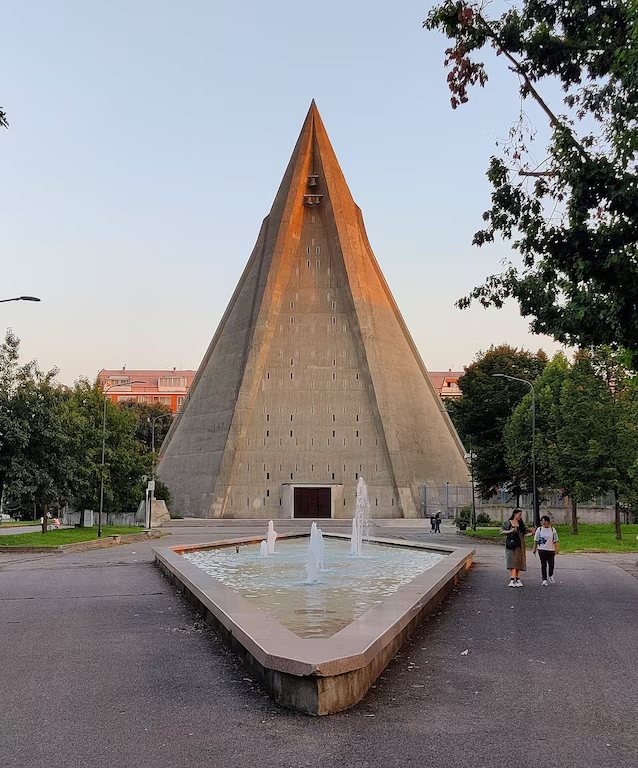
Like the rest of the new Sant’Ambrogio district of Milan, the church of San Giovanni Bono was also built in the 1960s by the architect Arrigo Arrighetti. Located in the center of the neighborhood, it stands out for its triangular shape: the sail roof rises from the presbytery area to create a spire at the façade. The walls, outside and inside, are in exposed concrete, pierced by a large number of colored windows: the roof, destroyed by a fire in 1980, was rebuilt with a new design.
The Tre Fontane Building Complex in Rome
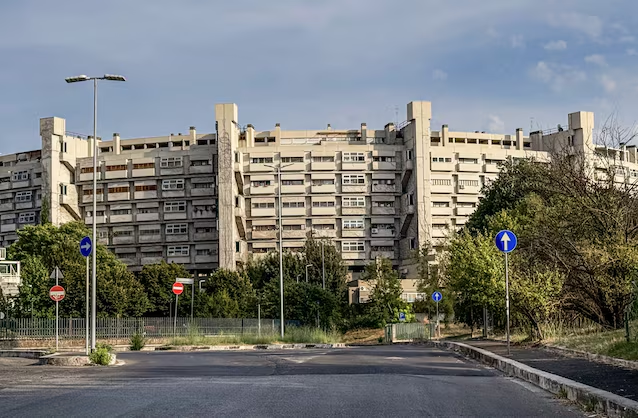
This work by Joseph Perugians it is considered the most genuine expression of Roman brutalism of the early 1960s.
Sources
Domus Order of Architects
Lombardy Cultural Heritage
Today Interiors
Giuseppe Magini, For the centenary (2014) of the birth of Richino Castiglioni in Busto (29/1/1914), grateful memory for the architect, in Almanac of the Bustocca Family for the year 2013, Busto Arsizio, La Famiglia Bustocca, 2013, pp. 90-92
Atlas of Contemporary Architecture
