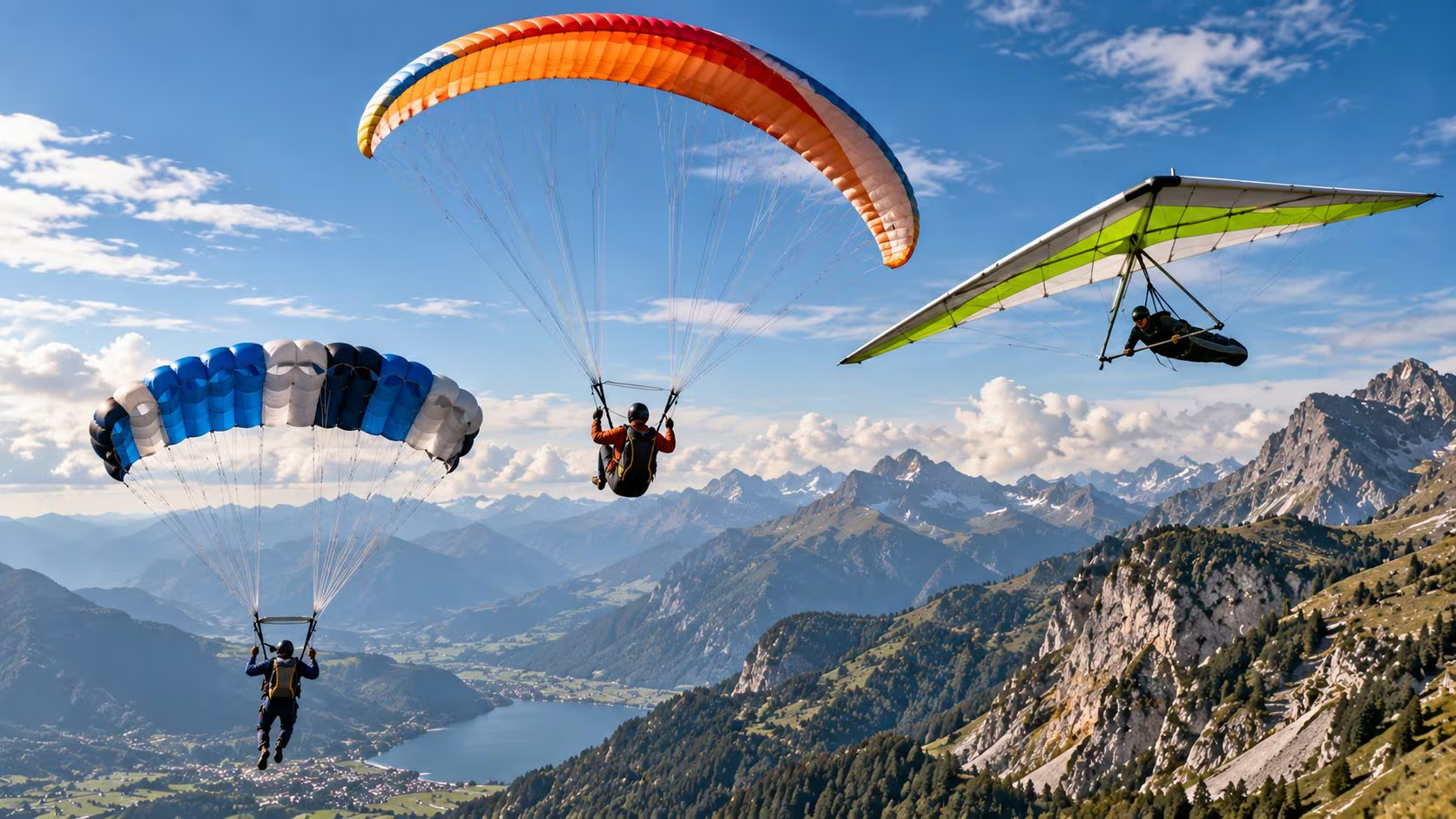
Parachutes, paragliders and hang gliders – three means of unpowered flight – all use the interaction between air and surface to support a person in flight, but they are not the same thing. The parachute born above all to slow a fall; paragliders and hang gliders, on the other hand, are true means of free flight, designed to transform descent into advancement and gain altitude. The fundamental difference therefore lies in the shape and structure of the wing, how it is controlled and what it is designed for. A paragliding has aflexible wing inflated by air, a hang glider has one rigid structure which maintains the shape of the wing, while a parachute can have very different configurations, including modern aerofoil ones.
The parachute increases air resistance to slow the fall
The basic function of the parachute is reduce the descent speed of a person or object, for example after being thrown from an airplane. When the sail opens, a large surface interacts with the air and generates strong aerodynamic resistancethat is, a force that opposes movement. The speed decreases until it reaches a condition in which the air resistance is able to balance the weight of the system: from that moment the parachutist continues to descend at an almost constant speed.
The operation is particularly evident in the round parachutesused historically and still present in some applications. The shell, connected to the harness through the suspension ropes, opens to form a large surface that intercepts the air. In this case the main function is to slow down the descent, while the ability to advance and maneuver is limited.
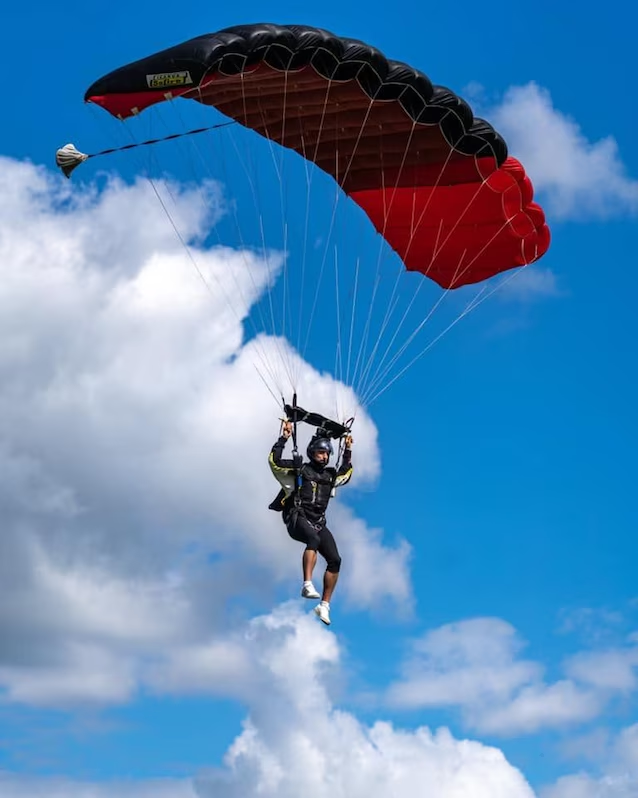
The parachutes used today in sport parachutinghowever, are often of the type ram-air. They are made of fabric cells that fill with air through openings at the leading edge, keeping the sail inflated and giving it a wing-like profile. This geometry significantly changes the behavior of the sail. A parachute ram-air not only generates resistance, but also lift: It can then transform part of the lost altitude into horizontal movement. The pilot can advance, turn and change his trajectory, heading towards a specific point on the ground.
The paraglider is a flexible wing designed for free flight
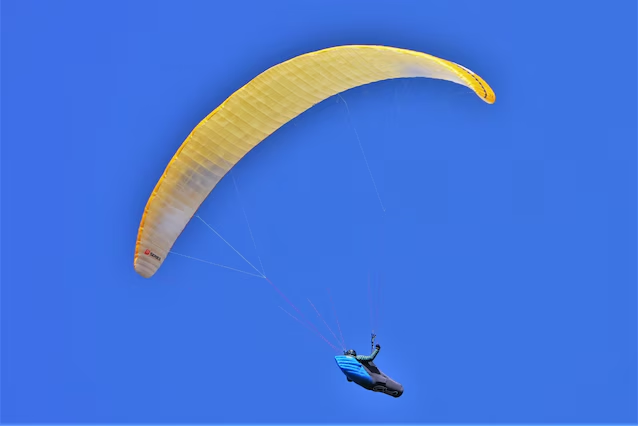
Unlike the parachute, the paraglider is designed from the beginning to take off from the ground, glide and exploit atmospheric currents. Its wing is made of a flexible tissue divided into numerous cells that inflate during flight. The ropes connect the glider to the risers and the pilot’s harness.
During flight, air enters openings at the leading edge of the wing and keeps the cells inflated, allowing the wing to retain its aerodynamic profile. It is precisely this shape, together with the movement of the sail with respect to the air, that generates the lift necessary to support the pilot. Control occurs primarily through commands attached to the trailing edge and through movement of the hands and body.
And above all, paragliding is not simply designed to “slowly descend”, as in the case of a parachute. In the presence of thermalsthat is, columns of air that rise because they are heated by the ground, or of dynamics, when the wind is deflected upwards by a mountain or a slope, the pilot can gain altitude. It’s the reason why a flight starting from a mountain can turn into a journey of dozens or even hundreds of kilometers.
The hang glider maintains its wing thanks to a rigid structure
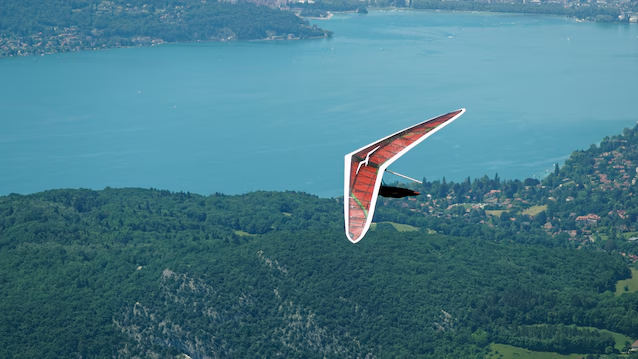
The hang glider uses the same aerodynamic principles as the paraglider, but its wing maintains its shape thanks to a rigid load-bearing structure. Tubes and other structural elements, traditionally made of metal alloys and composite materials, support a taut sail and form the characteristic triangular geometry.
The pilot flies in a prone position, suspended under the wing, and controls the vehicle mainly through the weight shift. By changing your position relative to the wing you can change the attitude and cause turns.
Compared to paragliding, hang gliding generally features higher flight speeds and greater aerodynamic efficiencywhile the paraglider has the advantage of being able to be folded and easily transported in a backpack. Both, however, can exploit thermals and dynamics and travel great distances without an engine.
The fundamental difference between these mediums can be summed up with a simple image. In paragliding it’s theair to keep the wing inflated; in hang gliding it is the structure that maintains its shape. The parachute, on the other hand, includes very different configurations, but its main function is to allow a controlled descent after a jump or in an emergency situation.
This also explains why paragliding and hang gliding are not simply parachutes. Their wings are optimized for gliding flight and taking advantage of updrafts, while parachutes are designed around the need to slow and control a descent. In fact, in case of emergency, paragliding and hang-gliding pilots normally carry with them a separate reserve parachute.
