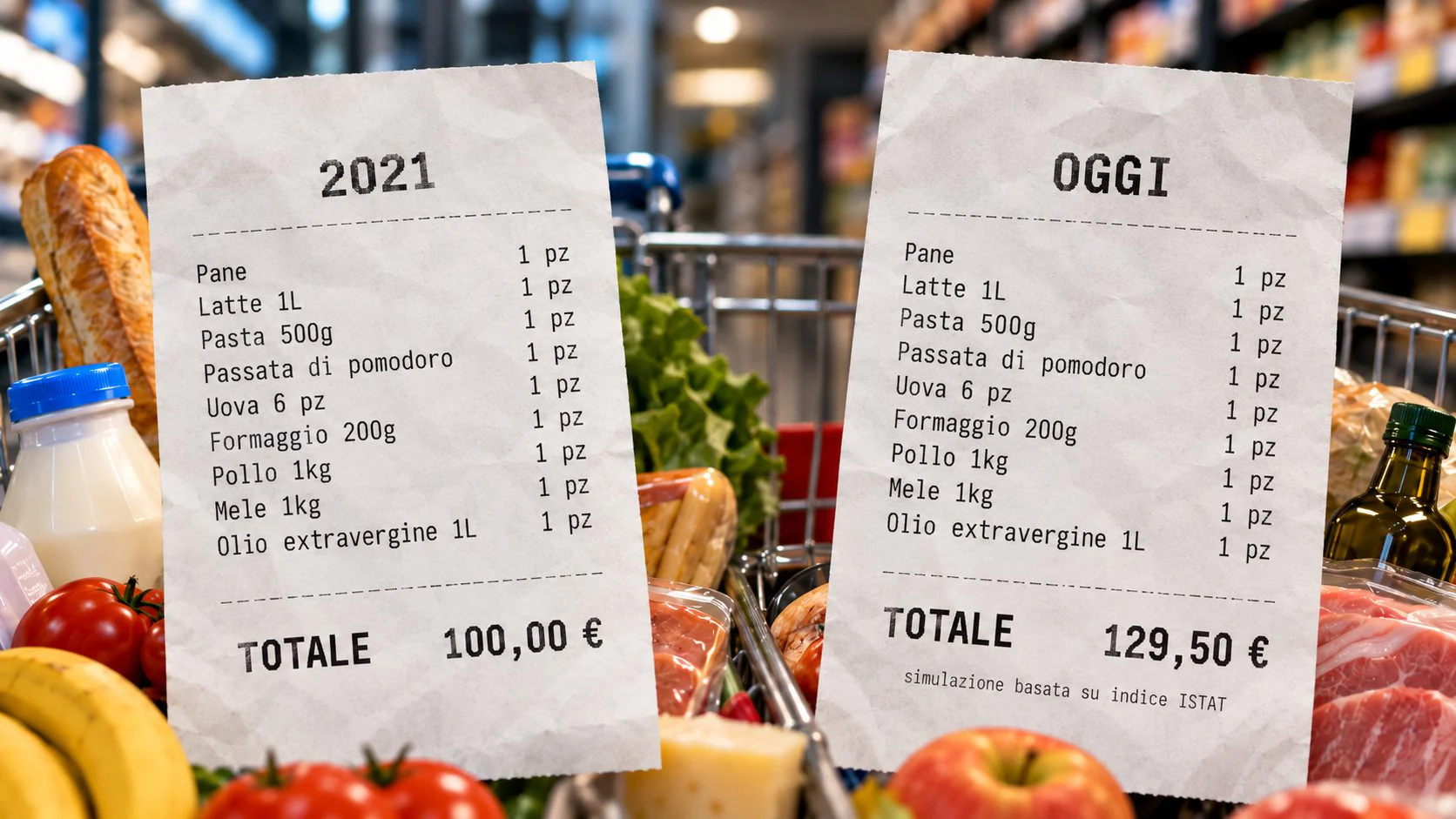
If you place the 2021 shopping receipt and today’s shopping receipt next to each other, the difference immediately catches the eye: to fill the same cart today you pay approximately 30% more. According to our calculation of the Istat consumer price indices, between July 2021 and July 2026 the prices of food and non-alcoholic drinks rose by 29.5%, against a general inflation of 21%.
Families have tried to keep up, but only partially. According to the latest Istat survey on consumption expenditure, published on 8 October 2026, in 2025 a family, which in Italy has an average of 2.2 people, spent on average 552 euros per month for food spending, 86 euros more than in 2021 (+18.4%). But if prices rise more than spending, it means that less food enters the cart today than five years ago.
Among the individual items, those on which spending has grown the most since 2022 are oil and fats (+34.5%) And coffee (+24.4%). And the race hasn’t stopped: according to provisional Istat data from September 2026, in one year food prices rose by 1.8% and those of fresh products, such as fruit, vegetables, meat and fish, by 5.5%.
How much does a family spend on average per month on groceries: comparison with 2021
According to Istat, today an Italian family spends on average 552 euros per month for food and drinks, excluding restaurants and bars: 86 euros more than the 466 in 2021. Since 2021, spending on food has risen by 18%, more than all other family expenses combined (+15%). The result is that today, out of 100 euros spent every month, around 20 end up in the supermarket trolley.
Naturally the figure changes a lot based on how many people live in the house: those who live alone spend on average 374 euros per month, a couple 567, a family of four 762 and families with five or more members reach 878 euros.
According to Istat, today an Italian family spends on average 552 euros per month for food and drinks, excluding restaurants and bars: 86 euros more than the 466 in 2021. Since 2021, spending on food has risen by 18%, more than all other family expenses combined (+15%). The result is that today, out of 100 euros spent every month, around 20 end up in the supermarket trolley.
Naturally the figure changes a lot based on how many people live in the house: those who live alone spend on average 374 euros per month, a couple 567, a family of four 762 and families with five or more members reach 878 euros.
Those 41 euros are the food that no longer ends up in the cart, or that has been replaced by cheaper products: approximately 7% of the expense of 2021. It’s the shopping cart paradox: we pay more and buy less.
The families themselves confirm this: according to Istat, in 2025 almost one in three reduced the quantity or quality of the food purchased, compared to around one in four in 2021. And the weight of the price increases is not the same everywhere: in the South food spending absorbs a quarter of the family budget, in Trentino-Alto Adige just 16%.
Which foods cost the most: Istat data on food expenditure item by item
From 2022 to today the voice has grown the most oil and fats: a family spends almost 20 euros a month, a third more than three years ago. In second place is the coffee (+24%), followed by ready-to-eat foods and dairy products. The comparison starts from 2022 because from that year Istat uses a new consumption classification, and the individual items are not comparable with 2021.
In euros, however, the item that weighs the most remains there meat: 117 euros per month, more than a fifth of all food spending.
However, an increase in spending does not mean that you buy more. Between 2022 and 2025, food prices grew more than household spending: only for oil, coffee, ready-to-eat foods and dairy products did spending increase more than inflation. On almost everything else, from fruit to fish, prices have grown less: overall, therefore, families have reduced quantities or chosen cheaper products.
Coffee, in particular, is the consumption that is given up the least: in the last year alone, spending has increased by almost 15%, the highest increase of the entire shopping cart.
