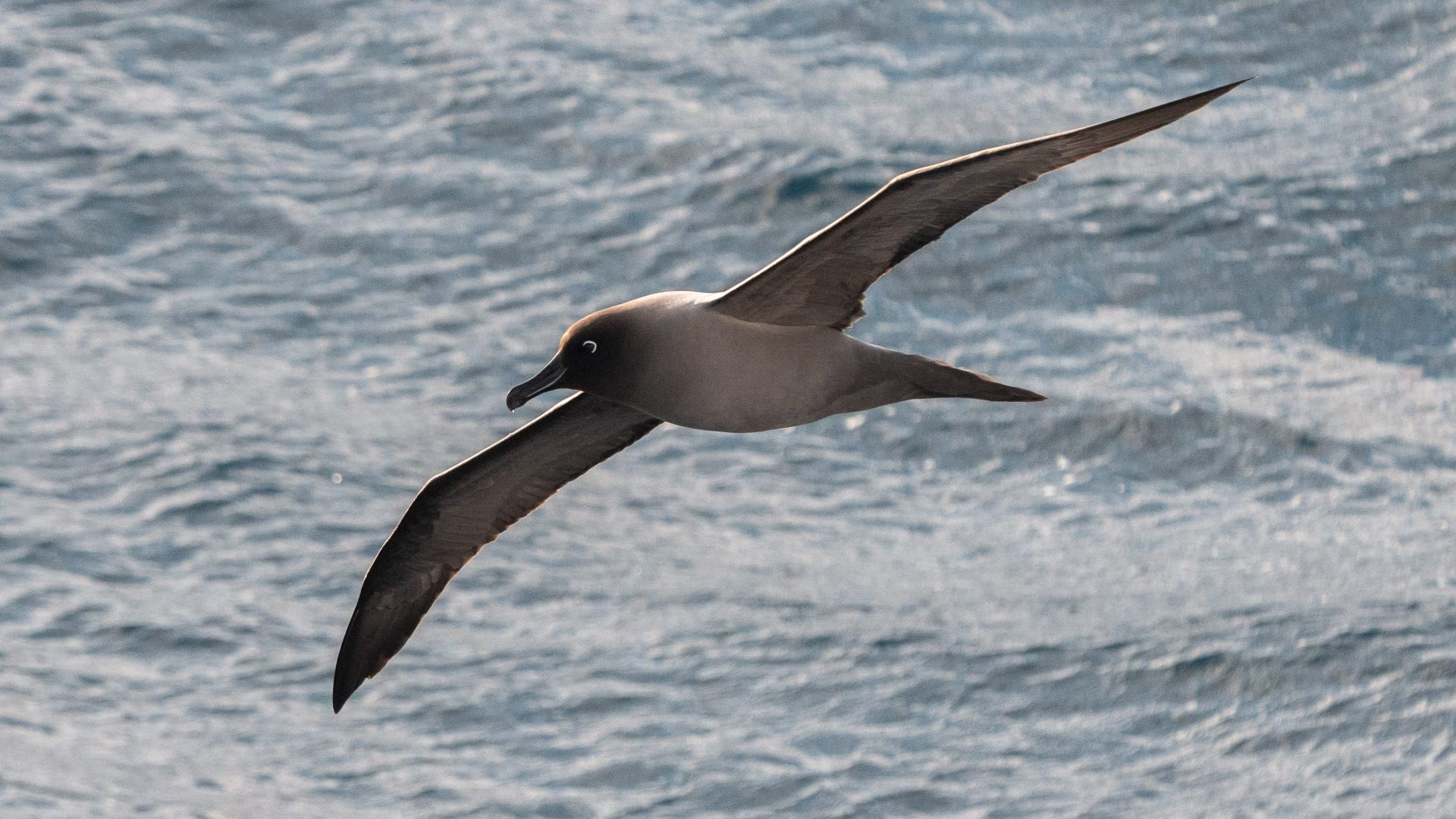
In just forty yearssome South Georgia albatross populations have declined by more than half. According to a large census published in 2025, among the monitored species the decline has reached 39% for the howling albatross (Diomedea exulans), The 46% for the black-browed albatross (Thalassarche melanophris) and even the 66% for the grey-headed albatross (T. chrysostoma). We are talking about some of the largest birds on our planet and among the most important regulators of Antarctic ecosystems. Yet, these giants of the sky, as well as many other seabirds that inhabit the seventh continent, are also struggling with consistent declineswhich the study authors link to a combination of pressures acting both at sea and in spawning areas. Among the main ones are the accidental capture in fishing activities and the effects of climate change over the Southern Ocean, which are changing the distribution and availability of key resources such as Antarctic krill. To better understand what is happening, the author also interviewed Simon Delany, ornithologist from HX Expeditiona cruise company specializing in remote destinations that combines travel with scientific activities and meetings with experts on board.
Why albatrosses are increasingly under pressure: the main causes
“It is difficult to attribute the decline of seabirds to a single cause, but industrial fishing is certainly among the main threats to these animals,” explained Delany. There are two fishing methods that, directly or indirectly, have an important effect on the populations of Antarctic and sub-Antarctic seabirds: the longline fishingthrough bycatch (bycatch), and the krill fishingwhich can act indirectly by reducing the availability of a key food resource. “The bycatch of seabirds through longline fishing has decreased significantly thanks to safer fishing techniques, although the problem has not disappeared”, said Delany. “Krill fishing – he continued – is instead regulated by annual quotas, but in such remote areas it is difficult to control how much they are actually respected”.
Further complicating the situation is climate change. Antarctic krill, in fact, is not statically distributed: as indicated by Kawaguchi and colleagues in a paper published in Nature Reviews Earth & Environment in 2024, its distribution has progressively increased in the southwestern sector of the Atlantic contracted towards the southwhile in the more northern areas both the density of adults and the presence of larger swarms have decreased. Among the causes indicated by scholars there are – now as well as over a decade ago – rising ocean temperatures and shrinking sea iceessential especially in the early stages of the krill life cycle. The result is that krill, predators and fishermen may find themselves increasingly concentrated in the same areas, increasing competition for a resource that represents one of the pillars of the Southern Ocean food network.
The Gentoo penguin moves south while other species retreat
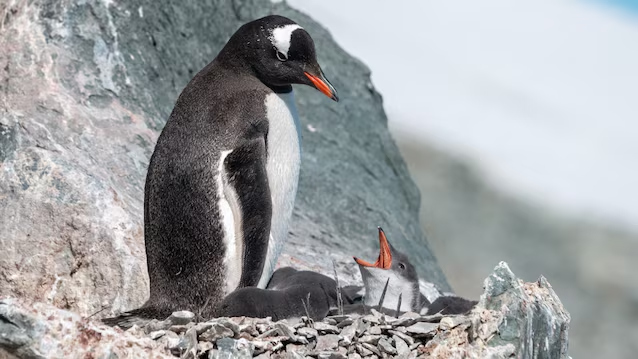
“However, there are also opportunistic species that are benefiting from some environmental changes,” underlined Delany. “An important example is that of Gentoo penguin (Pygoscelis papua), a species that fifty years ago was mainly sub-Antarctic and much less common along the Antarctic Peninsula”. With temperatures rising – Delany continued to explain – conditions on the Peninsula have become increasingly favorable for this species: “The Gentoo penguin is moving more and more southwards and is today among the penguins most frequently observed in the region, while typically Antarctic species such as the Adélie penguin (P. adeliae) or, to a lesser extent, the chinstrap penguin (P. antarcticus) find themselves increasingly in difficulty.”
From rats to plastic: other threats to Antarctic seabirds
If climate change is reshaping the distribution of some species such as krill or the Gentoo penguin, man has also modified these ecosystems in another way: by introducing non-native species. “Another major threat to seabirds in the Antarctic and sub-Antarctic areas is introduced alien species“, confirmed Delany. In South Georgia, for example, rats and mice they were accidentally introduced by the ships of sealers and whalers starting from the time of human colonization of the island, between the end of the eighteenth century and the following centuries, causing – as underlined in a 2019 paper – enormous problems for the bird populations that inhabited the island. “On other islands – continued Delany – they have also been introduced cats, goats, pigs and other species, which can have very serious consequences on seabirds and their breeding sites.”
“And a further problem is represented by marine waste, in particular by plastic“, explained Delany. For seabirds, which may ingest fragments of plastic because they resemble prey or because, once colonized by marine microorganisms, they emit odors associated with their food, this material is problematic both for its toxicity and for its physical effect. “It can in fact take up space or block the digestive system – underlined Delany – to the point of causing the death of the animal. It is a problem that has existed for a long time – he continued – because already about forty years ago, when I worked at Bird Island, I saw albatrosses bringing plastic back to the nests and giving it to the chicks. Since then the problem has become even more serious”.
Because the decline of albatrosses affects the entire Antarctic ecosystem
But the decline of these species, caused by various pressures – from accidental capture in fisheries to the effects of climate change on the Southern Ocean and its food resources – tells something more than simply their fate. Seabirds, especially in Antarctic environments, occupy the higher levels of the food web and, precisely for this reason, they can function as real ones indicators of the health of the ecosystem. “They are in fact top predators of the food web and feed on fish, squid, krill and other zooplankton organisms, which in turn depend on phytoplankton,” explained Delany. “And apex predators are generally good indicators of ecosystem health.” In other words, if seabird populations like albatrosses are decreasingthe problem could concern not only them, but the entire ecosystem of which they are part.
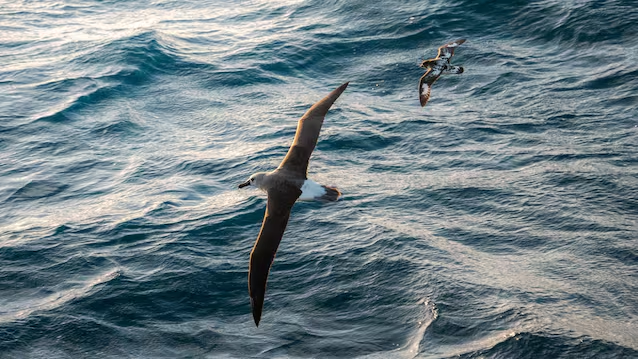
This is also why it is important to reverse this decline: “It is fundamental – said Delany –, also because most of the 22 living albatross species are still considered threatened globally”. Yet, we still have a lot to learn about these animals because, living and reproducing in very remote areas, studying them is very complicated. “Reaching them is expensive – added Delany – and long-term studies require large investments”. There are several international instruments for the conservation of albatrosses and petrels. Among the main ones is theAgreement on the Conservation of Albatrosses and Petrels (Agreement on the Conservation of Albatrosses and Petrels – ACAP), an agreement that brings together several countries with the aim of coordinating protection strategies and policies. The problem, however, is turning these commitments into concrete interventions: the availability of funds often remains limited and, despite the work of governments and researchers committed to conservation, the results obtained so far are still very variable.
However, there are also positive examples. The black-browed albatross, for example, is the only albatross species considered recovering in the South Atlantic, as highlighted by a study by Ventura and colleagues. Part of its recovery is linked to improvements in longline fishing techniques, which allow the birds to be kept away from the area where the bait is placed in water. “This shows that conservation measures can work,” commented Delany. “We can hope that there will be other similar examples in the future,” he concluded.
Sources
Agreement on the Conservation of Albatrosses and Petrels (ACAP) Flores, H., Atkinson, A., Kawaguchi, S., Krafft, B.A., Milinevsky, G., Nicol, S., … & Werner, T. (2012). Impact of climate change on Antarctic krill. Marine Ecology Progress Series, 458, 1-19. Kawaguchi, S., Atkinson, A., Bahlburg, D., Bernard, K. S., Cavan, E. L., Cox, M. J., … & Veytia, D. (2024). Climate change impacts on Antarctic krill behavior and population dynamics. Nature Reviews Earth & Environment, 5(1), 43-58. Mackley, E., Poncet, S., Black, A., Black, J., Floyd, K., Hall, R., … & Phillips, R. (2025). Endurance or extinction: long-term declines in albatrosses at South Georgia highlight threats from South Atlantic fisheries and climate change. Endangered Species Research, 57, 437-451. Martin, A. R., & Richardson, M. G. (2019). Rodent eradication scaled up: clearing rats and mice from South Georgia. Oryx, 53(1), 27-35. Savoca, M. S., Wohlfeil, M. E., Ebeler, S. E., & Nevitt, G. A. (2016). Marine plastic debris emits a keystone infochemical for olfactory foraging seabirds. Science advances, 2(11), e1600395. Ventura, F., Lukacs, P. M., Granadeiro, J. P., Matano, R., & Catry, P. (2021). Demographic responses to environmental change of the black-browed albatross, sentinel of the Patagonian Shelf Large Marine Ecosystem. Marine Ecology Progress Series, 668, 107-120.
