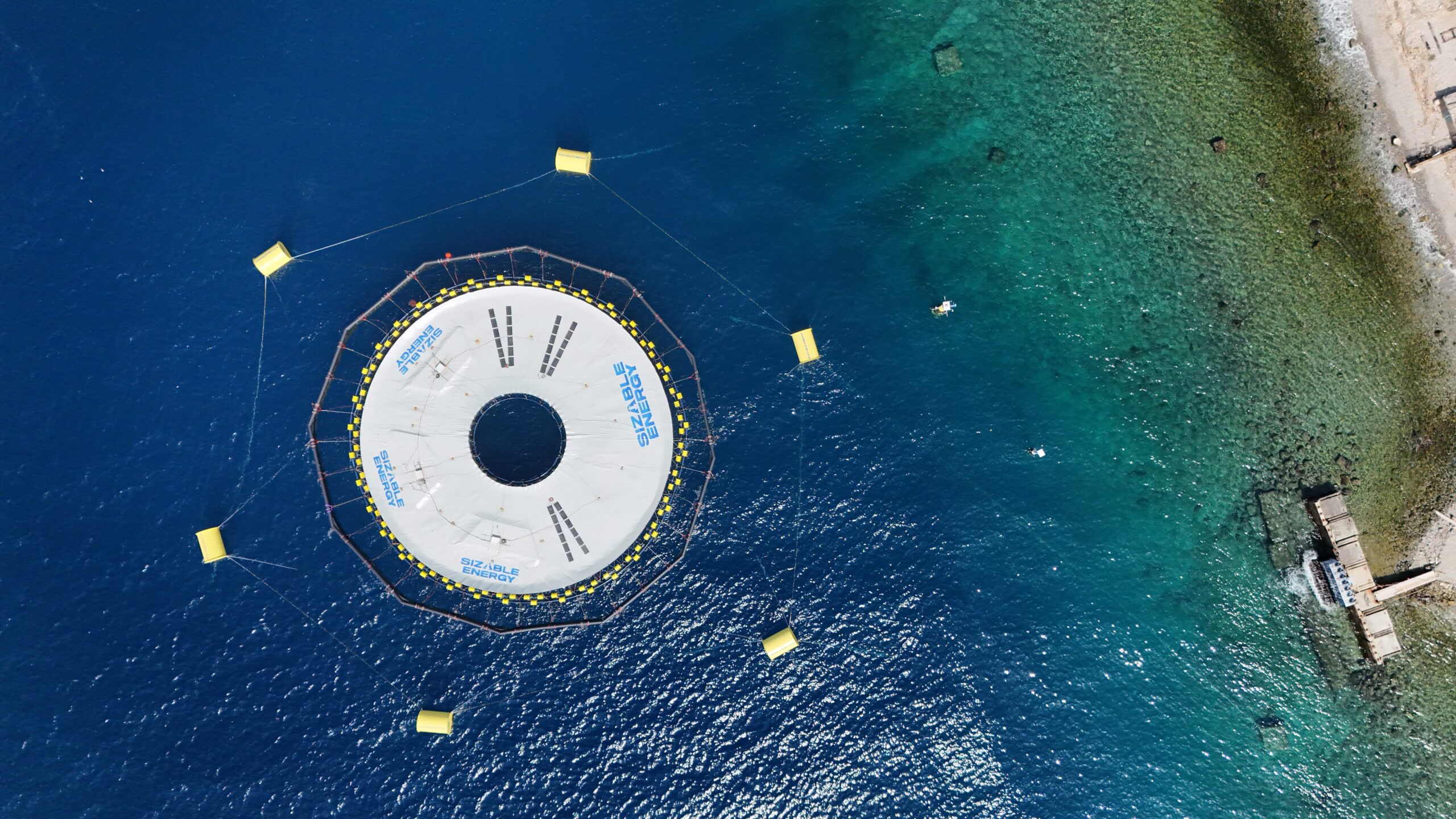
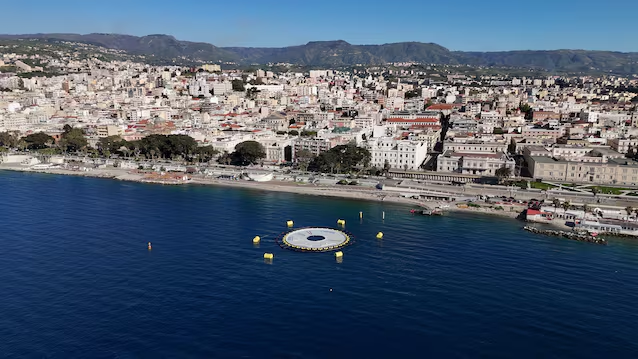
What if water, salt and the force of gravity were enough to accumulate energy? This is the idea of the Italian startup Sizable Energy, which is experimenting with an offshore energy storage system at sea, an alternative to conventional batteries. The area of the Strait of Messina is ideal, thanks to deep seabed a short distance from the coast and particularly intense currents.
Off the coast of Reggio Calabriathe sea becomes a laboratory for the future of energy. Here it is experimental phase the prototype of an innovative system offshore energy storage developed by the Italian startup Sizable Energywhich exploits the hydrostatic pressure and the severity to store excess electricity, especially that produced by non-programmable renewable sources, such as wind power And solar. The technology aims to offer an alternative to traditional electrochemical battery storage systems (Battery Energy Storage System), helping to make the electricity grid more flexible And resilient.
How Sizable Energy works and features
The technology patented by Sizable Energy is based on the use ofexcess electricity from the network to pump, within a closed circuit, a concentrated brinesolution of water and unrefined sea salt (about 20% more than sea water), from a smaller tank anchored to the bottom by one floating positioned on the surface. When the network requires energy, the fluid is released from the upper tank and descends by gravity towards the lower one through special pipes, activating reversible turbines which convert the accumulated potential energy into electricity. This operating principle allows you to temporally decouple production from electricity consumptionhelping to mitigate one of the main critical issues associated with the variability of generation from intermittent renewable sources.
From an engineering point of view, the system is conceived according to amodular and scalable architecturewith the aim of limiting the visual impact of offshore structures. Sizable Energy’s choice to use materials easily available aims to simplify the manufacturing, assembly and installation phases, potentially leveraging the technical skills, infrastructure and operational capabilities already available in the shipbuilding sector.
The experimental phase at sea
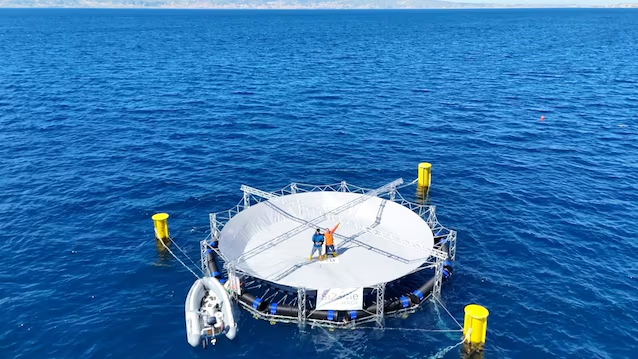
After an initial test phase conducted at the research center of Maritime Research Institute Netherlands (MARIN), a demonstration prototype of the energy storage system developed by Sizable Energy is currently undergoing testing in a marine environment at the Natural Ocean Engineering Laboratory (NOEL) of the Mediterranean University of Reggio Calabria. Test bench dedicated to experimental research in the field of maritime engineering, the complex lifting, towing and installation maneuvers of the platform, characterized by a diameter of approximately 50 meters and a total mass of 11 tonswere entrusted to Geodisan international operator specializing in logistics.
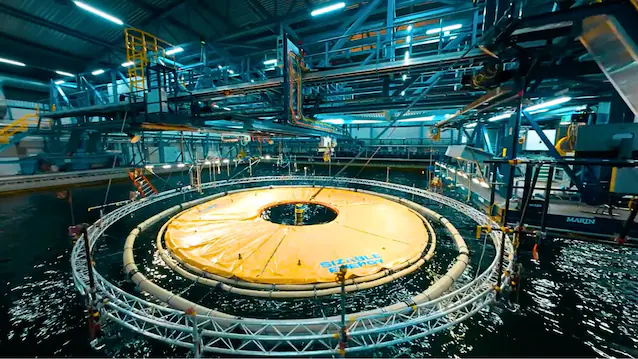
The experimental campaign conducted by the Italian startup aims to verify the behavior of the system real operating conditionsvalidating its performance at scale preindustrial and optimizing the launching, handling and installation procedures in view of possible future marketing. In this context, the area of the Strait of Messina presents characteristics potentially favorable to experimentation, thanks to the presence of deep seabeds a short distance from the coast and particularly intense current regimes, which allow the system to be evaluated in a marine environment characterized by complex hydrodynamics.
Comparison with traditional systems
In an energy context characterized by a growing need for long-term energy storage systems (Long Duration Energy Storage, LDES), the technology developed by Sizable Energy aims to overcome the constraints geographical and infrastructural factors that limit the adoption of conventional hydroelectric pumping systems. The modular offshore architecture could, in fact, extend the possibility of applying gravitational storage also to areas without the necessary orographic characteristics to the construction of hydroelectric basins, thus expanding their potential field of use.
The interest in technology is also reflected on a financial level: in October 2025, the Italian startup raised well 8 million dollars in a funding round led by Playground Global. The operation symbolizes the attention of investors for the potential of the solution, in a phase in which experimental validation, demonstration of performance on an adequate scale and verification of economic sustainability represent crucial steps towards possible commercialisation.
