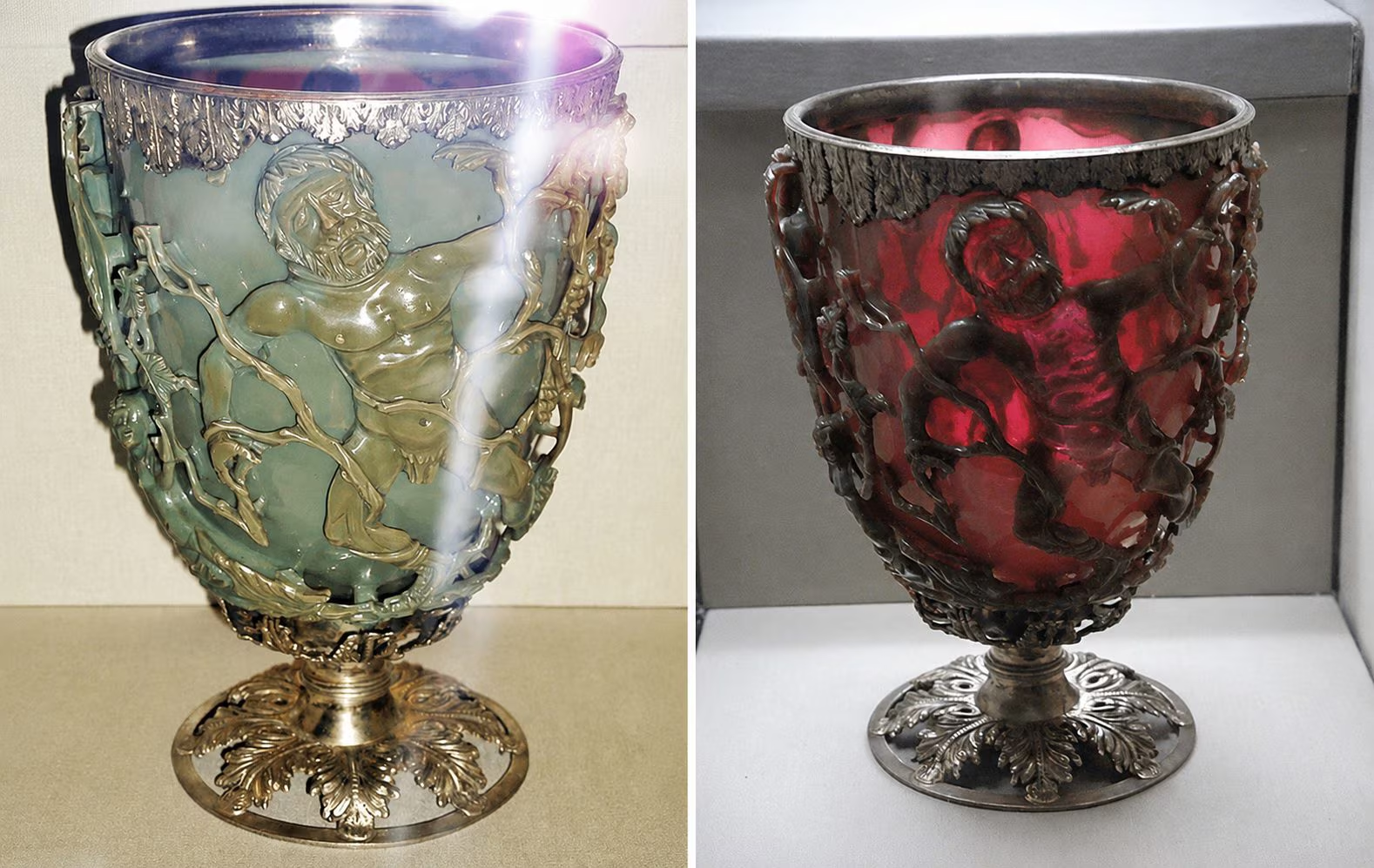
Researchers from the University of Sheffield have reproduced the dichroic effect of the Lycurgus Cup, a masterpiece of Roman craftsmanship from 1700 years ago, which appears green in reflected light and red in transmitted light. The experiment highlights the mastery of the Roman glassmaker, capable of obtaining astonishing results without our current physical knowledge.
A Roman cup of approx 1,700 years ago prompted a group of researchers fromUniversity of SheffieldIn the United Kingdomto reproduce one of the most singular properties of ancient glass processing: the ability to appear of different colors when light passes through it. This type of glass, attested at least since 4th century d. C.it is said “dichroic“. The most extraordinary object made with this technique is the Lycurgus Cuppreserved at British Museum and accomplished between the 3rd and 4th centuries AD The authors of the research revealed to Guardian how they managed to obtain dichroic glass.
The history of the Lycurgus Cup is mysterious. It was most likely made inRoman Egyptand because of its extraordinary state of conservationit is very likely that it comes from a funerary context. Its first mention in a modern document he already sees it in England in the mid-19th century. The mythological iconography of the decoration was quite well known. Lycurgusmythical king of Thrace, goes crazy because of Dionysusgod of wine, due to the lack of hospitality towards the divinity.
The artifact is one of the most extraordinary dichroic glass objects that have survived to our time. The cup is able to show different colors depending on the conditions lighting. The effect it does not depend on a simple pigmentbut by the presence in the glassy material of microscopic metal particlesmainly composed from gold and silver. When light passes through glass, these particles they absorb some wavelengthsletting prevail red and orange shades. The reflected light is instead diffused in a different way, producing the green appearance of the cup. This particular type of cups, called diatretic cupswhich spread in the 4th century. d. C., probably shows the pinnacle of mastery achieved by Roman craftsmen in glass processing.
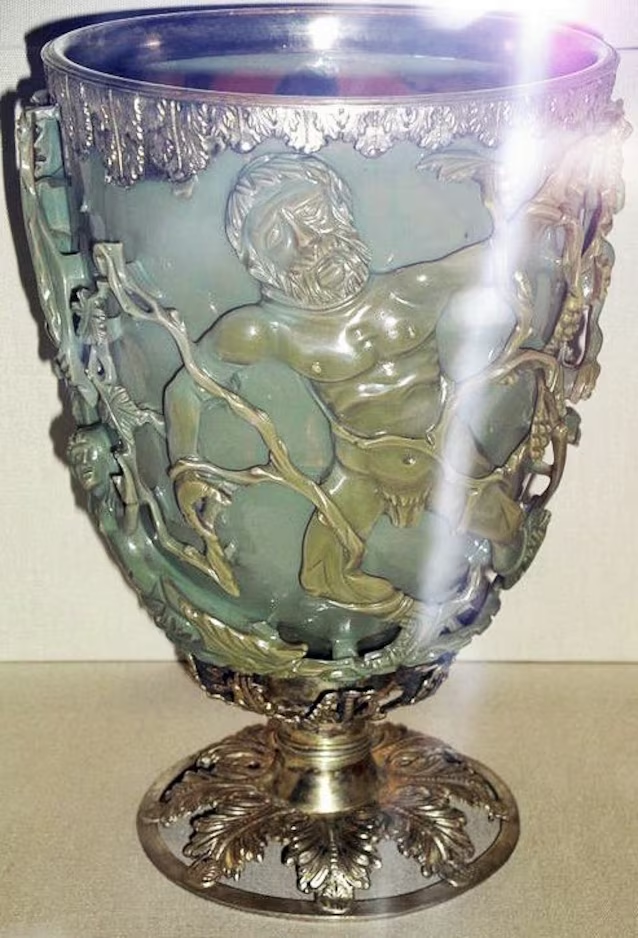
For reproduce this dichroic behavior, the Sheffield group has experienced a glassy mixture containing minimal quantities of gold and silverheated beyond i 1,000 °C. During cooling, tiny metal particles are formed, the size and characteristics of which determine the optical result. The difficulty lies precisely in check the process: small variations in composition and melting conditions can modify the final color significantly. In an environment checkedthe result turned out to be satisfactory. Indirectly, this complexity shows us how much they were capable the craftsmen who made the cup 1700 years ago.
Sheffield Work it doesn’t start from scratch. The presence of metallic nanoparticles in the Lycurgus Cup it was already known thanks to scientific analyseswhile previous attempts to reproduce the colors had obtained only partially satisfactory results. The group’s research was also described in a study by 2025 in the magazine Physics & Chemistry of Glassesdedicated to the reproduction of the chromatic characteristics of the cup. The experiment shows how Roman craftsmen were able to achieve complex optical effects through one practical knowledge of materialswithout having the modern theory of nanoparticles. It does not prove, however, that they knew the physical mechanism responsible for the phenomenon: it is possible that the result was achieved through tests and attempts. The reconstruction also provided the basis for a contemporary work inspired by the cupdestined to be exhibited in Sheffield.
