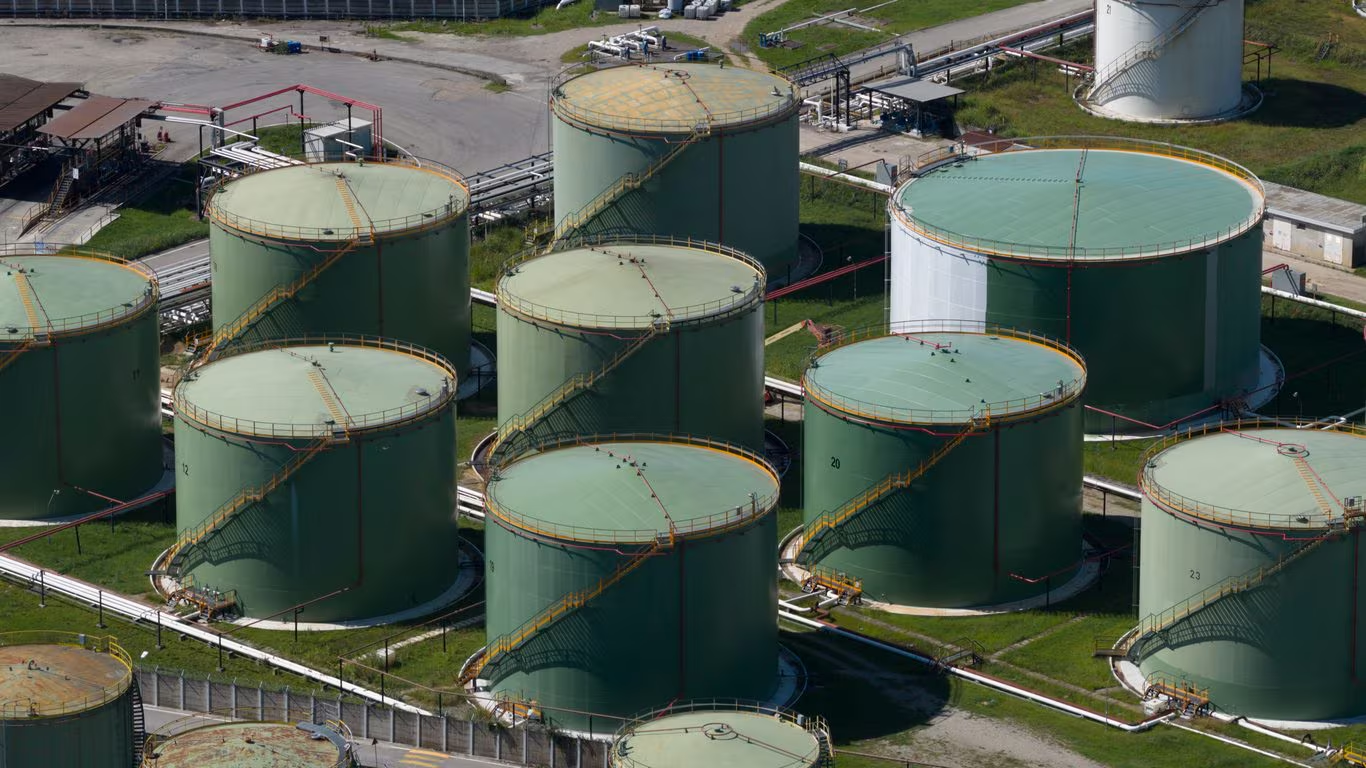
By January 2027, twelve European countries will place 42.6 million barrels of oil on the market, of which 20.5 million will be diesel. The intervention, coordinated within the IEA, aims to ease tensions on energy markets and contain pressure on fuel prices.
By the end of January 2027, twelve countries members of both the European Union and the International Energy Agency (IEA) – Belgium, Denmark, France, Germany, Greece, Italy, Latvia, Lithuania, Luxembourg, the Netherlands, Portugal and Sweden – will make available to the market 42.6 million barrels of oil and petroleum products, coming from their respective countries strategic reserves emergency. Of these, 20.5 million barrels will be diesel (diesel), confirming the particular attention paid to the critical issues affecting the refined petroleum products market.
The commitment was formalized through a joint statement released on October 29, 2026on the margin of EU Energy Council in Luxembourgand is part of the broader framework of international coordination initiatives aimed at counteracting tensions on the oil markets and mitigating pressure on fuel prices. The decision follows the agreement reached by the G7 countries on 2 October 2026 on the acceleration of the release of approx 100 million barrels of oil yet to be placed on the market, as part of the intervention program coordinated by the IEA and started in March 2026. The latter had established the making available on the market of a volume total Of 400 million barrels from the emergency stocks of participating countries.
How the release of oil reserves in the EU is decided
Strategic reserves are held and managed by individual states, which regulate how they are used in compliance with European and international obligations. Within the European Union, the Commission carries out monitoring and supervisory functionsverifying compliance with the obligations of incorporation and maintenance of safety stocks provided for by community legislation. In the event of energy crises of international scope, the coordination of emergency measures is instead entrusted to theInternational Energy Agencywhich can promote concerted intervention among member countries, favoring the coordinated release of large quantities of crude oil or refined petroleum products. The objective is to temporarily increase the supply available on the market, helping to ease tensions along the supply chains most exposed to fluctuations in energy prices, including those in transport, industry and logistics.
https://www.istockphoto.com/it/foto/old-nozzle-pump-fuel-gm458138087-21749417
The IEA does not intervene directly in the determination of prices, nor does it independently have national reserves, but performs a function of strategic coordinationaimed at making the collective response of states to supply interruptions or critical issues more effective. The participating governments maintain operational responsibility for the release of their respective stocks and define the concrete methods of implementing the intervention, including the type of petroleum products to be released, the quantities to be mobilized and the related level of information transparency.
What happens with the placing of the barrels on the market and the subsequent steps
In parallel with the commitment to make their strategic reserves available, the signatory governments have envisaged a monitoring mechanism of implementation, entrusting the European Commission Petroleum Coordination Group (Oil Coordination Group) the task of following the progress of releases and verifying their effective execution. Participating countries also committed to report on the progress madewith a view to a further evaluation scheduled for the next one EU Energy Council of 10 December.
The placing on the market of emergency supplies can lead to a relatively rapid increase in the available supply of diesel and other refined petroleum products. It is, however, a tool temporary intervention: strategic reserves represent, in fact, a quantitatively limited resource and their use makes a subsequent process necessary replenishment of stocks. In a context characterized by persistent geopolitical tensions and supply uncertainty, governments could adopt a prudential approachlimiting the use of reserves so as not to excessively compromise its safety margins in the event of further interruptions or shortages in supplies.
https://www.istockphoto.com/it/foto/congestion-of-cargo-ships-blocks-maritime-traffic-in-the-strait-of-hormuz-gm2264193758-676918598?phrase=petroleum&searchscope=image%2Cfilm
According to what was communicated by the IEA in the October 2026 report, the global oil stocks recorded a contraction of 509 million barrels compared to levels prior to the outbreak of the conflict in Iran. At the same time, the reduced availability of diesel and aviation fuel has helped push refining margins towards exceptionally high levels, highlighting the supply chain’s difficulties in meeting demand for distillate petroleum products.
