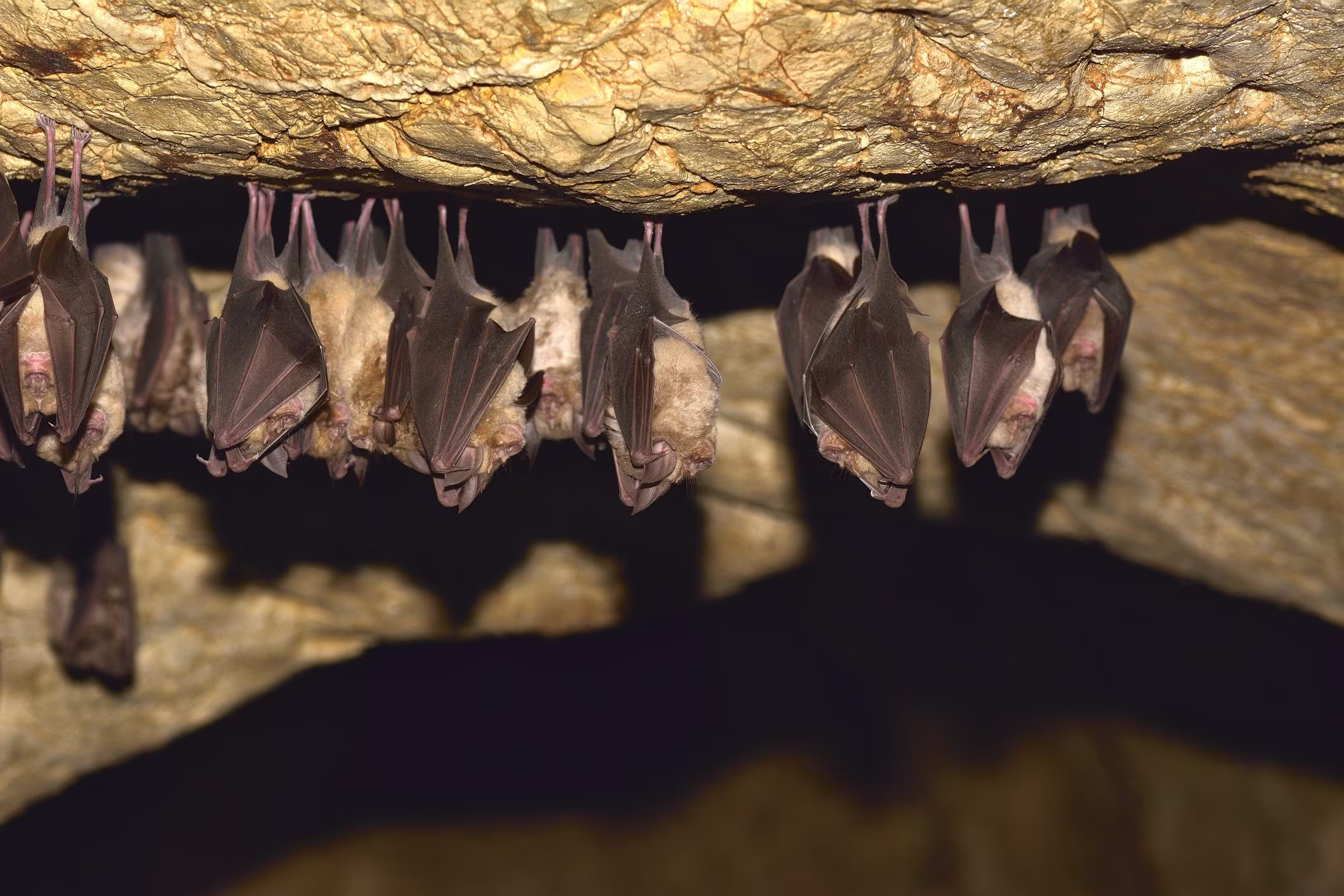
Bats, often present in Halloween images, are the protagonists of a natural phenomenon in this period: autumn swarming. In late autumn, numerous individuals from different colonies gather near caves, natural cavities, mines and old buildings.
A dark night, an old castle and a flight of bats; this is one of the iconic images associated with Halloween night. Why bats? Superstitions and false beliefs associate chiropterans (a scientific term to indicate bats) with vampires or supernatural nocturnal creatures, so much so that they have generated fear and disgust towards these winged mammals. In reality, the flight of bats in Halloween iconography could derive from the observation of a natural phenomenon: in our latitudes around the end of October the bats gather in large groups to reach the sites where they will spend the winter in hibernation, the so-called “hibernacles”. In a flurry of wings they aggregate and, when the night temperature becomes colder, they begin the winter sleep period. This behavior is called “autumn gathering” (autumn swarming) and is used for hibernation site selection, mating and the exchange of social information regarding the suitability of shelters. Favorite sites are caves, tree cavities and, sometimes, cellars of ancient buildings. Once chosen by a colony they will be reused for several years.
Sometimes you read headlines in the newspapers that talk about “sudden invasions of bats” in an area and alarm is created; in reality, just wait and the phenomenon will end precisely because it is due to the autumn gatherings. Individuals from different colonies meet and mate, thus promoting the exchange of genes between populations of the same species. With repeated flights and moving from one site to another they test the suitability of potential hibernacula. A single cavity will also be occupied by some thousands of individuals belonging to different species and must have characteristics of temperature And humidity suitable for hibernation and saving metabolic energy during the colder months. In the “autumn swarms” (this is also what the gatherings are called) a prevalence of males over females was observed with a ratio of 4 to 1. In essence, the males visit the wintering sites more frequently and move from one to another, in an attempt to increase the chances of mating. The study “Swarming activity of temperate zone microchiropteran bats: effects of season, time of night and weather conditions” conducted over 5 years on a swarming site in south-east England highlighted that aggregation varies from one night to the next and slows down in case of precipitation. It is reduced in the first hours after sunset and reaches its peak between 6 and 7 hours after dusk. Once identified, the hibernacle will be frequented by bat colonies for several years and for this reason it is necessary to conserve them and not generate disturbing situations.
The Order Chiroptera enjoys some primates: they are the only mammals capable of flying thanks to patagiumthat particular richly vascularized membranous structure similar to a pair of wings. They move in the night thanks to the sonar they are equipped with. They represent, after rodents, the most numerous order of mammals in terms of existing species. Nonetheless, a large number of them are highly threatened and at risk of extinction. For this reason these are particularly protected animals throughout Europe. Disturbance of wintering or roost sites has deleterious effects on entire colonies, as large concentrations of bats gather at a single site and adapt. Just to get an idea, just think that in the cellars of the historic Marburg Castle, in Germany, researchers counted approximately 5000 individuals of dwarf bat (Pipistrellus pipistrellus) during the hibernation period, with temporary increases during autumn swarming. Even in Italy, many species usually use buildings as shelters and in winter they adapt to cellars, underground pipes and even hypogeal (i.e. underground) tombs. Very often renovation and restoration interventions can cause the extinction of entire colonies, and this is why It is forbidden to disturb the animals during hibernation or damage the places they use as shelter.
